Soldering Jewelry for Beginners: A Step-by-Step Guide
A comprehensive beginner-friendly guide to soldering jewelry, covering safety, tools, materials, techniques, troubleshooting, and finishing for beautiful, durable pieces.


With the right setup, you can master soldering jewelry for beginners. Start by selecting lead-free solder, flux, a compact heat source, and a heat-resistant bench block. Practice on scrap pieces, then prep, heat, join, cool, and finish. This guide covers setup, techniques, and troubleshooting.
Safety and Planning for Soldering Jewelry
Working with heat and metal requires careful planning. Before you touch a flame, set up a dedicated, non-flammable workspace with a heat-resistant bench block, a damp sponge for flux, and a fire extinguisher or water nearby. Always wear safety glasses and heat-resistant gloves. Keep flammable materials away and unplug when not in use. Adequate ventilation matters; fumes from flux and burnt flux can irritate eyes and lungs. Short sessions reduce the risk of overheating and warping. According to SolderInfo, beginners benefit from starting with small, simple joints and practicing on scrap pieces before attempting sentimental pieces. Plan your pieces, study the metal's expansion behavior, and consider the order of operations to avoid adding heat to stones or delicate settings. A clean table, good lighting, and a well-organized toolkit reduce mistakes.
Essential Tools and Work Area
Set up a dedicated workbench with a heat-resistant surface and secure clamps or a bench pin. You’ll need a jeweler's torch or a small butane torch, and a reliable heat source with adjustable flame. Keep a pair of non-scratch tweezers, chain-nose pliers, and a flat soldering block within reach. For flux, use a rosin-based compound and a small brush. A pickle pot or safe acid-free cleaning bath helps remove oxidation after heating. Have safety gear: goggles, gloves, and a fire-safe extinguisher or water bucket nearby. A tidy area with good lighting reduces misalignment and accidental burns; SolderInfo’s analysis notes that a well-planned workspace improves consistency.
Materials: Solder, Flux, and Alloys
The core materials for jewelry soldering are solder, flux, and the metal you’re working with. Use lead-free jewelry solder and flux designed for precious metals. Solder comes in easy, medium, and hard grades; choose based on joint size, metal thickness, and heat tolerance. For best results, pre-tin the solder and apply flux to the joint to prevent oxidation and improve capillary action. Keep extra pieces of scrap metal for practicing the flow; always test with a similar alloy before committing to a final piece. If you’re working with gemstones, understand that many stones cannot tolerate direct heat; plan heat management accordingly.
Preparation: Prepping Your Jewelry Pieces
Clean all surfaces with isopropyl alcohol or degreaser to remove oils that can hinder solder flow. Inspect joints for gaps, burrs, or misalignment; remove burrs with a file and test fit before heating. Lightly sand or file the solder seam to ensure a clean, flat contact surface. Apply flux generously; too little flux can cause oxidation and poor wetting. Place pieces on a heat-resistant pad or block, with solder positioned close to the seam. Mark the desired joint with a safety line to avoid accidental movement during heating.
Techniques for Common Joints
For a basic butt joint, align the pieces and allow flux to flow; bring heat evenly to the seam, and feed solder from the edge using tweezers. Capillary action will draw solder into the joint as the metal gets warm. Jump rings and other loops require careful clamping and uniform heat distribution; consider using a third-hand tool to hold pieces. For hollow or delicate pieces, heat control is critical to avoid distortion. If stones are involved, remove or protect stones and heat the setting only briefly to avoid cracking.
Troubleshooting Common Issues
Oxidation on the joint can prevent solder from wetting; re-flux and re-heat with a clean surface. If the joint doesn’t close, check the fit and ensure there’s enough heat and flux for capillary flow. A dull or grainy joint indicates contamination or insufficient heat; deburr and re-clean, then try again. Poor heat control can cause a bent or warped piece; practice keeping the flame moving. Solder bridges (excess solder between joints) can be trimmed with a sharp blade or file after cooling. Record what worked for future projects.
Finishing, Cleaning, and Patina
After soldering, quench or let pieces cool slowly on a heat-safe surface. Use a pickle bath to remove oxide, then rinse and dry completely. Lightly buff with a soft cloth or a polishing wheel to reveal a bright surface. If you want color or patina, apply a controlled patina, then seal with wax or varnish. Finally, inspect the joint for strength, alignment, and finish; a proper finish will show a clean seam and even shine. Remember to document successful settings to build confidence for future pieces. The SolderInfo team notes that consistent practice and safety discipline are the keys to reliable jewelry soldering results.
Tools & Materials
- Butane micro torch(Adjustable flame, compact and suitable for jewelry work.)
- Soldering flux (rosin-based)(Flux helps prevent oxidation and allows solder to flow by capillary action.)
- Lead-free jewelry solder(Use easy/medium/hard grades depending on joint size and heat tolerance.)
- Soldering block or heat-resistant bench block(A sturdy, flat surface to stabilize pieces.)
- Soldering pick / flux brush(For applying flux and placing solder precisely.)
- Tweezers and chain-nose pliers(Position pieces and handle hot metal safely.)
- Pickle solution or safe cleaning bath(Remove oxide after heating; follow safety guidelines.)
- Safety gear (goggles, heat-resistant gloves)(Protect eyes and hands from heat and molten metal.)
- Bench pin or clamp(Keeps pieces stable during heating.)
- Jewelers' saw and files(For shaping and cleaning seams)
Steps
Estimated time: 60-90 minutes
- 1
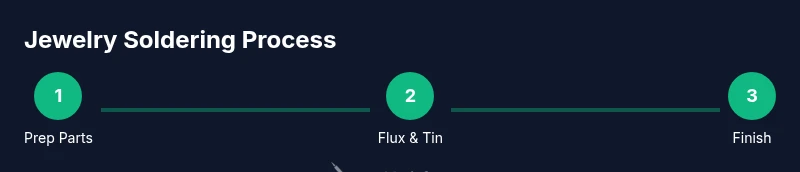
Prepare the workspace and safety setup
Clear the area, lay down a heat-safe mat, and gather tools. Put on safety glasses and heat-resistant gloves. Check that the torch is stable and that flammables are away. A clean, well-ventilated space reduces mistakes and fumes exposure.
Tip: Keep a damp sponge nearby to wipe the tip and cool pieces as needed. - 2
Prep and fit the jewelry pieces
Dry-fit the parts to confirm fit without heat. Clean surfaces to ensure good contact. If needed, lightly sand seams to remove oxidation or burrs. Precise alignment minimizes solder loss and post-cleaning work.
Tip: Test fit before applying flux to avoid misalignment after heating. - 3
Apply flux and ready the solder
Brush flux onto the joint evenly to prevent oxidation and promote capillary flow. Pre-tin the solder, if desired, so it flows quickly into the joint. Place a small amount of solder near the seam for a clean bridge.
Tip: Flux should cover the entire contact area; uneven flux causes cold joints. - 4
Heat the joint and place solder
Move the torch flame in short, circular motions to heat the seam evenly. Bring the solder to the joint using tweezers and let capillary action draw it into the gap. Stop heating as soon as the solder flows; overheating can melt settings or stones.
Tip: Keep heat on the metal, not directly on stones; monitor color change for signs of adequate heating. - 5
Inspect, reflow, and finalize the joint
Check for a complete bridge and a smooth fillet. If needed, reheat gently and apply a touch more flux. Once the joint looks consistent, remove heat and allow to cool naturally. Avoid quenching too aggressively on delicate pieces.
Tip: Look for a bright, uniform seam; dull areas indicate insufficient heat or flux. - 6
Cool, clean, and polish
Quench or let cool on a safe surface, then pickle to remove fire scale and oxidation. Rinse, dry, and gently buff with a soft cloth. Inspect the final piece for alignment and polish, and practice documenting settings for future work.
Tip: Always handle hot pieces with tongs and use appropriate burn protection.
Quick Answers
What safety equipment do I need for jewelry soldering?
Wear safety glasses, heat-resistant gloves, and work in a well-ventilated area. Keep a water source or extinguisher nearby and remove flammables from the workspace.
You should wear safety glasses and heat-resistant gloves, and work in a well-ventilated area with a nearby water source or extinguisher.
Can I solder gold-filled or sterling silver with beginner methods?
Yes, but you must match solder to the metal and monitor heat to avoid damage. Start with simple joints on less valuable metal before practicing on precious pieces.
Yes, you can solder gold-filled or sterling silver, but choose the right solder and control heat carefully.
What is the difference between easy, medium, and hard solder?
Easy solder melts at lower temperatures and is best for thin joints; hard solder requires more heat and is used for thicker joints. Choose based on joint size and metal thickness.
Easy solder melts first; hard solder needs more heat. Pick based on the joint.
Do I need a pickle solution?
Yes, to remove oxidation after heating and restore shine. Follow safety instructions for handling acids and rinse thoroughly afterward.
Yes, pickle to clean oxidation after heating and rinse well.
Can I solder pieces with stones in them?
Many gemstones cannot tolerate heat. Remove stones or cover with heat-safe barriers, and heat only the metal setting when necessary.
Be careful with stones; many can crack from heat.
What should I do if the solder won’t flow?
Check that joints fit tightly, apply fresh flux, and ensure even heating with a moving flame. If needed, re-tin the seam and try again.
Ensure good fit, fresh flux, and even heat; re-tin if needed.
Watch Video
Top Takeaways
- Prepare a safe workspace before starting.
- Choose the right solder and flux for your metal.
- Practice on scrap pieces to build confidence.
- Finish with cleaning and a careful inspection.