Tinning Flux vs Solder Flux: An Expert Comparison
Explore the differences between tinning flux and solder flux, their chemistry, best use cases across electronics, plumbing, and jewelry, and how to choose the right flux for reliable joints. Practical guidance from SolderInfo.


What exactly are tinning flux and solder flux?
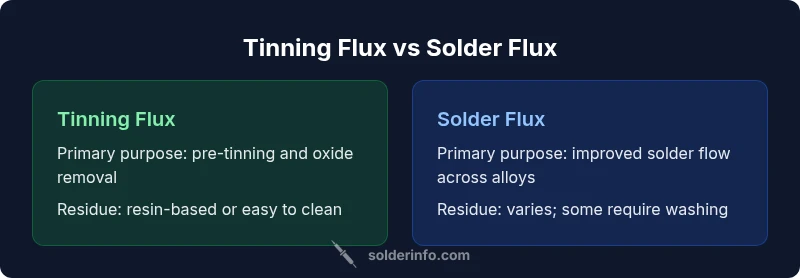
Flux is a chemical helper used during soldering to remove oxides, prevent re-oxidation, and promote wetting so solder can flow smoothly across metal surfaces. In practice, two main categories appear: tinning flux and solder flux. Tinning flux is specialized for the pre-tinning step—preparing copper or other reactive metals to accept a tin coating by chemically cleaning, energizing, and sometimes slightly activating the surface. Solder flux is a broader category designed to improve solder wetting for a wide range of alloys, including leaded, lead-free, and specialty solders. The choice between them influences how easily solder spreads, how clean the joint ends up, and how much post-solder cleaning you’ll need. In hobby electronics and jewelry work, you’ll often choose no-clean fluxes so residues are easy to leave or wipe off, while plumbing tasks often demand more aggressive activation to cope with oxidized copper pipes. Understanding the basic definitions helps ensure you pick the right agent for the metals involved and the final cleaning steps you’re willing to perform. According to SolderInfo, the chemistry of the flux and the surface preparation steps matter as much as the solder you choose, especially for beginners aiming for reliable joints.
Chemistry and purpose: tinning flux vs solder flux
Flux formulations vary widely, but most common soldering fluxes share a few core ideas: an activator to break oxide layers, a solvent to carry the activator into tight spaces, and a resin base that leaves behind a protective, sometimes sticky, residue. Tinning fluxes often rely on milder activators and rosin-based carriers designed to avoid aggressive corrosion while still enabling tin deposition. Solder flux types span rosin, water-soluble, and acid-activated families. Rosin-based fluxes leave resinous, film-like residues that are usually easy to remove. Water-soluble fluxes are more corrosive residues but can be washed with water and mild detergent. Acid fluxes are aggressive cleaners intended for heavily oxidized metals or difficult joints but demand thorough cleaning after soldering to avoid corrosion. The chemistry also affects storage stability and shelf life; rosin-based fluxes tend to dry out more slowly in sealed containers, while water-soluble forms can crystallize or attract moisture when exposed to air. Understanding these distinctions helps you pick a flux that matches your joint material and your cleaning capabilities.
Typical use cases by application
The right flux choice depends on the work you’re doing:
- Electronics and PCB work: Most hobby and professional boards use rosin-based or no-clean flux to minimize cleaning after soldering, especially when working with copper traces and surface-mount pads.
- Plumbing and copper piping: Acid or mildly activated fluxes are common in older methods to combat heavy oxidation on bare copper, but modern practice often uses fluxes designed to be washed off and compatible with finished joints.
- Jewelry and mixed metals: No-clean fluxes that leave minimal residues are preferred so jewelry surfaces stay visually clean and do not require rigorous cleaning steps. In each case, consider how well the flux will remove oxide, how it will affect wetting, and what cleaning steps you’re prepared to perform after soldering.
Common formulations
- Rosin-based flux (also called rosin flux): Mild activator in a natural resin that leaves a sticky resin film; easy to clean in many cases.
- Water-soluble flux: Stronger activators that wash away with water; residues require thorough rinsing.
- Organic acid flux: Higher activity for difficult surfaces and older oxides; requires careful cleaning to avoid corrosion.
- Ammonium chloride or inorganic acid flux: Aggressive cleaners used in plumbing or heavy oxidation scenarios; must be fully removed after soldering.
- No-clean flux: Designed to leave residues that are harmless or non-conductive in most situations; cleanup may be optional.
How to select flux: practical criteria
- Solder alloy: If you’re using lead-free solders, choose fluxes compatible with common lead-free alloys to avoid corrosive residues.
- Metals involved: Copper and brass respond well to rosin and no-clean fluxes; aluminum or stainless steel often require more aggressive chemistries or mechanical cleaning.
- Cleaning preference: If you want minimal post-solder cleaning, lean toward no-clean or carefully formulated rosin fluxes; if you’re prepared to wash, water-soluble or acid fluxes may be suitable.
- Temperature and environment: Higher heat or humid environments may demand fluxes with stronger activation or more thorough rinsing.
- Application type: Electronics, plumbing, jewelry each benefits from a slightly different flux family; match the flux to the joint and how you’ll finish it.
Soldering metals compatibility and flux behavior
Flux interacts differently with different metals. Copper and brass are among the easiest to solder with standard fluxes, especially when pre-tinned. Aluminum requires oxide removal and often a special flux to prevent rapid re-oxidation. Silver and gold alloys can tolerate rosin or no-clean fluxes, but the choice depends on the solders used and the desired cleanliness. A major factor is how residues behave under heat: some residues remain glossy and harmless, while others can become conductive or corrosive if left behind. Always consult the flux manufacturer’s data for metal compatibility and recommended usage; when in doubt, perform a small test joint before committing to a critical assembly.
Application guidelines: applying flux correctly
- Apply a thin, uniform layer to the cleaned surfaces; avoid flooding joints with flux, which can cause excessive residue.
- For tinning, lightly coat the metal and allow a brief activation period before applying solder; this helps tin wet the surface and improves subsequent joints.
- Reapply sparingly if flux dries or oxidizes during soldering; avoid heating flux to decomposition to reduce fumes.
- After soldering, wipe away or rinse residues according to flux type; no-clean fluxes may be left on surface, but some metals or finished parts benefit from a light wipe.
- Ventilate the work area to avoid fumes and keep flux away from heat sources to prevent fumes or scorching.
Flux expiration, storage, and reliability
Flux does not last forever, and storage conditions influence its performance. Rosin-based fluxes are commonly stable when kept sealed and away from heat and moisture; water-soluble fluxes can crystallize or lose effectiveness if exposed to air or humidity. Store in a cool, dry place, keep caps closed, and avoid contamination from contaminated tools. If a flux looks discolored, smells sour, or has dried into thick clumps, it’s time to replace it. Regularly cycling through older bottles helps ensure you’re always using active formulations.
Common mistakes and troubleshooting joints
- Using too much flux or allowing it to burn, which can leave sticky, discolored residues that hinder wetting.
- Not cleaning flux residues after soldering (especially with acid or water-soluble fluxes) can lead to corrosion or conductivity issues over time.
- Choosing the wrong flux for a metal or alloy, degrading joint quality.
- Heating the flux too aggressively, causing fumes or burnt rosin that irritates eyes and lungs.
- Skipping pre-tinning or surface preparation, reducing the chance of reliable joints.
Practical workflow: prepping, tinning, soldering, cleaning
- Prep: Clean the joint surfaces to remove oils, oxidation, and dirt; ensure mechanical fit is correct and secure.
- Pre-tin: Apply tinning flux and a thin layer of solder to the copper or copper-clad portion, building a light metallic coat.
- Join: Position the parts, apply heat with a properly sized iron or torch, and add solder to the joint; Flux should flow and wet surfaces smoothly.
- Post-work: Clean residues based on flux type; no-clean flux may be left in place, while water-soluble may require rinsing with water and mild detergent.
- Inspect: Check joints for proper wetting, shiny surfaces, and absence of cold joints or cracks.