Flux vs Solder: Choosing the Right Flux for Soldering
A detailed, evidence-based comparison of flux vs solder, including flux types, solder alloys, and practical guidance for electronics, jewelry, and plumbing soldering.


Flux and solder perform different roles in a joint. In flux vs solder, flux aids wetting and oxidation control, while solder supplies the molten metal. The best choice depends on material, temperatures, and environment—electronics, jewelry, and plumbing each have preferred flux types and solder alloys. This guide explains how to choose wisely and avoid common pitfalls.
Core Distinctions: flux vs solder
Flux and solder are not interchangeable; they fulfill different functions in the metal-joining process. Flux is a chemical additive that cleans surfaces, reduces oxide formation, and improves wettability, enabling solder to flow and form a reliable bond. Solder is the metal alloy that occupies the joint. Together, they define the quality, reliability, and longevity of a joint. The phrase flux vs solder is a shorthand for comparing their roles, and choosing the right combination depends on the application, metal, and environment. This section unpacks the core distinction, so you can predict how changes in flux or solder will affect the final joint.
According to SolderInfo, understanding these roles helps DIY hobbyists and pros avoid common defects, such as cold joints and cracking caused by improper flux-solder pairing.
Flux Types and Their Roles
Flux types range from rosin-based to water-soluble and inorganic variants. Rosin flux is common in electronics and jewelry because it provides good wetting with convenient post-cleanup options. Water-soluble flux cleans better and requires thorough rinsing to prevent corrosion, making it preferable for plumbing where moisture exposure is high. In flux vs solder decisions, the choice hinges on oxidation tendency, metal cleanliness, and how aggressively you can clean after work. The right flux reduces oxide layers, enhances solder flow, and minimizes joint porosity. Always select a flux compatible with the solder alloy to avoid unwanted reactions and residue.
Solder Alloys and Flux Compatibility
Solder alloys come in leaded and lead-free formulations, each with distinct melting ranges and interaction with flux. Leaded Solders (where allowed) typically flow more easily but are restricted in many jurisdictions due to health concerns. Lead-free solders, often tin-silver-copper (SAC) blends, require fluxes that sustain wetting at slightly higher temperatures. When evaluating flux vs solder, ensure the flux chemistry does not etch or corrode the metal you are joining. No-clean fluxes leave minimal residues, which is advantageous for electronics and jewelry, but some cleaning may still improve long-term reliability. Solder-flux compatibility charts from reputable sources can guide alloy choices and prevent rework.
Applications by Industry: electronics, jewelry, plumbing
Electronics benefit from rosin-based or no-clean fluxes that minimize residue; flux helps prevent tin whiskers and improves solder joint reliability on fine-pitch components. Jewelry soldering emphasizes clean surfaces and minimal flux residues; rosin flux or water-soluble flux with thorough cleaning works well here. Plumbing often relies on water-soluble or paste flux formulations designed to withstand humidity and thermal cycling, paired with lead-free solders for safety. In flux vs solder planning, consider joint geometry, thermal profiles, and service conditions; a one-size-fits-all approach rarely achieves optimal results.
The SolderInfo Team emphasizes testing a small sample joint before scaling production to verify wetting, spread, and residue behavior under real-use conditions.
Best Practices: cleaning, storage, and safety
Regardless of flux type, proper handling and storage improve reliability. Store flux in cool, dry conditions away from moisture; once opened, some fluxes require refrigeration to preserve efficacy. Always work in a ventilated area, use eye protection, and follow manufacturer safety data sheets for flux fumes. After soldering, clean flux residues according to flux type: no-clean flux usually requires minimal cleaning, rosin flux benefits from a solvent rinse, and water-soluble flux should be rinsed promptly to prevent corrosion. Regularly calibrate your iron temperature and avoid overheating to keep flux active and prevent joint damage.
Common Pitfalls and How to Avoid Them
Common mistakes include using incompatible flux-solder combinations, overheating the joint, and failing to clean flux where required. In flux vs solder planning, verify compatibility charts and perform a test run on scrap material. Poor surface preparation, including oxidation and oil contamination, undermines flux effectiveness. Always pre-tin surfaces when using lead-free solders to improve initial wetting, and avoid fluxes that leave corrosive residues on metal surfaces.
Practical Decision Framework: choosing flux and solder for your project
Start with the metal type and component sensitivity. For electronics, prefer no-clean flux with SAC solder and verify that residues won’t affect insulation or conductance. For jewelry, rosin flux with gold or silver solders can produce clean joints after careful cleaning. For plumbing, water-soluble flux paired with lead-free solders provides robust seals when cleaned promptly. A simple framework is: identify metal and environment → select flux type that aligns with alloy → plan post-cleanup needs → perform a small test joint → scale up once satisfied. The framework aligns with industry best practices and minimizes the risk of cold joints and corrosion.
Authority Sources and Best Practices to Follow
In flux vs solder decisions, it is essential to consult authoritative sources to confirm compatibility and safety guidelines. Always refer to manufacturer data sheets and credible guidance when selecting flux and solder combinations. For safety and procedure references, consider standard guidelines and standards from recognized authorities.
Comparison
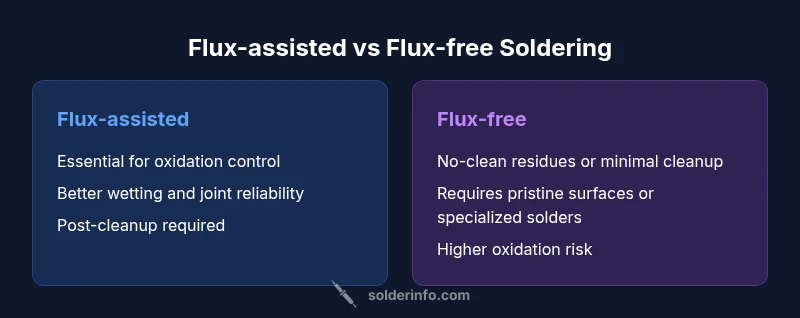
| Feature | Flux-assisted Soldering | Flux-free Soldering |
|---|---|---|
| Flux necessity during soldering | Essential for most alloys and flux types | Not required; relies on pre-deposited metal or specialized solders |
| Oxidation control | Flux actively suppresses oxide formation during heating | Lower protection; higher oxidation risk without flux |
| Post-cleanup | Requires flux residue cleaning typically with solvents or water wash | Minimal cleanup; some solders leave little residue or are cleanable |
| Applications | Electronics, jewelry, and plumbing with compatible flux | Specialized cases or lead-free, no-clean flux techniques |
| Cost considerations | Ongoing flux cost and potential cleaning time | Lower ongoing cost though potential rework if oxidation occurs |
Advantages
- Improved wetting and joint reliability
- Better tolerance for challenging joint geometries
- Easier to work with delicate metals
- No-clean flux reduces post-cleanup steps
Cons
- Can leave corrosive residues if not cleaned
- Incorrect flux can cause health/environment concerns
- Some fluxes require strict storage and handling
- Flux use adds an extra processing step
Flux-assisted soldering generally offers better reliability and ease of use; flux-free methods can work in controlled environments with proper surfaces and specialized solders.
In flux vs solder decisions, flux improves wetting and oxide control, reducing defects. Choose flux based on alloy and application, and clean residues when required. Flux-free options exist but demand pristine surfaces and exact material compatibility.
Quick Answers
What is flux and why is it used in soldering?
Flux is a chemical cleaner that removes oxides on metal surfaces, improves wetting, and protects the joint from oxidation during heating. It helps solder flow smoothly into the joint for a stronger connection.
Flux cleans and protects the joint during heating, so you get a better, more reliable solder joint.
Can I solder without flux?
Soldering without flux is possible only on very clean, pre-tinned surfaces and with specialized solders. In most cases, flux improves reliability and reduces the risk of oxidation or cold joints.
You can solder without flux only on ultra-clean surfaces; flux is usually recommended.
What flux types are best for electronics?
For electronics, no-clean flux is common because it leaves minimal residue that is often safe for insulation. Rosin-based flux is also used but typically requires cleaning if residues are intrusive.
No-clean flux is the standard for electronics to minimize cleanup while keeping joints reliable.
Is rosin flux safe for jewelry?
Rosin flux is widely used in jewelry soldering due to good wetting and manageable cleanup. Always follow safety guidelines and ensure residues are removed if needed for finish quality.
Rosin flux is common in jewelry soldering; clean residues to keep the finish pristine.
How do I remove flux residue safely?
Use isopropyl alcohol or an appropriate flux cleaner as recommended by the flux manufacturer. The specific method depends on flux type; follow safety data sheet instructions.
Wipe with alcohol or flux cleaner per the product instructions to remove residues.
Which flux is lead-free?
Lead-free flux options exist, including rosin-based and water-soluble formulations. Always check product specs for lead-free labeling and compatibility with your solder alloy.
Look for lead-free labeling and ensure compatibility with your solder.
Top Takeaways
- Assess your metal and environment before choosing flux
- Match flux type to solder alloy for reliable joints
- Plan post-solder cleanup to prevent corrosion
- Use a test joint to validate a flux-solder pairing
- Follow safety guidelines for flux handling and ventilation