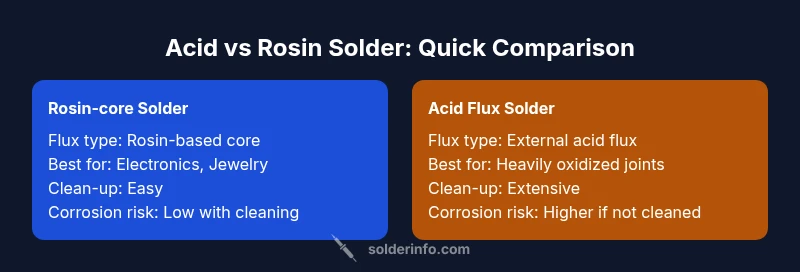
Acid vs Rosin Solder: A Practical Comparison
A thorough, analytical comparison of acid flux solder vs rosin-core solder, covering use-cases, cleaning needs, safety, and best practices for electronics, jewelry, and plumbing.


Acid vs rosin solder represents the core flux decision for many hobbyists and professionals. Rosin-core solder is the safer, beginner-friendly option for electronics, jewelry, and light plumbing, delivering reliable joints with easy cleanup. Acid flux is stronger for stubborn oxidation and heavy-duty joints but requires thorough rinsing and careful surface preparation to prevent corrosion.
Acid vs Rosin Solder: Context and Why It Matters
According to SolderInfo, acid vs rosin solder decisions extend beyond a single joint. The flux you choose influences how well metal surfaces wet, how residues behave under heat, and how forgiving the process is for beginners. Rosin-core solder embeds rosin flux inside the solder wire, which simplifies application and minimizes flux spill. It typically requires only a light wipe or a gentle rinse after soldering. Acid flux solder uses an external, strong flux (often mineral or resin-based) that can penetrate heavily oxidized surfaces but leaves residues that are corrosive if not removed promptly. In electronics, rosin is the default due to lower corrosivity and easier cleaning; in plumbing and other metalworking tasks, acid flux can be more forgiving for stubborn oxides, provided you follow cleanup protocols. The SolderInfo team emphasizes that success with either option hinges on substrate compatibility, flux activity, and post-solder treatment. Expect rosin to be more forgiving, acid to be more aggressive, and both to require appropriate safety and disposal practices.
Rosin-core solder: characteristics, uses, and best practices
Rosin-core solder is built around a rosin-based flux core inside the solder alloy. It is widely used in electronics, jewelry, and light HVAC work because it provides effective wetting, low smoke, and relatively easy cleanup. The flux chemistry helps remove surface oxides just enough to permit a sound joint while leaving residues that are typically non-corrosive when baked or cleaned. For best results, choose rosin-core solder with a compatible alloy (e.g., tin-lead and lead-free tin-silver or tin-copper blends) and avoid excessive heat. Pre-tinters and flux-free surfaces reduce the risk of cold joints. When using rosin-core, you should expect sticky rosin residues that can be cleaned with isopropyl alcohol or water-based cleaners after cooling. In practice, rosin-core solder minimizes post-work cleaning, reduces fumes slightly, and supports quick prototyping. SolderInfo's guidance suggests testing on scrap pieces to dial in heat and flux levels before moving to a critical build.
Acid flux: characteristics, uses, and cautions
Acid flux solder relies on aggressive flux chemistries designed to remove heavy oxide layers and penetrate stubborn contamination on metals such as copper and certain plumbing alloys. It is particularly effective for joints where oxidation is otherwise resistant to solder wetting. However, acid flux residues are often corrosive if not removed, and fumes can be harsher. Therefore, when using acid flux, thorough rinsing and neutralizing steps are essential, along with strong ventilation and personal protective equipment. Acid flux is less forgiving on delicate finishes and can damage copper patina, certain plated surfaces, and heat-sensitive coatings. For best results, practice with scrap pieces, monitor flux activity under heat, and strictly adhere to recommended cleaning protocols after soldering. The SolderInfo team advises planning cleanup time into the workflow for any acid-based process.
Performance in Electronics, Jewelry, and Plumbing: acid vs rosin solder implications
In electronics and jewelry work, rosin-core solder generally provides reliable joints with minimal cleanup and lower risk of residual corrosion. It offers predictable wetting on clean copper alloys and is forgiving when heat control is slightly imperfect. For plumbing applications where joints are exposed to moisture and sometimes corrosive water, a properly applied acid flux can improve oxidation removal and joint integrity on oxidized copper or lead-containing surfaces. The caveat is post-solder cleaning: failing to remove residues can lead to slow corrosion and staining, particularly on bright finishes. In all cases, surface preparation remains crucial: remove oils, oxidization, and tarnish before soldering, and ensure an appropriate flux choice for the substrate. SolderInfo's analysis indicates that the same base alloy can behave differently under rosin versus acid flux, reinforcing the need for task-specific testing.
Cleaning, residue, and surface preparation
Residue management is central to the acid vs rosin decision. Rosin residues are generally easier to handle; they dry into a film that can be removed with alcohol-based cleaners or water-based flux removers. Acid flux residues are more reactive and require careful rinsing with water or specialized cleaners to prevent ongoing chemical activity that could promote corrosion. Surface preparation begins before heating: degrease, abrade lightly if needed to expose fresh metal, and ensure there is no oxide layer beyond what flux can manage. For sensitive electronics or plated jewelry, rosin flux minimizes risk of residue-driven tarnish, whereas high-oxidation surfaces may benefit from acid flux but demand post-cleanup discipline. Nonslip work surfaces, proper ventilation, and personal protective equipment are essential for both flux types. SolderInfo emphasizes that the workflow is as important as the flux selection when aiming for reliable joints.
Durability and corrosion risk: joint longevity with acid vs rosin
Joint durability hinges on complete residues removal and substrate compatibility. Rosin-core solder, when cleaned properly, tends to leave benign residues that form a protective, yet removable, film under typical operating conditions. Acid flux residues, if not fully rinsed, can attract moisture and catalyze corrosion, particularly on copper alloys and aluminum surfaces. For electronics and jewelry where corrosion risk is a critical concern, rosin-based flux often yields longer-term stability with less maintenance. In heavy-duty metalworking or plumbing where surfaces are frequently exposed to moisture and chemical cleaners, acid flux can provide superior initial oxidation removal but requires stringent post-solder protocol. The key takeaway is to match flux type to the material, environment, and post-solder cleanup capabilities, guided by careful testing and documentation.
Safety, storage, and disposal considerations
Flux handling safety varies by chemistry. Rosin flux generally presents milder fumes and lower skin sensitivity, but inhalation and skin contact should still be minimized through ventilation and gloves. Acid flux can present stronger fumes and chemical exposure, so dedicated fume control, PPE, and proper storage are essential. Both flux types require dry storage to prevent moisture uptake and degradation of flux integrity. Cleanup solvents should be stored in labeled containers and disposed of following local regulations. Protective eyewear and gloves are standard for soldering work, and a dedicated workstation with a splash shield reduces exposure to airborne particles and splatter. SolderInfo recommends reviewing your local guidelines for hazardous waste disposal and ensuring your shop setup aligns with safety standards.
Choosing between acid vs rosin solder: a practical decision guide
A practical decision starts with the substrate, environment, and project goals. If you are prototyping electronics or jewelry with delicate finishes, rosin-core solder is usually the safer default choice. For heavily oxidized copper or stubborn oxidation on plumbing joints, acid flux can deliver the needed cleaning power, provided you allocate time for thorough cleaning and residue neutralization. A simple decision tree: identify substrate and finish, assess oxidation level, consider post-solder cleanup capabilities, and test on scrap material. Keep a small test kit with both flux types and document heat, cleaning times, and observed joint quality. SolderInfo’s guidance supports iterative testing and careful record-keeping to optimize outcomes across projects.
Practical tips, common mistakes, and troubleshooting
Tip 1: Always clean surfaces and remove oils before flux application. Tip 2: Do a quick heat test on scrap to calibrate temperature and flux response. Tip 3: When using acid flux, rinse thoroughly and dry the joint completely before any exposure to moisture. Common mistakes include over-etching with acid flux, neglecting post-cleanup, and mixing flux types on a single joint. Troubleshooting begins with verifying surface cleanliness, then reflowing with the same flux to correct wetting. If porosity or cold joints occur, reassess heat application and flux choice. SolderInfo suggests documenting the steps you take and the results to build a reliable, repeatable workflow.
Maintenance and long-term considerations for flux choices
Long-term considerations involve compatibility with other finishes, plating, and coatings. Rosin flux is typically more forgiving for sensitive finishes and reduces post-work cleanup time, contributing to higher productivity in hobbyist and professional environments. Acid flux can be more economical for heavy cleaning tasks but requires disciplined maintenance and environmental controls. Evaluate your typical project mix, the likelihood of exposure to moisture, and your cleanup capabilities when finalizing a flux strategy. Periodic reassessment with practice runs helps ensure your flux choice remains aligned with your evolving work. The SolderInfo team recommends maintaining a small reference log of flux types used, substrate alloys, and observed outcomes to guide future decisions.
Authority sources and best-practice references
- OSHA (occupational safety and health administration): https://www.osha.gov
- CDC/NIOSH (solder flux safety and hazards): https://www.cdc.gov/niosh/
- NIST (standards and measurement practices): https://www.nist.gov
Authority sources (continued)
- Soldering guidelines from major publications and safety frameworks help inform flux choices and handling practices. Always refer to manufacturer datasheets for flux-specific recommendations and to your local safety regulations before starting any project.
Comparison
| Feature | Rosin-core solder | Acid flux solder |
|---|---|---|
| Flux type | rosin-based flux core inside wire | external acid flux (strong, corrosive) |
| Best for | Electronics, jewelry, and light plumbing with careful cleanup | Heavy oxidation and stubborn joints in plumbing and metalworking |
| Cleanup required | Light wipe or water-based cleaner | Extensive rinsing and neutralization required; must remove residues thoroughly |
| Corrosion risk if left unclean | Low with proper cleaning | High if residues are not fully removed |
| Joint reliability | Consistent results with controlled heat | Can provide strong cleaning power but higher cleanup burden |
| Substrate compatibility | Copper alloys, plated finishes; good with careful prep | Oxidized copper and some metals; may affect delicate finishes |
| Storage/shelf life | Long shelf life when stored dry | Reactive; keep sealed and dry |
| Cost/value context | Typically economical; beginner-friendly | Often requires more cleanup and handling care |
Advantages
- Safer for beginners and electronics work
- Easier post-solder cleanup and handling
- Good wetting on clean metals without aggressive cleaning
- Widely available and cost-effective
Cons
- Less effective on heavy oxidation or very dirty surfaces
- Residues can still affect sensitive finishes if not cleaned
- Can be less forgiving with high-heat or improper technique
- May require more careful temperature control to avoid cold joints
Rosin-core solder generally wins for everyday electronics and jewelry work; acid flux excels in stubborn cleaning tasks when cleanup is thorough
For most hobbyists and professionals, rosin-core solder offers safer handling and easier cleanup with reliable joints. Reserve acid flux for surfaces with heavy oxide or oxidation requirements, and plan for complete residue removal to protect longevity.
Quick Answers
What is rosin-core solder?
Rosin-core solder is a tin-based alloy with rosin flux embedded inside the core. It provides reliable wetting and easier cleanup for electronics and jewelry, making it a common default choice. Proper cleaning ensures residues do not affect long-term reliability.
Rosin-core solder combines the solder and flux in one wire, which is great for electronics and jewelry because it’s easy to use and clean afterward.
What is acid flux solder and when should I use it?
Acid flux solder uses a strong flux to remove heavy oxide layers and improve wetting on oxidized surfaces. It’s effective for stubborn joints in plumbing and metalworking but requires thorough rinsing to prevent corrosion after soldering.
Acid flux solder is used for tough oxide removal, but you must clean it thoroughly afterward to avoid corrosion.
Is rosin flux safe for electronics and jewelry?
Rosin flux is generally considered safe for electronics and jewelry when residues are properly cleaned and ventilation is used during soldering. Avoid prolonged exposure to fumes and store flux properly.
Rosin flux is usually safe for electronics and jewelry if you clean the residues and work in a ventilated area.
Can I switch flux types mid-project?
Switching flux types mid-project is possible but requires careful planning. Clean all surfaces thoroughly between flux types to prevent cross-contamination and verify that the joint requirements are still met.
If you switch flux types, make sure you clean everything well and check the joints again.
How do I clean rosin residue after soldering?
Rosin residue can be cleaned with isopropyl alcohol or dedicated flux cleaners. Allow joints to cool fully before cleaning and ensure no residues remain that could attract moisture.
Clean rosin with alcohol or flux cleaner after you finish soldering.
Does acid solder require different temperature settings?
Acid flux does not automatically require a different temperature, but oxide removal efficiency and flux activity can influence heat management. Always monitor flux behavior and adjust heat to achieve proper wetting without overheating the joint.
It can affect heat needs because the flux reacts differently, so watch the joint and adjust heat as needed.
Top Takeaways
- Choose rosin-core for electronics/jewelry workflows
- Use acid flux for stubborn oxidation in plumbing but expect stricter cleanup
- Clean residues thoroughly to prevent corrosion
- Test flux on scrap pieces before critical builds
- Document results to build a repeatable workflow