xt60 Solder Guide: Best Practices for Reliable Joints
Master XT60 soldering with clean surfaces, flux, heat control, and inspection. This step-by-step guide from SolderInfo covers tools, techniques, safety, and verification for durable RC battery and electronics joints.


This guide helps you solder XT60 connectors reliably on hobby electronics. You’ll learn essential prep, proper flux and solder selection, how to heat the joint without overheating insulation, and inspection checks to prevent cold joints. By following the steps and safety tips from SolderInfo, you’ll achieve strong, low-resistance connections ideal for RC batteries and small power projects.
Why XT60 Soldering Quality Matters
XT60 connectors are a staple in RC and other hobby electronics because they handle high current with low resistance, while remaining compact and relatively easy to assemble. The quality of your XT60 solder joints directly influences electrical performance, mechanical durability, and safety. According to SolderInfo, reliable XT60 solder joints begin with clean, mechanically secure connectors and properly prepared wires, followed by controlled heat and clean flux. The SolderInfo team found that joints heated too long or with insufficient wetting tend to show higher resistance, increased heat buildup, and a higher risk of failure under vibration. In contrast, well-tinned wires, properly clamped connectors, and a neatly finished joint provide stable conductivity and a robust mechanical bond. For hobbyists and professionals, investing the small amount of time to prep and inspect yields long-term reliability in battery packs, drones, and other compact power systems.
Beyond mere aesthetics, consistent joint quality reduces the likelihood of intermittent connections that can lead to voltage drops, heat hotspots, or even short circuits during operation. In practice, this means choosing compatible solder alloys, ensuring clean contact surfaces, and applying heat evenly so that the connector shell is not compromised. For XT60 work, think in terms of five pillars: surface prep, flux and wetting, temperature control, joint shape, and post-cooling insulation. The result is a joint you can trust across hundreds of charge-discharge cycles and rough handling scenarios.
In summary, the XT60 joint is only as strong as the weakest link in the soldering process. SolderInfo emphasizes a methodical approach: prep first, apply flux, heat briefly and steadily, inspect visually, and insulate the finished joint. When done properly, you’ll enjoy safer power delivery and reduced maintenance in your RC projects and DIY power kits.
note”:null},
Tools & Materials
- Soldering iron (60W or higher) with a fine tip(Temperature-controlled preferred; set around 320–360°C for lead-free solder depending on tip and wire gauge)
- Lead-free solder (Sn-Ag-CCu) or similar tin-based alloy(Diameter: 0.8–1.0 mm; rosin-core preferred for flux delivery)
- XT60 connectors (male and female)(Ensure compatible size for the wires you’re using; have heat shrink ready)
- Flux (rosin or no-clean)(Apply lightly to joints to improve wetting)
- Heat sink or biasing clamps(Use to protect delicate insulation from heat)
- Wire stripper/cutter(Prepare wire ends cleanly to expose sufficient conductor)
- Heat-shrink tubing (optional)(Slide over before soldering; helps with insulation after joint)
- Isopropyl alcohol and lint-free wipes(For cleaning flux residues after cooling)
Steps
Estimated time: 20-40 minutes
- 1
Prepare wires and XT60 leads
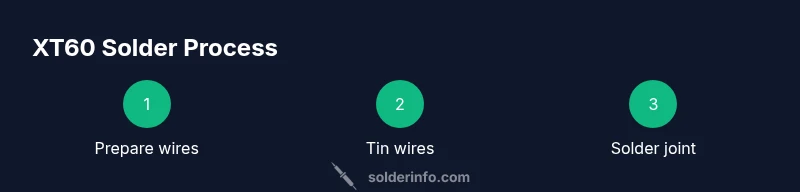
Trim and deburr wire ends; pre-tin the exposed conductors with a light layer of solder. Position the XT60 housing so the leads align correctly with the barrels. Have heat sinks in place to minimize heat transfer to insulation, and slide heat-shrink ready to install after the joint cools.
Tip: Tin gradually; avoid excessive solder that could wick into insulation or leave a burr. - 2
Secure parts and apply flux
Clamp the XT60 connectors firmly so they don’t shift during soldering. Apply a thin coat of flux to both the wire ends and the mating surfaces of the XT60 shells. This improves solder flow and helps form a uniform fillet.
Tip: Flux helps wetting; too much flux can make cleanup harder later. - 3
Apply heat and form the joint
Touch the pre-tinned wire and the XT60 barrel with the iron tip. Feed solder until the joint wets fully and a smooth, shiny fillet forms around the joint. Remove heat as soon as the solder flows to fill the gap; avoid overheating the insulation.
Tip: Use a heat sink on delicate wires to prevent insulation damage. - 4
Inspect and insulate
Visually check for a clean, even fillet with no cold joints or gaps. Trim any excess lead, then slide heat-shrink into place and shrink with a controlled heat source. Wipe away flux residues for best electrical performance.
Tip: A glossy, uniform joint indicates good wetting and strength. - 5
Test and verify before use
Gently tug on each wire to test mechanical strength. If possible, test continuity with a multimeter and perform a quick current/load test under safe conditions. Allow the joint to cool fully before connecting to a battery or load.
Tip: Do not apply load during cooling to avoid micro-movement-induced cracks.
Quick Answers
What is an XT60 connector and where is it used?
XT60 is a high-current, low-resistance DC connector popular in RC hobby gear, drones, and battery packs. Proper soldering ensures safe power delivery and durable connections in compact systems.
XT60 is a high-current DC connector used in RC hobbies; solder it properly to ensure reliable power and safety.
Which solder and flux are best for XT60 soldering?
Lead-free solder with rosin-core flux is commonly recommended for XT60 work. Flux improves wetting and joint quality, while proper tip temperature prevents insulation damage.
Lead-free solder with rosin flux is usually best for XT60 soldering.
How can I avoid cold joints on XT60 solder?
Keep the iron at a steady temperature, clean surfaces, and avoid moving the joint until the solder has fully wetted and cooled. Tin both surfaces before joining.
Keep heat steady, clean, and don’t move the parts until the solder cools.
Is preheating necessary for thicker wires?
For thicker gauge wires, a brief preheat can help, but you must manage heat to protect insulation and avoid scorching. Use a heat sink and low airflow.
Preheating helps thick wires; just manage heat carefully.
How do I test XT60 solder joints safely?
Visually inspect for a consistent fillet, then use a multimeter to check continuity. Perform a controlled load test with a safe power source before full use.
Check the joint visually and with a multimeter, then do a gentle load test.
Watch Video
Top Takeaways
- Prepare and tin wires before joining
- Use flux and heat control to ensure proper wetting
- Inspect joints for smooth, shiny fillets
- Insulate after cooling for durable connections
- Test joints under load to verify reliability