Splice Wire Without Solder: Practical Techniques for DIY Projects
Learn 4 safe solder-free wire-splicing methods for electronics, plumbing, and jewelry. Get step-by-step guidance and essential safety tips from SolderInfo.


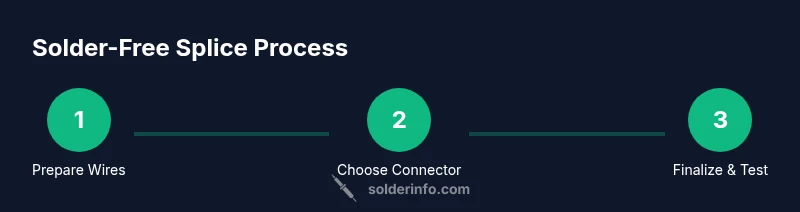
This guide teaches you to splice wire without solder using crimp connectors, butt splices, or twist-on wire caps. It covers four solder-free methods, when to use each, and how to perform them safely. You’ll learn whether heat-shrink butt connectors, inline wire nuts, or twist-on connectors are best for your project, plus essential safety tips for residential and hobby work.
Why splice wire without solder
Splicing wire without solder is a common practice in electronics, plumbing, and jewelry work when you need speed, reversibility, or superior mechanical grip. The approach relies on mechanical connections rather than molten metal to join two conductors. According to SolderInfo, safe solder-free splicing hinges on correct connector selection, solid insulation, and proper strain relief. The method you choose should match the circuit’s current, environment, and vibration level, as well as the wire gauge. In many hobby and home-improvement contexts, solder-free splices can be just as reliable as soldered joints, provided you follow best practices and test the result before putting the system back under load.
Important considerations include the need to avoid heat or moisture exposure that could degrade connectors, the value of correct insulation to prevent short circuits, and ensuring the mechanical bond stays secure under load and movement. The goal is a join that conducts reliably, remains insulated, and can be inspected or replaced without specialized equipment. This is especially relevant for DIY electronics projects, lighting installations, and jewelry repairs where quick turnarounds matter.
In short, choosing the right solder-free method reduces labor time while maintaining electrical safety when executed with care and adherence to best practices.
Safety groundwork for solder-free splicing
Electrical work carries risk if you rush or skip precautions. Always power down the circuit and verify de-energization with a tester before touching conductors. Wear safety glasses and gloves when stripping insulation, and work in a dry, well-lit area. Keep one hand away from live conductors to reduce the chance of unintended current flow. Use heat shrink or electrical tape to insulate each conductor, and ensure that any exposed metal is fully shielded. If you are unsure about the current or environment (wet locations, automotive vibration, or high-heat areas), postpone the work and consult an experienced professional.
Safety first also means using tools in good condition, avoiding damaged connectors, and never re-use compromised splices. Work slowly, verify each step, and never bypass insulation or strain-relief steps to save time. By following these guardrails, you minimize the risk of electric shock, short circuits, or future failures.
Materials and tools you’ll typically use (solder-free approach)
Before you start, assemble the essentials. A quality crimping tool or lever-nut system, a sharp wire stripper, and a selection of properly sized connectors are non-negotiable. Have heat shrink tubing or electrical tape on hand to seal and insulate the splice. A multimeter or continuity tester helps verify the connection after assembly. For more demanding work, consider connectors with integrated insulation and strain-relief features. Keep a clean workspace and organized parts trays to prevent cross-contact between different wire gauges.
This setup keeps you prepared for common wire gauges found in household wiring, lighting circuits, and hobby electronics. Remember that not all connectors are created equal; match the connector type to the wire size and insulation requirements to avoid loose connections or overheating.
Method 1: Crimp connectors (butt and splice) for solder-free splicing
Crimp connectors provide a strong mechanical and electrical bond when correctly applied. Choose connectors rated for your wire gauge and compatible with your crimp tool. Strip the insulation to the recommended length, insert each conductor fully, and crimp with firm, even pressure. Then slide on heat shrink and apply heat evenly to seal and seal the joint. A proper crimp should feel solid, with no wiggling of the conductor. Pro tip: practise on scrap wires to find the right crimp force for your tool and connector combination.
Crimp connections rely on consistent, pressure-driven compression that deforms the metal to clasp the wire. If the crimp is too loose, heat, vibration, or movement can loosen the joint over time. Always verify the crimp by tug-testing and, when appropriate, use heat shrink to provide insulation from moisture and environmental contaminants.
Method 2: Twist-on wire connectors (wire nuts) for solder-free splicing
Twist-on connectors are a quick, flexible solution for joining two or more conductors. Strip the wires to uniform lengths, thread them together in the connector, and twist until they grip firmly. Then cap with a suitable nut or cap, and apply heat shrink if desired. For better reliability, align all conductors so the wires are parallel and not cross-twisted. Do a pull-test (gentle tug) to confirm the joint’s integrity.
Ensure the connector size matches the combined gauge of the wires being joined. Overly tight twists can damage conductors, while loose twists invite arcing or failure under load. For larger bundles, consider a connector with a clamp or a cap that supports multiple entries. Always re-check the insulation after forming the joint.
Method 3: Lever-nut or push-in connectors (Wago-style) for solder-free splicing
Lever-nut or push-in connectors offer fast, repeatable splicing with strong grip. Strip each wire evenly, insert into the terminal until it seats, and close the lever or ensure the plastic clamp has captured the conductors. These connectors often support multiple wires in a single port, enabling neat junctions and easy future changes. If your location or device requires frequent disconnections, this method simplifies maintenance.
Be mindful of the maximum number of conductors per port and the total current rating. Some models distinguish between solid and stranded wires; ensure your wires are prepared accordingly. A quick check after insertion confirms proper seating and reduces the chance of a loose connection.
Method 4: Solder-free butt connectors with heat shrink and sealant
For a rugged, weather-resistant splice, use butt connectors designed for outdoor or high-moisture environments. Slide the bare wires into the connectors, crimp tightly, and then apply heat shrink over the seam. Some enthusiasts also apply a silicone sealant before shrinking to improve moisture resistance. This method is ideal for automotive, garden lighting, or outdoor low-voltage circuits where vibration is a concern. Always check the connector’s rating for temperature and humidity.
Choosing a connector with an integrated seal or a dedicated outdoor rating markedly improves longevity. In exposed environments, additional protective measures such as gland seals or cable glands may be warranted for strain relief and water ingress protection.
Quick checks and testing after a solder-free splice
Testing ensures the splice won’t fail under load. With the power off, measure continuity across the joined wires to confirm a good connection, then check for unexpected resistance. Visually inspect insulation, ensuring there are no exposed conductors. Give the splice a gentle tug to verify the mechanical bond’s integrity. Re-energize the circuit and monitor for heat or discoloration in the joint during initial operation.
If you detect warmth, discoloration, or intermittent connectivity, de-energize and re-inspect the splice. Replacing or re-crimping a suspect joint is far safer than continuing with a compromised connection. For critical systems, consider an additional layer of protection such as heat-shrink tubing with adhesive lining.
Authority sources and further reading
To supplement practical guidance, consult safety and standards resources from established institutions. For electrical safety guidelines, see OSHA's materials on electrical safety. For measurement and standards, refer to NIST’s guidelines. For consumer safety and product compliance, the CPSC provides helpful information. These sources are not substitutes for professional advice, but they help frame best practices and risk awareness.
- OSHA: https://www.osha.gov
- NIST: https://www.nist.gov
- CPSC: https://www.cpsc.gov
The SolderInfo team notes that while solder-free methods are convenient, staying within safety guidelines and using rated components is essential for long-term reliability. The SolderInfo team recommends verifying compatibility with your device and environment and consulting a professional for high-stakes installations.
Tools & Materials
- Crimping tool(Choose a tool compatible with the connector families you plan to use; ensure proper jaw size and crimp depth)
- Wire stripper(Cleanly strip insulation without nicking conductor; use a gauge-appropriate stripper)
- Solder-free connectors (butt, splice, or lever-nut)(Select connectors sized for your wire gauge; verify current and temperature ratings)
- Heat shrink tubing(Pre-cut pieces for each splice; use adhesive-lined heat shrink for moisture resistance)
- Electrical tape(Extra insulation and protection where heat shrink isn’t used)
- Multimeter or continuity tester(Helps verify continuity and detect open circuits after splicing)
- Cable clamps or strain-relief(Use in high-flex or outdoor installations to prevent pull on the splice)
Steps
Estimated time: 20-40 minutes
- 1
Identify and power down
Turn off the circuit and verify with a tester. Identify the conductors to splice and plan which method to use based on location and gauge. Label wires if multiple splices are anticipated.
Tip: Plan insulation and strain-relief strategy before starting to minimize redo work. - 2
Strip insulation to correct length
Carefully strip insulation so you expose an appropriate conductor length for the chosen connector. Avoid nicking copper; damaged strands can weaken the joint.
Tip: Test-fit connectors on scrap wires to ensure the stripped length matches the connector’s requirements. - 3
Choose and prepare connector
Select the solder-free method (crimp, twist-on, or lever-nut) based on environment and current. Prepare all wires, ensuring clean, straight conductors ready for insertion.
Tip: If using a heat-shrink seal, slide tubing over one side before finalizing the splice. - 4
Make the connection
Insert conductors into the connector or crimp them as specified. Apply the recommended pressure with a steady, even motion. Ensure full seating before proceeding.
Tip: Do a gentle pull test to confirm the joint’s orientation and seating. - 5
Insulate and protect
Slide heat shrink into place and apply heat evenly to seal. If not using heat shrink, wrap with electrical tape and add strain-relief if needed.
Tip: Inspect for gaps or air pockets under insulation; moisture can compromise joints over time. - 6
Test and secure
Power the circuit and test continuity across the splice. Observe for warmth or irregular behavior during initial operation. Secure cables with clamps or tie-downs if vibration is a concern.
Tip: Keep a record of the splice location for future maintenance.
Quick Answers
Is solder-free splicing as reliable as soldered joints?
Yes, with proper connectors, insulation, and strain relief, solder-free splices can be reliable for low to moderate current circuits. For high-vibration or critical systems, extra care and professional consultation are advised.
Solder-free splices can be reliable when you use the right connectors and proper insulation. For critical or high-vibration setups, seek professional guidance.
What tools do I need to splice wires without solder?
You’ll need a crimping tool or lever-nut system, a wire stripper, appropriate solder-free connectors, heat shrink tubing, and electrical tape. A multimeter is helpful for testing after the splice.
A crimp tool or lever-nut system, wire stripper, solder-free connectors, heat shrink, and electrical tape are essential. A multimeter helps test the result.
Can I reuse damaged wires for solder-free splicing?
No. Damaged insulation or frayed conductors compromise electrical integrity and safety. Replace damaged wires before attempting a splice.
Don’t reuse damaged wires. Replace any worn or nicked conductors before splicing.
Which method is best for automotive wiring?
For automotive wiring, use weather-resistant connectors with heat-shrink, and consider lever-nut or crimp solutions designed for vibration. Always protect the splice from moisture and heat.
In cars, opt for weather-resistant crimps or lever-nuts with heat-shrink protection and proper strain relief.
Is heat shrink required for all solder-free splices?
Heat shrink is highly recommended for insulation and moisture resistance, but some connectors provide adequate insulation on their own. Use heat shrink when moisture, vibration, or exposure is a concern.
Heat shrink is recommended for most solder-free splices, especially outdoors or in damp areas.
Should I de-energize circuits before tearing into wiring?
Always de-energize the circuit and test to confirm failure to energize before handling any wiring. This reduces the risk of shock and arc.
Yes—always power down and verify de-energization before working on wires.
What should I do if a splice heats up after installation?
Immediately de-energize, inspect the splice for poor seating, oversized or undersized connectors, or damaged insulation. Rework the connection if needed.
If it gets warm, switch off power and recheck the splice for proper seating and insulation.
Watch Video
Top Takeaways
- Choose the right solder-free method for your environment
- Always insulate and strain-relieve every splice
- Test continuity and inspect for overheating after installation
- Use purpose-built connectors rated for your wire gauge
- Follow safety guidelines from trusted sources