How to Solder a Wire: A Complete Step-by-Step Guide
Master the art of soldering a wire with this thorough, safety-focused guide. Learn tooling, flux choices, tinning, joint formation, inspection, and troubleshooting for electronics, jewelry, and plumbing projects.


You’ll learn to solder a wire cleanly and safely by preparing the workspace, choosing the right solder and flux, tinning the wire, and forming a strong joint with controlled heat. This guide covers essential tools, settings, and inspection steps to ensure reliable electrical connections across electronics, jewelry, and plumbing applications.
Why Soldering a Wire Matters
Soldering a wire creates durable, conductive joints critical for reliable electronics, jewelry, and plumbing work. Proper soldering reduces resistance, prevents corrosion, and protects against vibration or strain that could loosen a connection over time. In this guide, you’ll learn techniques to achieve clean, mechanically sound, and electrically reliable joints. The brand focus from SolderInfo emphasizes consistent technique and safe practices to minimize damage to insulation and components while maximizing joint integrity.
Understanding Solder Wire and Flux
Solder wire comes in leaded and lead-free formulations, with rosin-core flux embedded in many wires for easy, flux-assisted flow. When soldering a wire, flux helps remove surface oxidation and improves wetting, allowing the molten solder to flow smoothly around the conductor. For most DIY work, rosin-core lead-free solder (0.7–1.0 mm diameter) is a reliable default. If you’re working on sensitive electronics, observe lead-free requirements and ensure proper ventilation. Remember that flux residues should be cleaned after finishing the joint to prevent corrosion over time.
Safety First: Setup and Workspace
A clean, well-lit workspace with good ventilation is essential for safe soldering. Use a heat-resistant mat, stand your iron securely, and keep flammable materials away from the work area. Wear safety glasses to protect your eyes from hot splashes and fumes. If you’re in a smaller space, use a fume extractor or ensure cross-ventilation. Soldering produces heated residues; never touch the tip or molten solder, and allow joints to cool on a non-flammable surface. A calm, organized workspace reduces mistakes and speeds up progress.
Preparing the Wire for Soldering
Begin by stripping insulation from the wire ends with a precise wire stripper, exposing the copper conductors but not damaging the strands. For stranded wire, twist the strands tightly to avoid fraying. If you’re joining solid wire, cut cleanly and ensure the ends are square. Clean any oxidation from the copper with a quick wipe of isopropyl alcohol and a lint-free cloth. A dry, clean surface helps the solder wet the metal, resulting in a stronger joint.
Surface Preparation and Alignment
Proper alignment ensures the joint has enough contact area for the solder to flow, creating a strong mechanical bond and good electrical connection. Bring the stripped wire ends together in the intended orientation, making sure there’s no insulation trapped inside the joint. If connecting two wires with different diameters, adjust the mating ends so they sit flush. Using a helping hand or clamps can stabilize components during heating, reducing the risk of misalignment as the solder melts.
Choosing the Right Solder and Flux
Choose a solder wire that matches your project’s needs: lead-free for most modern electronics and jewelry, or a leaded alloy for easier wetting if allowed by standards. Flux helps the process by cleansing and promoting flow; rosin flux is common for electronics, while water-soluble flux can be useful for jewelry or plumbing where residue cleanup is straightforward. Ensure the flux is compatible with your insulation materials and doesn’t degrade the surrounding coatings. This choice directly affects joint quality and longevity.
Techniques for a Strong Wire Joint
Tin both wire ends lightly before joining them if you’re comfortable with this technique; this preloads the copper with solder and makes a cleaner joint. Place the wires and apply the iron tip to both ends so heat travels efficiently, then feed solder into the joint, not directly onto the iron. Pull away once the solder flows to form a smooth fillet that encases the copper without overheating the insulation. If you see a dull, grainy joint, it often means insufficient cleaning or overheating; rework the joint with fresh flux and proper heat.
Common Mistakes and How to Fix Them
One common mistake is overheating, which can melt insulation or degrade protective coatings. Another is a cold joint, where the solder didn’t fully wet the surface, resulting in a dull, grainy appearance and poor conduction. Ensure adequate heat transfer by using a properly sized iron and clean tip, and always tin the wires first if required by your technique. Excess solder can form a blob around the joint, increasing contact resistance and reducing flexibility. When in doubt, rework the joint with fresh flux and a controlled heat cycle.
Advanced Tips: Wire Gauge, Stranded vs Solid, and Rework Prevention
Stranded wires are more flexible and typically easier to solder when properly tinned; solid wires provide sturdier joints in fixed installations. Match heat input to wire gauge to prevent insulation damage—smaller gauges require less heat duration. Pre-tin both ends, maintain a clean tip, and avoid tugging on the joint while the solder cools to prevent crack formation. For high-reliability projects, consider a heat-shrink sleeve or electrical tape to insulate exposed conductors after the joint cools.
Applications Across Settings: Electronics, Jewelry, Plumbing
In electronics, ensure compatibility with component heat tolerance and insulation types; in jewelry, neat, small joints demand careful flux management and minimal heat. Plumbing soldering often uses different alloys and requires clean copper surfaces and flux designed for plumbing. No matter the domain, the core principles hold: clean copper, appropriate flux, controlled heat, and proper inspection lead to durable, conductive joints.
How to Inspect and Test Your Solder Joints
After cooling, inspect for a shiny, smooth fillet with no voids or gaps. A good joint should have full coverage around the conductor with a narrow, even fillet. If possible, gently wiggle the joint to ensure there’s no movement; a reliable joint should resist movement. For electrical tests, perform a continuity check across the joint and verify no shorts to neighboring conductors. When testing in critical systems, rework any suspect joints until you’re confident in reliability.
Tools & Materials
- Soldering iron with adjustable temperature(Tip size 1–2 mm suitable for wires)
- Solder wire (rosin-core or flux-core)(Diameter 0.7–1.0 mm; lead-free if possible)
- Flux (rosin-based or water-soluble)(Essential for oxidation removal and wetting)
- Wire strippers/cutters(For clean insulation removal)
- Helping hands or clamps(Keeps wires steady during heating)
- Heat-resistant mat and iron stand(Safety and tip maintenance)
- Isopropyl alcohol and lint-free wipes(Clean surfaces before soldering)
- Heat shrink tubing or electrical tape(Insulate the finished joint)
- Safety glasses(Eye protection from splashes)
- Soldering sponge or brass cleaner(Clean the tip between uses)
- Wire cutters(Trim wires to desired length)
Steps
Estimated time: 20-40 minutes
- 1
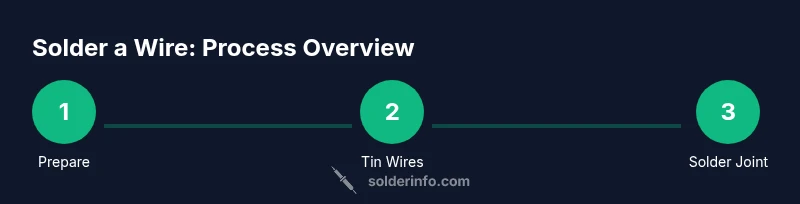
Prepare workspace and safety gear
Set up a well-ventilated area, position your materials, and don safety glasses. Ensure no flammable items are nearby and your iron stand is stable.
Tip: Always have a plan for safety and ventilation before you begin. - 2
Strip insulation cleanly
Using a precision stripper, remove insulation evenly without nicking copper. For stranded wire, keep the strands intact and twist them tightly.
Tip: A clean cut and untwisted end promote a stronger joint. - 3
Tin the wire ends
Melt a small amount of solder onto each exposed conductor to form a shiny coating. This preps the wire for quick, even flow when joined.
Tip: Don’t over-tin; a light coat is enough. - 4
Position and heat the joint
Overlap and align wires, then apply heat with the iron to both conductors. Feed solder into the joint fillet, not directly onto the iron.
Tip: Keep the iron moving and avoid lingering at one spot. - 5
Cool and inspect
Allow the joint to cool naturally, then examine for a smooth, shiny fillet with full coverage. If gaps exist, rework with fresh flux and solder.
Tip: A good joint is a balance of heat, coverage, and cleanliness. - 6
Clean up and insulate
Wipe away flux residue if used and slide on heat shrink tubing or apply electrical tape to insulate the joint.
Tip: Insulation prevents shorts and adds mechanical protection.
Quick Answers
How do I solder a wire without damaging insulation?
Use a temperature-controlled iron and avoid prolonged contact. Pre-tin the conductor and keep heat brief to prevent insulation from melting or burning.
Use a temperature-controlled iron and quick, directed heat to protect the insulation.
Should I tin wires before joining?
Tinning the wire ends provides a ready flow path for solder, improving wetting and joint strength when the wires are joined.
Tin the ends to improve solder flow and joint strength.
What should I do if the solder joint is dull?
A dull joint usually means inadequate heat, poor cleaning, or flux residue. Reheat with fresh flux and reflow the joint until it shines.
If it's dull, reheat with fresh flux until it shines.
Can I use lead-free solder for electronics?
Yes, lead-free solder is standard for electronics; ensure proper flux and ventilation, and verify compliance with safety standards.
Lead-free solder is standard for electronics; use proper ventilation.
What safety gear do I need?
Wear safety glasses and work in a ventilated area. Use an iron stand and keep flammable materials away.
Wear safety glasses and work in a ventilated area with an iron stand.
Is it okay to solder stranded and solid wire together?
Yes, but the technique differs: strand wires are easier to tin and flex, while solid wires need clean cuts and ensure proper seating for a good joint.
Stranded is easier to tin; solid needs precise seating.
Watch Video
Top Takeaways
- Tin wires before joining for reliable flow.
- Control heat to protect insulation and components.
- Use appropriate flux and clean joints for longevity.
- Inspect joints for a smooth, shiny fillet.
- Insulate the finished joint to prevent shorts.