How to Solder 4 Gauge Wire: A Practical Guide
Learn how to safely solder 4 gauge wire with practical steps, proper tools, and safety tips for reliable high-current connections in electronics, automotive, and DIY projects.


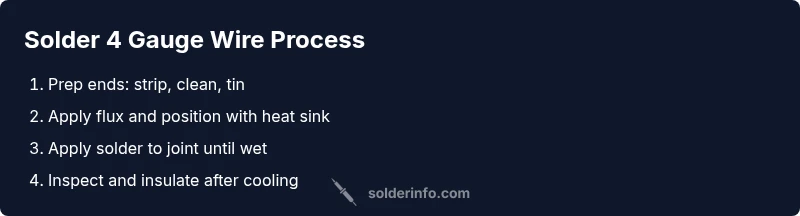
You will learn how to solder 4 gauge wire safely and effectively, including heat management, proper joint prep, and terminal selection. This quick guide covers essential tools, flux types, and step-by-step methods to achieve a strong, conductive connection in high-current applications, with heat-sink use and inspection checks.
Safety first: High-current soldering demands precautions
Soldering heavy gauge wire is different from small signal work. When you work with solder 4 gauge wire, you are handling higher energy and often thicker insulation. Always work in a well-ventilated area, wear safety glasses, and keep flammable materials away from the work surface. Before you even touch solder or wire, disconnect power and ensure any devices connected to the wire are isolated. High-current joints can heat up quickly and transfer heat to nearby plastics or housings, so use heat shields or clamps to protect these components. If you smell melting plastic or burning flux, pause and reassess heat levels. In automotive or power-terminal tasks, double-check that batteries and power sources are safely isolated. According to SolderInfo, a methodical, safety-first approach reduces risk and improves joint quality. This emphasis on preparation ensures you can solder 4 gauge wire with confidence while keeping yourself and equipment safe.
Why heat management matters when working with 4 gauge wire
High-current paths demand careful heat management. If you overheat copper or the insulation near the joint, the plastic may soften, warp, or release fumes. For solder 4 gauge wire, the joint must wet thoroughly and fill cleanly; otherwise, a cold joint or inadequate wetting will raise resistance and reduce current capability. A hot joint can cause brittle joints that crack under vibration. Pre-heating the connector or terminal and using a heat sink to draw excess heat away from insulation significantly improves reliability. The goal is to reach the solder’s melting point long enough to wet the copper without overheating the insulation. SolderInfo notes that consistent heat control and proper joint preparation contribute far more to durability than rushing the process. Practically, work with steady heat, maintain a clean joint, and observe the joint as it forms a smooth, shiny fillet across both surfaces.
Tools and materials you’ll need for heavy-gauge soldering
Soldering 4 gauge wire requires a robust toolkit. A high-wattage iron or power supply (60–140 watts) or a capable torch can deliver the heat needed for large copper sections. Use a rosin-core lead-free solder or a comparable high-temperature alloy, along with flux to improve wetting. Have a reliable heat sink clamp to control heat flow away from delicate insulation. A sturdy wire stripper capable of handling 4 AWG, a quality wire cutter, and plenty of isopropyl alcohol for cleaning are essential. Keep heat-shrink tubing sized for thick cables and a digital multimeter for post-solder testing. Finally, wear eye protection and gloves to stay safe while handling hot metals. With these tools, you’ll be prepared to tackle the task of solder 4 gauge wire reliably.
Prep the wire ends and joint surfaces
Proper prep is critical for a strong, low-resistance connection. Start with clean, square cuts and strip the insulation evenly over a controlled length of copper (roughly 1/4 to 3/8 inch, depending on the terminal). If the wire is stranded, twist the strands neatly and then tin them lightly to resist fraying. Wipe the copper with isopropyl alcohol to remove oils and oxidation, then lightly abrade the surface to improve wettability. Apply flux to the bare copper, and then tin the ends with a thin layer of solder for a uniform starting surface. Check mating surfaces on any lug or terminal for cleanliness and flatness. Meticulous prep reduces the chance of a cold joint and ensures a solid electrical path when you solder 4 gauge wire.
Flux and solder choices for robust joints
Choosing the right flux and solder is critical for large-diameter connections. Use flux that remains active long enough to wet the large copper sections. Rosin-core or power-grade flux helps maintain wetting and reduces oxidation during heating. For solder, select a high-temperature alloy with good flow characteristics; lead-free options designed for power applications are well-suited for heavy gauge work. Apply flux to both ends and the mating surface, then tin lightly to facilitate wetting. Remember, flux aids wetting but does not substitute for proper heat and prep. A well-chosen solder and fresh flux create reliable joints when you solder 4 gauge wire.
Joint formation and mechanical reliability
When assembling the joint, ensure proper alignment and stable positioning to prevent motion during soldering. Use a heat sink to protect insulation; heat should be directed at the joint, not the insulation itself. Feed solder slowly into the joint as you maintain heat to promote a clean, complete fill. Look for a smooth, shiny fillet that wets both surfaces with no voids. After cooling, perform a gentle tug test to confirm mechanical integrity. For additional durability, consider reinforcing with heat-shrink or a mechanical clamp that provides strain relief. A well-formed joint with adequate insulation reduces resistance and improves long-term reliability.
Testing, inspection, and final insulation
After the joint cools, test continuity with a multimeter to verify a solid electrical path. Visually inspect for a clean, shiny fillet and ensure there are no cold joints or exposed copper. Confirm insulation coverage and verify there is no risk of shorting against metal surfaces. If heat shrink was used, apply heat evenly to seal the joint; otherwise, wrap with electrical tape and then heat shrink to bundle and protect. Document the process and monitor the joint during initial operation for signs of heat buildup or movement. Regular checks help catch aging joints before they fail, ensuring the solder 4 gauge wire connection remains dependable.
Common mistakes and troubleshooting tips
Common pitfalls include overheating insulation, insufficient flux, and incomplete wetting of the copper. A dull or grainy joint often indicates a cold joint or insufficient heat; rework with fresh flux and heat, then re-tin. Never rely on low-temperature solders for heavy gauge work, as they can fail under vibration or high current. If you see wire strands fraying, re-strip and re-tin to restore a clean surface. Always use heat sinks and strain relief to protect insulation during operation. If the joint seems bulky or uneven, rework until a uniform fillet forms. These practices help prevent premature failures when you solder 4 gauge wire in real-world applications.
Tools & Materials
- High-wattage soldering iron or power supply(60–140 watts recommended for 4 AWG copper; consider a tool with temperature control)
- Heat sink clamps(Multiple clamps recommended for larger joints)
- Rosin-core lead-free solder or high-temperature alloy(Choose a solder rated for power applications)
- Flux (rosin or water-based)(Needed to improve wetting on heavy gauge copper)
- Flux brush(For precise application to joints)
- 4 AWG wire stripper (or heavy-duty utility knife)(Essential to expose clean copper without nicking strands)
- Wire cutter suitable for thick conductors(Make clean, square cuts)
- Isopropyl alcohol (rubbing), lint-free wipes(Clean surfaces before tinning)
- Heat shrink tubing sized for thick cables(Insulate and provide strain relief)
- Electrical insulating tape(Used for supplementary protection if needed)
- Digital multimeter(Test continuity after soldering)
- Safety gear (goggles, gloves)(Protect from hot metal and flux fumes)
Steps
Estimated time: 20-40 minutes
- 1
Prepare the workspace
Clear the area, remove power, and arrange tools within easy reach. Set up a heat-resistant mat or surface and ensure adequate ventilation. The goal is to minimize distractions and reduce the chance of accidental burns during heavy-gauge soldering.
Tip: Wear safety glasses and keep a damp cloth handy to clean the tip between steps. - 2
Measure and strip the wire ends
Cut to length if needed, then strip the insulation from the conductor ends to expose roughly 1/4–3/8 inch of copper. If the wire is stranded, twist and straighten the strands before tinning to prevent fraying.
Tip: Use a proper 4 AWG stripper to avoid nicking copper strands; a nick reduces current carrying capacity. - 3
Clean and tin the conductors
Wipe the exposed copper with isopropyl for cleanliness, apply flux, then tin the ends with a thin layer of solder. For stranded wire, ensure the tin covers all strands evenly to prevent loose filaments from protruding.
Tip: Tin only a light coating to avoid excessive solder that can slow down wetting of the joint. - 4
Position and apply heat
Place the joint and a heat sink to draw heat away from the wire insulation. Apply heat to the joint area rather than directly to the insulation, and keep the iron moving to avoid scorching the plastic.
Tip: Maintain a steady, medium tempo with the heat source; avoid lingering on one spot. - 5
Feed solder and form the joint
Touch the solder to the joint area and allow it to flow into the copper surface. Stop feeding once a smooth, shiny fillet forms that fully wets both surfaces. Remove heat and let the joint cool undisturbed.
Tip: Do not move the components during cooling to prevent a cold joint. - 6
Inspect and insulate
Check for a complete fill and absence of voids. Apply heat shrink over the joint and terminate with proper strain relief to prevent movement. Test continuity with a multimeter and verify there’s no inadvertent short.
Tip: Perform a final tug gently to ensure mechanical integrity before putting the assembly into service.
Quick Answers
Can I solder 4 gauge copper wire with standard electronics solder?
Yes, but you need proper heat control and insulation. Heavy gauge joints require sufficient temperature and time to wet the copper; otherwise you risk a cold joint. Use a high-wattage iron, flux, and heat sinks to manage heat effectively.
Yes, you can, but you’ll need proper heat control and insulation to avoid a weak joint.
What solder alloy is best for thick gauge wires?
Choose a high-temperature lead-free solder or an alloy designed for power applications. Avoid low-melting solders that may fail under heat or vibration. Flux quality also matters for large joints to maintain wetting.
Use a high-temperature lead-free solder with good flux for heavy gauge joints.
Do I need to tin both ends before soldering?
Yes. Tinning both ends creates a ready-wet surface that wets quickly when heated, reduces required heat, and helps form a solid fillet.
Yes, tin both ends to improve wetting and joint quality.
Is it safe to solder with the power on?
No. Always disconnect power and ensure there is no live circuit. Work only on de-energized systems to prevent shocks and accidental shorts.
No, you should always disconnect power before soldering.
How should I insulate the final joint?
Use heat shrink tubing sized for thick cables and, if needed, wrap with electrical tape for added protection. Ensure a tight seal and strain relief to prevent movement.
Use heat shrink or thick tape with strain relief for solid insulation.
Watch Video
Top Takeaways
- Plan heat management before starting.
- Tin both ends and apply flux for reliable wetting.
- Use heat sinks and appropriate solder for large gauge work.
- Insulate and test joints thoroughly after soldering.