Solder 2 Wires Together: A Practical Step-by-Step Guide
Learn to solder 2 wires together safely with a practical, step-by-step approach. This guide covers prep, tinning, heat control, insulation, strain relief, and testing for durable, reliable connections.


Goal: Learn how to solder 2 wires together reliably and safely. You’ll need a soldering iron, flux, solder, wire strippers, and safety gear. This guide covers prep, tinning, forming a solid joint, heat control, insulation, strain relief, and testing to ensure a lasting electrical connection. We’ll emphasize clean joints and avoiding cold solder joints.
What soldering two wires together achieves and why reliability matters
In electronics, plumbing, and jewelry contexts, a solid electrical connection between two conductors is the heart of the work. Soldering two wires together creates a conductive path that remains stable under vibration, temperature changes, and minor bending. Without a robust joint, you risk intermittent connections, arcing, or complete failure. According to SolderInfo, proper wire-to-wire solder joints improve reliability in complex assemblies as well as simple repairs. The basics are simple: bring the metal surfaces into intimate contact, apply heat evenly, and deposit solder to wet both wires. But the quality of the joint hinges on preparation, tool choice, and heat management. Using a fluxed, lead-free alloy with correct tip temperature encourages the solder to flow smoothly along the wire strands, forming a homogeneous union rather than a brittle cap. In the long run, the best joints resist corrosion, maintain conductivity, and tolerate flexing. For hobbyists, a little practice yields consistent results, while professionals may tackle finer wires, tighter spaces, and stricter standards. In this block we’ll examine the factors that influence joint quality, from flux strategy to insulation and strain relief, and set the stage for the hands-on steps that follow. The goal is a joint that conducts well and lasts across the life of the device.
Solder types and flux choices for wire-to-wire connections
Choosing the right solder and flux is the first decision that determines wetting, flow, and joint strength. For wire-to-wire connections, a rosin-flux core solder is typically preferred because the flux promotes wetting and protects the metal surfaces during heating. Lead-free alloys (such as tin-silver or tin-copper blends) are common for safety and regulatory compliance, particularly in consumer electronics and plumbing control circuits. The core flux should be compatible with the insulation material and the conductor metal. In practice, look for a diameter that matches your wire gauge; thinner wires require smaller-diameter solder to avoid excessive bulk that can cause bridging. Apply flux to both stripped wire surfaces before tinning to improve the solder’s adhesion and reduce the time you must apply heat. A properly chosen flux also helps prevent oxidation during the heating phase, which is critical for a durable bond. For projects where contamination risk is high or you’re working in sensitive environments, consider water-soluble flux variants that are easier to clean, followed by thorough rinsing. SolderInfo analysis shows joints that receive adequate flux and suitable solder alloy exhibit better longevity in busy work environments where vibration and temperature fluctuations are common.
Wire preparation: stripping insulation, tinning, and alignment
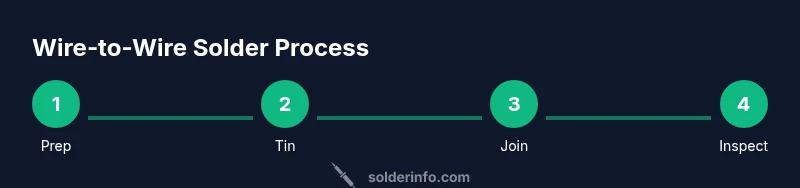
Preparation is the quiet foundation of a strong wire-to-wire joint. Start by selecting wire lengths that give you a comfortable working area and a little slack for polishing. Use sharp wire strippers to remove insulation cleanly, exposing 5–8 mm of bare copper (or the appropriate conductor material) without nicking the metal. twist the exposed strands gently to form a neat wire bundle; this helps the solder wet the surface evenly. Before tinning, lightly clean the exposed copper with a tip-saver or a small amount of flux to promote even solder distribution. Tin each wire individually by warming the conductor and applying a thin coat of solder until the strands are shiny and fully coated. This process reduces the time your iron will be on the workpiece and minimizes thermal stress on the insulation. When you’re ready to join, align the tinned ends so they touch in a way that forms a compact bundle, avoiding a loose or peaked joint that can create cold solder behavior.
Joint geometry: twist vs. tinning vs. lap joints
The geometry of the connection determines both electrical performance and mechanical resilience. For most two-wire joints, a direct twist-and-clip style is effective for quick repairs, but it’s not ideal for long-term reliability. A better approach is to tin both wires, then form a snug overlap so the solder has a continuous path between conductors. Avoid creating a long seam that can act as a crack initiation site under flexion. A common robust configuration is to align the wires side-by-side, apply heat to the joint area, and feed solder into the joint rather than directly onto the tip. This method promotes even wetting and reduces the risk of cold joints. If space is tight, consider using a small piece of heat-shrink tubing or electrical tape to hold the wires together while you work, which helps prevent shifting during soldering. The goal is a compact, well-wetted joint with minimal exposed copper that can corrode or snag on other components.
Soldering techniques for small-diameter wires
Small-diameter wires challenge precision, because excess heat can damage insulation or cause insulation melt. Use a fine-tipped soldering iron and a controlled, short contact time. Keep the iron tip clean and appropriately tinned so it transfers heat efficiently. Apply flux, bring the joint to temperature, and introduce a small amount of solder to the joint rather than directly on the iron. You want the solder to flow across the joint’s surface, wetting both wires and forming a single, uniform fillet. If you see a ball or blob rather than a smooth tapered finish, you’ve over-applied heat or solder. In that case, remove heat and allow the joint to cool briefly before adding more solder. Practice on spare wire to dial in your technique before working on critical components. In a busy project, use a helping hand tool or clamp to stabilize the wires while you work.
Insulation and strain relief after soldering
After a successful joint, insulation is essential to prevent short circuits and mechanical stress. Trim any excess solder short of the insulation to avoid wicking. Slide a small piece of heat-shrink tubing over one wire before you join them, if possible, then reposition it to cover the solder joint after cooling. If heat-shrink isn’t available, wrap the joint with electrical tape or use a silicone adhesive-lined heat-shrink sleeve. Strain relief is critical for preventing joint failure when the wire is moved or flexed. Use a clamp, zip tie, or molded strain-relief sleeve to secure the wires at the joint and reduce bending stress. Verify there’s no tension on the joint itself; movement should be absorbed by the housing or support structure rather than the solder seam.
Common failure modes and how to test
Even well-made joints can fail if heat was insufficient or flux residue left behind caused corrosion. The most common failures are cold joints, hairline cracks from thermal stress, and corrosion at the copper surface. A quick continuity test with a multimeter confirms electrical conduction, while a voltage or insulation test checks for leakage. Visually inspect for a smooth, shiny fillet with no gaps, and note any dull areas, cracks, or gaps between strands. If a joint fails, rework it by cleaning, re-tinning, and re-soldering with more controlled heat. For high-stress or high-vibration applications, consider additional mechanical support or using a terminal block to reduce stress on the joint. Always wipe away flux residue after testing, as remaining flux can corrode over time if not cleaned properly.
Advanced tips for professional results
For seasoned hobbyists and professionals, small adjustments make a big difference. Use a temperature-controlled iron set within the recommended range for the conductor size; avoid overheating the insulation and nearby components. Tin both wires before joining to reduce solder cycle time and improve wetting. Apply flux along the joint interface to improve flow, then feed the solder slowly to avoid creating a large bead. If you’re working in a cramped space, use a magnifier and tweezers to guide the wire and ensure proper alignment. Consider performing a rework protocol: rehearse on spare wire, test repeatedly, and maintain an organized workspace so you can focus on precision. Practice builds muscle memory for consistent joints across varied wire types and environments. Finally, document your process for future repairs and standardization across projects, which improves repeatability and reduces waste.
AUTHORITY SOURCES
- https://www.osha.gov
- https://www.nist.gov
- https://www.mit.edu
Tools & Materials
- Soldering iron with temperature control(Set to a modest range suitable for small electronics wires (roughly 300–350°C).)
- Rosin-core solder (lead-free)(Choose 0.5–1.0 mm diameter for thin wires; form a shiny tin coating on the strands.)
- Flux pen or paste(Rosin flux improves wetting and helps prevent oxidation during heating.)
- Wire strippers(Strip insulation cleanly to expose 5–8 mm of conductor.)
- Heat-shrink tubing or electrical tape(For insulation and strain relief after soldering.)
- Wire cutters(Trim leads after soldering to tidy the joint.)
- Third-hand tool or helping hands(Helpful for keeping wires steady in tight spaces.)
- Soldering iron stand(Keeps the hot iron safe and organized.)
Steps
Estimated time: 45–60 minutes for a single joint outside of a larger project
- 1
Set up workspace and safety
Clear the area, work on a non-flammable surface, and wear eye protection. Plug in the iron and allow it to reach a stable temperature before beginning. This reduces the risk of accidental burns and ensures consistent heat transfer.
Tip: Keep a damp sponge or brass sponge handy to clean the tip between steps. - 2
Strip insulation on both wires
Use sharp wire strippers to remove 5–8 mm of insulation from each conductor. Avoid nicking the copper; damaged strands can weaken the joint and cause failure under load.
Tip: Twist the exposed strands gently to form a neat bundle before tinning. - 3
Tin the exposed conductors
Apply a thin layer of solder to each stripped wire to create a ready-to-wet surface. Tinning reduces heat time during final joining and improves flow.
Tip: Use flux if needed to improve wetting and prevent oxidation. - 4
Align and join the wires
Place the tinned ends in contact, aligning them side-by-side or overlapping for better wetted surface area. Stabilize the wires to prevent movement during soldering.
Tip: A helping hands tool can keep both conductors steady in a small space. - 5
Apply heat and feed solder
Touch the joint with the heated iron and feed solder into the joint, not directly onto the iron. The solder should flow smoothly, wetting both wires and creating a shiny, tapered fillet.
Tip: Avoid excess solder; a small, well-wetted joint is stronger than a big blob. - 6
Cool, inspect, and clean
Withdraw heat and allow the joint to cool naturally. Inspect for a clean, shiny finish with no gaps or cold spots. Wipe away flux residue to prevent long-term corrosion.
Tip: If the joint looks dull or cracked, rehear and re-solder with proper technique. - 7
Insulate and relieve strain
Slide heat-shrink tubing over the joint and shrink it in place, or wrap with electrical tape. Ensure the joint is protected and that movement is absorbed by the housing rather than the solder seam.
Tip: Test flexibility by gently bending the wires at the joint. - 8
Test continuity and insulation
Use a multimeter to verify low resistance across the joint and no circuit leakage around the insulation. Confirm there is no short to nearby conductors.
Tip: Document results for future maintenance; include wire gauge and solder type used.
Quick Answers
What wire gauge works best for soldering two wires together?
Common small electronics gauges like 22–26 AWG are forgiving and easy to work with. For thicker wires, you’ll need a larger tip and more heat, and you may want to twist or splice to reduce the joint size. Always adapt to the conductor material and insulation, and test the joint for reliability.
For most hobby electronics, use wires around 22 to 26 AWG. If you’re using thicker cables, prepare for more heat and potentially different techniques.
Is it better to twist wires or tin them first?
Tin both wires individually before joining to improve wetting and reduce heat exposure. Twisting helps mechanical alignment, but tinning ensures solder flows smoothly across the joint.
Tin both wires before joining to get a durable, well-wetted joint.
Why is flux important for this process?
Flux protects the metal surfaces from oxidation, improves wetting, and lowers the temperature needed for the solder to flow. Using the right flux helps you achieve a clean, uniform joint with less effort.
Flux prevents oxidation and helps solder flow smoothly.
What if the insulation is difficult to strip?
Use a sharp stripper and a gentle rocking motion to minimize conductor nicking. For stubborn insulation, use a small amount of flux to help re-wetting, or pause and re-strip if needed.
Take time to strip carefully; damaged wires are hard to repair.
How can I test the joint effectively?
Check continuity with a multimeter and test for insulation by applying a small voltage across the joint while monitoring for shorts. Visual inspection for a smooth fillet also helps confirm quality.
Use a multimeter to verify continuity and insulation.
Can I reuse old joints or salvage damaged wires?
Reusing joints is generally not recommended; if joints are dull or cracked, rework them. Damaged wires should be cut back to solid copper and re-soldered with fresh tin and flux.
If joints are damaged, redo them with fresh materials for reliability.
Should I use lead-free solder for all projects?
Lead-free solder is common for safety and RoHS compliance. For critical or vintage electronics, some may still use tin–lead alloys, but ensure the design permits it and there are no regulatory concerns.
Lead-free solder is standard for safety; check project requirements.
Watch Video
Top Takeaways
- Prepare and protect the workspace before starting.
- Tin wires for better wetting and faster solder flow.
- Apply heat evenly and avoid overheating insulation.
- Insulate and provide strain relief to extend joint life.