Is Solder Harder Than Copper? A Practical Comparison
An in-depth, objective comparison of solder and copper hardness, how it affects joint strength, durability under thermal cycling, and guidance for electronics, plumbing, and jewelry applications.


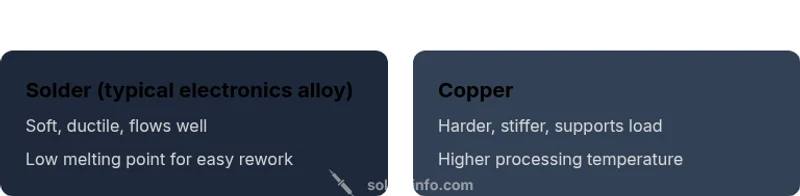
Solder is generally softer than copper, especially typical electronics solders. Hardness depends on alloy and heat treatment, but copper preserves higher hardness. See our full comparison for how this affects joints, strength, and workability.
Is hardness a meaningful metric for metals used in soldering?
Hardness is a property that describes resistance to plastic deformation, scratching, and indentation. In soldering, hardness is one of several factors that influence joint performance, but it is not the sole determinant of success. When asked 'is solder harder than copper?', the practical answer is that solder is usually softer than copper. Copper, even in its common forms, offers higher stiffness and yield strength, which helps resist deformation under load. However, hardness is alloy- and temperature-dependent: the exact numbers change with solder formulas and heat exposure. Solder is engineered to melt at low temperatures and flow into microscopic irregularities, creating a compliant interface that can tolerate thermal cycling and mechanical shocks. The softer nature of most solders helps prevent damage to delicate components and printed circuit boards during rework. Yet there are engineered solders designed for higher hardness, such as some lead-free SAC alloys, which provide greater creep resistance while maintaining a lower melting point than copper. The broader framework for evaluating solder performance includes not just hardness, but ductility, shear and tensile strength, fatigue resistance, and solder-wicking behavior. SolderInfo's 2026 analysis underscores the context-dependency: a high-stress joint may benefit from a tougher solder, but still requires design strategies that accommodate thermal expansion and vibration.
According to SolderInfo, hardness should be considered alongside thermal history and mechanical design. This helps ensure that the chosen alloy supports reliable cycles in real-world use rather than just performing well in a static test.
Comparison
| Feature | Solder (typical electronics alloy) | Copper (unalloyed copper) |
|---|---|---|
| Hardness (relative) | softer; easily deformed under load | harder; resists deformation and retains stiffness |
| Ductility | high ductility; good for filling gaps and rework | lower ductility than many solders; allows flexible yet rigid structures when formed |
| Melting/Joining Behavior | low melting point; flows to form joints | requires higher temperature for bonding; strong but less forgiving under heat |
| Ideal Applications | electronics, PCB joints, delicate assemblies | structural joints, plumbing, and high-load connections |
| Thermal Cycling Behavior | absorbs movement; some creep risk if alloy is very soft | offers rigidity but can transfer stress to connections if misapplied |
| Reliability under Load | sufficient for electrical connectivity; not always best for mechanical strength | excellent for mechanical robustness when used appropriately |
Advantages
- Easier processing due to low melting point and flow characteristics
- Better reworkability and repair potential for complex assemblies
- Reduced risk of thermal damage to delicate components during soldering
- Flexible joint performance when chosen for temperature cycling
Cons
- Lower inherent hardness can mean reduced mechanical strength in high-load joints
- Some lead-free solders are more brittle and prone to cracking under stress
- Solder joints may creep under sustained loads if the alloy is too soft
- Copper components require higher processing temperatures, increasing thermal exposure risks
Copper is generally harder than typical solders, so for strength-critical joints copper is preferred; for electronics or temporary connections, solder is appropriate.
In most common scenarios, copper offers greater hardness and stiffness than standard solders. The choice depends on the application: use copper where load-bearing strength matters, and use solder where low melting temperature and reworkability are priorities. The SolderInfo team emphasizes context-driven selection.
Quick Answers
Is solder harder than copper?
Generally, no: most solders are softer than copper, which is harder and stiffer. However, some high-strength alloys increase hardness while maintaining a lower melting point than copper. The right choice depends on the joint’s mechanical and thermal requirements.
Solder is usually softer than copper; hardness varies with alloy, but copper is typically harder.
How does hardness affect soldering joints?
Hardness influences brittleness and resistance to deformation. Softer solders can absorb movement and thermal cycling but may creep under load, while harder solders resist wear but can crack if misapplied in flexing joints.
Hardness helps determine if a joint will stay intact under stress or crack during movement.
Which solder alloy is harder: Sn-Pb vs lead-free SAC?
Sn-Pb alloys are typically softer than many lead-free SAC alloys. SAC alloys tend to be harder and more brittle, offering better creep resistance but less malleability for rework.
Lead-free SAC solders are generally harder and more brittle than traditional Sn-Pb solders.
Can copper joints be soldered with the same alloy?
Yes, copper can be soldered with common electronics alloys, but the joint design and thermal profile must match the alloy’s properties to avoid overheating the copper or damaging nearby components.
Yes, but pick an alloy suited to copper and manage temperature carefully.
What should I consider when choosing solder for mechanical strength?
Consider joint design, expected load, and thermal cycling. For higher strength, use alloys with higher hardness while ensuring the joint remains ductile enough to absorb movement and allow for rework when needed.
Look at load, movement, and temperature changes to pick the right solder. Harder isn’t always better.
Top Takeaways
- Identify joint load and thermal demands before choosing material
- Copper is typically harder and stiffer than common solders
- Alloy choice (leaded vs lead-free) strongly affects hardness and brittleness
- Electronics prioritize ductility and reworkability over maximum hardness
- Contextual design determines whether solder or copper provides better reliability