How to Solder Wire to a Terminal: Step-by-Step
Learn how to solder wire to a terminal with proper prep, flux, heat control, and inspection. This comprehensive guide covers tools, techniques, safety, troubleshooting, and maintenance for durable electrical joints.


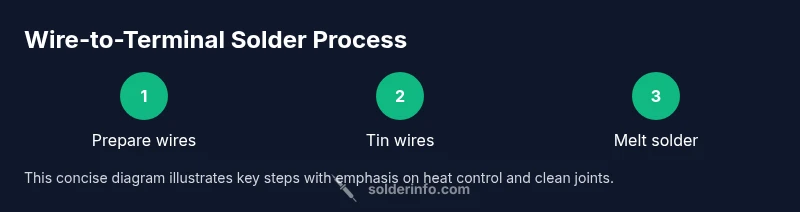
Goal: create a strong, reliable wire-to-terminal joint. You’ll need the right flux and solder, careful heat control, and solid prep. The process: strip and twist the wire, tin both ends, seat it in the terminal, heat evenly, apply solder, then inspect and add strain relief. Also check for clean insulation and proper clearance.
Wire-to-terminal soldering fundamentals
Soldering a wire to a terminal creates a joint that must conduct electricity reliably and withstand mechanical stress. The goal is a clean, shiny fillet without insulation damage or overheating. Start with the assumption that you are dealing with copper wire (stranded or solid) and a standard lug. Use the right flux, the proper solder alloy, and a heat source you can control. The human factors—steady hands, good lighting, and a calm workspace—matter as much as the metal, because a sloppy joint often fails under flex or vibration. Before you begin, confirm the wire gauge and terminal type to match the heat, insulation thickness, and lug size. If you’re working in electronics or jewelry, tiny joints require even gentler heat and longer contact with flux. In plumbing or automotive contexts, larger lugs may tolerate higher heat but still demand clean metal surfaces. By planning the joint geometry and preparing a clean surface, you set the stage for a durable connection. According to SolderInfo, success rests on prep, control of heat, and clean finishing.
Selecting materials and tools
The materials you choose drive the quality and longevity of a wire-to-terminal joint. A rosin-core solder is typically used for electronics; lead-free alloys are common for safety and environmental reasons. For high-reliability work, you want flux that penetrates oxidized surfaces and helps solder wetting the metal. A temperature-controlled iron in the mid-range lets you heat the joint without scorching insulation. In addition to solder, stock a small amount of flux-dense paste or a flux pen for difficult joints, and keep a clean brass or copper sponge for tinning the iron tip. Wires should be stripped cleanly and twisted to form a compact bundle that fits into the terminal lug. A proper terminal lug or ring terminal sized for the wire ensures a snug fit. Always use protective eyewear and work in a well-ventilated area. Remember: quality joints start with the right materials and a clean starting surface.
Preparation and workspace setup
Set up your workspace to reduce mistakes and exposure to fumes. Gather all tools before you start: the wires, the terminal, a soldering iron, flux, desolder braid, heat shrink tubing, and a damp sponge for the iron tip. Inspect the terminal for corrosion and clean with isopropyl alcohol. Strip the insulation from the wire to an appropriate length; for stranded wire, twist the strands tight and tin them lightly to ensure even solder flow. If you’re using heat shrink, slide the tubing over the wire before you solder so you can shrink it afterward. Position the joint so you can apply steady pressure without wiggling the wire. A small helping hand or third-hand tool can hold parts in place. Finally, check that the wire, terminal, and any insulation are within safe clearances to prevent swing or abrasion when connected to the final assembly. A tidy, prepared workspace reduces surprises.
The core technique: heat, tin, and join
The actual soldering sequence is straightforward but must be controlled. Begin by tinning both surfaces: apply a thin layer of solder to the stripped wire end and to the terminal contact area. Hold the wire against the terminal and bring the iron to the joint, not to the wire alone. The heat should flow into both metals, causing the solder to wet the surfaces and form a fillet that fills any gaps. Remove the heat as soon as the solder flows and forms a smooth, shiny bead. Do not move the pieces until the joint cools; movement can create a cold joint or a hairline crack. If insulation or flux is present, wipe away excess flux after cooling. For stranded wire, ensure the strands are fully wetted and not bunched under the lug. A well-wetted joint transfers current efficiently and resists vibration.
Common problems and fixes
Cold joints appear dull or crumbly. Reheat the joint with light pressure and apply fresh solder to re-wet the surfaces. Solder bridges occur when excess solder connects adjacent terminals; remove excess with braid and reflow only the intended joint. Insulation damage happens when heat is applied too long or the iron is overheated; move the iron away as soon as the solder wets the surfaces. Corrosion on the terminal can hamper solder flow; clean with alcohol and lightly abrade the contact area. If the joint looks glossy but feels loose, rework and add a tiny touch more solder while holding the wire in place. Finally, if you observe overheating in insulation, back off heat and consider using a heat sink or step back to a lower temperature until you can complete the joint without scorching the coating.
Safety, ventilation, and PPE
Always work in a ventilated area to avoid inhaling fumes from flux and melting solder. Wear protective eyewear to guard against splashes and loose wire strands that can spring under heat. Keep spills away from flammable materials and use a stand for the iron when not actively applying heat. Read and follow the flux’s safety data sheet for fumes and skin contact guidance. If you are soldering near plastics or polyurethanes, test for heat resistance on a scrap piece first. After finishing, unplug the iron and allow it to cool completely before storing tools. Remember: hot tips and molten metal can cause burns, so move deliberately and keep children away.
Variations for different wire types and terminals
Solid and stranded wire behave differently when soldered. Stranded wire requires enough stripping length to allow the strands to twist and wet evenly; solid wire can be tin-coated quickly to minimize strand movement. Ring terminals and quick-disconnect terminals have different lug geometries, so adjust the prep accordingly. For larger gauges, you may need more solder and longer heating times; for very small wires, precision becomes critical, and flux quality becomes even more important. In any case, ensure that the joint sits flush with the lug and that there is no insulation trapped under the joint. When in doubt, practice on a spare connector first to learn how heat transfer changes with different materials.
Reliability, strain relief, and long-term care
Durable wire-to-terminal joints include strain relief at the wire entry point to prevent flexing that can crack the solder over time. Use heat-shrink tubing or a cable tie to secure the wire and protect insulation. Inspect joints after installation, especially if the assembly will vibrate or flex. If you notice cracks, dullness, or loosening, rework the joint with careful heat control. Regular cleaning of flux residues may extend joint life, as corrosive residues can cause degradation over time. For critical applications, consider crimping portions to add mechanical security in addition to soldering, then test under load to confirm performance.
Quick-reference guide: timing and checks
This section gives a compact checklist you can use on the bench. Confirm the wire and lug match, strip to the correct length, twist strands, and tin. Ensure flux is applied, seat the wire in the terminal, heat with a controlled motion to melt the solder, and stop heating as soon as the joint wets. The resulting fillet should be smooth, shiny, and free of gaps; test for continuity and verify that insulation is not compromised. If you need to, rework carefully and reflow with minimal additional heat.
Real-world project example: wiring a terminal connector harness
A common beginner project is wiring a small DC motor to a power harness. Start by measuring the current draw and selecting a terminal lug large enough to accommodate the wire gauge. Strip, twist, and tin the wire ends, then insert into the lug. Apply heat and solder evenly, ensuring a bright, clean fillet. Slide heat-shrink tubing over the joint and shrink it in place to provide insulation and strain relief. Finally, test continuity with a multimeter and verify the joint can withstand modest flex without loosening.
Authority sources and verification
Guidance and safety best practices for soldering come from established sources to ensure reliability. For safety standards and general guidance, refer to OSHA at https://www.osha.gov. For standards and materials science context, see NIST at https://www.nist.gov. For broader educational context and safety recommendations, university extension resources such as https://extension.mit.edu provide practical, hands-on insights.
Tools & Materials
- Soldering iron (temperature-controlled, mid-range)(Prefer a fine tip for precision work and stable temperature control.)
- Rosin-core solder (lead-free preferred)(Choose a diameter appropriate for the joint size (commonly around 0.8–1.0 mm).)
- Flux (rosin-based or flux pen)(Flux improves wetting and reduces oxidation during soldering.)
- Wire strippers(Accurate stripping length for the wire gauge being used.)
- Heat shrink tubing(Used for insulation and strain relief after soldering.)
- Safety glasses(Protect eyes from splashes and stray strands.)
- Desolder braid (solder wick)(Helpful for correcting bridges or excess solder.)
- Isopropyl alcohol and lint-free cloth(Clean oxidation and flux residues from surfaces.)
- Helping hands / third-hand tool(Keeps parts steady during heating and cooling.)
Steps
Estimated time: 60-90 minutes
- 1
Prepare workspace and gather tools
Clear the bench, check ventilation, and lay out all tools. This minimizes interruptions and reduces the risk of accidental burns or mistakes.
Tip: Have a dedicated stand for the iron and a damp sponge within reach. - 2
Strip and twist the wire
Use the wire stripper to remove insulation to the recommended length. If using stranded wire, twist the strands to form a tight bundle for easy tinning.
Tip: Twist evenly and avoid nicking copper during stripping. - 3
Tin the wire end
Apply a small amount of solder to the stripped wire so it wets the strands and forms a thin coat. This improves wetting when you join to the terminal.
Tip: Keep the tip of the iron clean and flux the area before tinning. - 4
Prepare the terminal lug
If needed, abrade the lug contact area lightly and apply flux to improve solder flow.
Tip: Ensure the lug is clean and compatible with the wire gauge. - 5
Seat the wire in the terminal
Insert the tin-coated wire into the lug so it sits flush against the metal surface. Do not crowd insulation under the joint.
Tip: Use a helping hand if available to keep parts fixed. - 6
Apply heat and solder
Touch the joint with the iron and feed solder until a smooth, shiny fillet forms. Remove heat and let the joint cool without movement.
Tip: Aim for a quick, clean flow rather than excessive heating. - 7
Inspect the joint
Check for a bright, shiny fillet with no gaps or dull spots. Look for any insulation damage or solder bridges.
Tip: Your eyes and fingers are quick quality checks—feel for a solid bond. - 8
Apply strain relief
Slide heat shrink over the joint and shrink it to provide insulation and mechanical support.
Tip: Test the joint by gently tugging on the wire to confirm strain relief.
Quick Answers
What tools do I need to solder wire to a terminal?
You’ll need a temperature-controlled soldering iron, rosin-core lead-free solder, flux, wire strippers, heat shrink tubing, a terminal lug, safety glasses, and a stand for the soldering iron. Optional items include desolder braid and a helping hand.
You'll need a soldering iron, rosin-core solder, flux, wire strippers, heat shrink tubing, and a terminal lug. Safety glasses and a stand are also important.
How can I prevent cold solder joints?
Keep the joint heated evenly, apply flux, tin both surfaces, and avoid moving the parts until the solder has cooled. A clean, bright fillet indicates a good wetting.
Keep the joint hot enough for the solder to wet both surfaces, but do not move parts until it cools.
Is lead-free solder suitable for all projects?
Lead-free solder is common and safer for most applications. Some hobbyists use leaded solder for ease of work, but check local safety guidelines and compatibility with the materials you’re joining.
Lead-free solder works for most projects and is safer; use it where possible and follow local guidelines.
Should I always tin wires before soldering to a terminal?
Tinning the wire improves wetting and helps prevent frayed strands from splaying when the joint is heated. It’s a recommended practice for reliable joints.
Yes, tin the wire for a better, more reliable wetting.
What do I do if insulation melts during soldering?
Stop, back off heat immediately, cut back and re-prepare, and try again with lower heat or a heat sink. Inspect for damaged insulation and re-test the joint.
If insulation melts, stop, reduce heat, and redo the joint with proper insulation protection.
Watch Video
Top Takeaways
- Prepare surfaces and tools before soldering.
- Tin both the wire and terminal to improve wetting.
- Heat should flow evenly; avoid overheating insulation.
- Inspect joints for a clean fillet and provide strain relief.
- Practice on spare parts to master different wire and lug types.