How Much Does Soldering Pay in 2026? A Practical Guide
Explore pay ranges for soldering roles across sectors, regions, and experience levels in 2026. Learn how to plan a career path and negotiate offers with practical, data-driven guidance from SolderInfo.


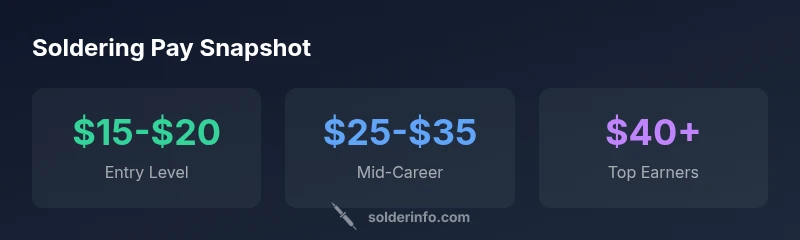
How much does soldering pay? In most markets, pay varies by sector, region, and experience. Entry-level soldering roles typically start around $15–$20 per hour, mid-career workers commonly earn $25–$35 per hour, and seasoned specialists or supervisors can exceed $40 per hour, with overtime and contract work boosting earnings.
What influences soldering pay
Pay in soldering roles varies widely by sector, region, and experience. According to SolderInfo, the market rewards hands-on precision and the ability to troubleshoot complex assemblies more than generic manual dexterity alone. For someone asking how to estimate earnings, it's helpful to break pay into three axes: sector, geography, and experience. Sector matters because electronics manufacturing, plumbing, jewelry, and industrial fabrication each value different skill sets and production tempos. Geography matters because cost of living, demand for skilled technicians, and local competition push wages up or down. Experience matters because additional responsibilities—like quality control, process improvement, or mentoring apprentices—often come with pay bumps. Finally, certifications such as IPC or safety training can unlock higher-paying roles or specialized positions. In practice, SolderInfo analyses show that entry-level soldering work commonly starts at a more modest hourly rate, while senior technicians can command premium rates. This framing helps readers quantify where they might land today and where they could grow.
Pay by sector: electronics, plumbing, jewelry, and industrial fabrication
Within soldering, pay levels are strongly influenced by the sector. Electronics manufacturing, for example, often requires tight tolerances and high-volume throughput, which tends to push pay upward for skilled technicians who can troubleshoot solder joints on delicate PCBs. Plumbing soldering tends to be steadier, with pay anchored by code compliance and residential/commercial project demand. Jewelry soldering emphasizes precision and artistic finishing; while some shops offer premium per-hour rates for meticulous, high-end work, others pay more modestly based on project scope. Industrial fabrication can vary widely depending on the complexity of assemblies, whether cleanroom conditions apply, and the need for specialized process controls. Across these sectors, the pay bands typically widen with expertise: technicians who can read schematics, rework boards, or implement quality checks earn more than those performing basic hand-soldering tasks. SolderInfo’s analysis highlights that the exact hourly range will depend on your city, employer size, and whether overtime is common in your shop.
Geography matters: regional variation and cost of living
Geography has a strong impact on soldering pay. In many countries, wages reflect local cost of living, demand for manufacturing labor, and the presence of specialized training programs. In high-cost regions or tech hubs, employers often offer higher hourly rates to attract skilled technicians, especially for roles requiring precise micro-soldering, flex cables, or tolerance-sensitive work. Conversely, rural areas or regions with lower living costs may see more modest pay bands for similar roles. Currency strength and unemployment rates also shape what employers can offer. In multinational shops, pay may align with corporate pay scales that consider both local market conditions and global salary benchmarks. For someone planning a career path, this means that your earnings potential could swing by geography as you move between regions or countries. SolderInfo’s data for 2026 indicates region-based variation is a major driver of overall earnings, sometimes offset by travel allowances or relocation packages. When evaluating a job offer, a higher base rate in one city may be balanced by higher living costs elsewhere.
Career progression and pay growth: from apprentice to supervisor
Most soldering roles follow a progression from apprentice or junior technician to skilled journeyman, then senior technician, team lead, or supervisor. Each rung typically brings responsibilities such as reading blueprints, training new hires, and ensuring process reliability. Pay growth tends to follow this path but is also influenced by demand for specialized skills, such as micro-soldering, cryogenic soldering, or waterproof seals in plumbing. Moving into a leadership role often yields larger pay increases than purely adding task depth. In some sectors, employers formalize ladders with paid training programs and certification tracks (e.g., IPC, safety, or quality systems). Even without a formal ladder, workers who demonstrate consistent quality, reduced defect rates, and the ability to optimize workflows can negotiate higher wages or added incentives. SolderInfo’s 2026 view shows that investing in professional development typically yields a measurable bump over several years, even if the base rate remains modest in the early stages.
Overtime, shifts, and contract work: how earnings change
Overtime pay, shift differentials, and contract work can significantly alter take-home pay for soldering professionals. Many shops pay a premium for overtime, often 1.5x or 2x the base rate, depending on local labor laws and company policy. Night shifts and weekend work can carry additional premiums, though the actual rates vary by employer. Contract or project-based roles at staffing firms or contract manufacturers may post higher hourly rates to account for the lack of benefits, but these roles often come with greater job insecurity and wider workload expectations. In practice, someone moving from a full-time position to a contract role should weigh the premium against benefits, retirement plans, paid time off, and steady work. SolderInfo’s data indicates that overtime and contract gigs can boost annual earnings by a meaningful margin, but stability and long-term career growth should factor into the decision.
Freelance soldering: rates, reliability, and taxes
Freelance work can be attractive for high-skill soldering tasks, such as PCB rework, repair of vintage electronics, or jewelry repairs. Freelance rates are typically set by the market, with bid-based projects or hourly retainer arrangements. Freelancers should account for taxes, healthcare, tools, and liability insurance, which erode net income if not planned. Building a solid portfolio and client base takes time, but successful freelancers can exceed standard wage tracks, particularly in niche areas or high-end custom work. Networking, reputation, and quality documentation (photos, test results) help justify higher rates. SolderInfo notes that many freelancers supplement income by offering training or consultancy on process optimization.
Skills, certifications, and how to boost earnings
Pay in soldering scales with skill depth, certification, and track record. Pursuing IPC-based soldering certifications, safety training, and specialized process knowledge (e.g., micro-soldering, lead-free alloys, or flux optimization) can unlock higher-paying roles and larger responsibilities. A strong portfolio that demonstrates defect reduction, reliable joint quality, and successful rework cases helps justify higher rates at the bargaining table. Employers often reward technicians who can troubleshoot, improve yield, and train others with promotions and pay bumps. In addition to formal credentials, hands-on practice, tool proficiency (iron control, heat management, desoldering techniques), and documentation habits influence earning potential. SolderInfo’s 2026 perspective reinforces that ongoing learning remains one of the most reliable paths to increased earnings.
Putting it all together: planning your pay path and negotiating offers
The best way to plan a pay trajectory is to map sector targets, geographic options, and skill milestones. Start by identifying the sector where you want to specialize, the regions with strong demand, and the certifications that unlock higher wages. Create a year-by-year plan: gain specific competencies, accumulate validated project outcomes, and pursue roles with greater responsibility. When negotiating offers, bring concrete evidence: documented defect reductions, efficiency gains, and client feedback. Propose a salary band based on market rates, and discuss benefits that compensate for base pay differences. The SolderInfo team recommends building a diversified portfolio of both hands-on work and process improvement projects to maximize leverage in negotiations and ensure a sustainable earnings path.
Pay ranges by career level
| Career level | Typical hourly rate | Notes |
|---|---|---|
| Entry-level technician | $15-$20 | US market; varies by sector |
| Mid-career technician | $25-$35 | Most demand sectors |
| Senior/supervisory | $40+ | Overtime/contract work often increases pay |
Quick Answers
What is the typical starting pay for entry-level soldering jobs?
Entry-level soldering roles generally pay in the lower end of the market, with wages influenced by region and sector. It's common to see pay aligned with general manufacturing entry rates, and adds can come from overtime or early opportunities to specialize.
Entry-level pay tends to be on the lower end, but opportunities to grow exist as you gain skills.
Do pay rates vary by sector within soldering?
Yes. Electronics, plumbing, jewelry, and industrial fabrication each value different skill sets and workflows, which leads to different pay ranges. More technically demanding sectors often offer higher base rates for experienced technicians.
Sector choice matters a lot for pay.
Does geography affect soldering pay?
Geography has a strong impact due to cost of living, local demand, and competition. Tech hubs and high-cost regions generally offer higher rates, while rural areas may pay less, even for similar work.
Yes—where you work can swing pay a lot.
Can overtime boost earnings in soldering jobs?
Overtime can significantly boost earnings, often at premium rates. However, overtime availability varies by employer and project load, so plan around job stability and benefits.
Overtime can help, but check the terms.
How can I improve my earning potential in soldering?
Invest in certifications (like IPC), learn specialized techniques (micro-soldering, lead-free practices), and build a portfolio that demonstrates efficiency and high-quality joints. These credentials often translate into higher offers.
Get certified and prove your skills.
Is freelance soldering more lucrative than full-time work?
Freelance work can offer higher hourly rates but comes with tax, insurance, and income stability considerations. A mixed approach—core full-time plus select freelance gigs—often balances earnings and security.
Freelance can pay more per hour, with trade-offs.
“Pay in soldering reflects a balance of sector needs, regional markets, and skill depth. The more you can demonstrate precision, reliability, and process knowledge, the more you can earn.”
Top Takeaways
- Set pay targets by sector and region, not just title
- Certifications and process skills raise earning potential
- Overtime and contract work can boost pay but impact benefits
- Career progression generally yields larger increases than base rate alone
- Geography strongly influences overall earnings—consider relocation if feasible