How Much Does Solder Cost? A 2026 Pricing Guide for Makers
Learn how solder prices vary by alloy, diameter, flux, and packaging. This guide provides typical ranges for hobbyists and professionals, plus tips to compare costs and maximize value in 2026.


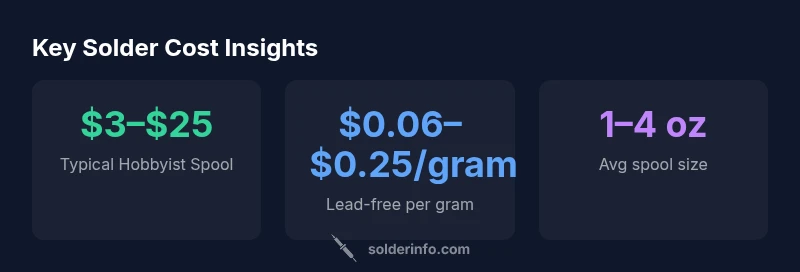
Prices for solder vary widely; for hobbyists, most spools cost roughly $3 to $25 depending on diameter, alloy (lead vs lead-free), and flux type, with larger spools and specialty alloys typically offering lower per-gram costs.
Why solder cost matters
Prices influence not only the upfront purchase but also ongoing project profitability. According to SolderInfo, understanding how much solder costs is essential for budgeting across electronics, jewelry, and plumbing projects. At its core, the sticker price reflects three things: the alloy composition, the diameter and finish (leaded vs lead-free, rosin-core vs flux-core), and the packaging or quantity purchased. A small beginner project may require only a few inches of solder, but repeaters need spools that last months. When you estimate a build, you don’t just look at the label price; you need to calculate cost per usable length or per gram. The price you pay will also depend on the supplier, the presence of special additives (flux types), and the risks associated with handling and storage. In practical terms, price controls your purchasing options, tool compatibility, and even the quality of joints you achieve. Understanding these dynamics empowers smarter decisions and fewer surprises at the checkout.
What drives the price
Solder cost is driven by several interdependent factors. Alloy type matters: lead-based solders are generally cheaper upfront, while lead-free variants command higher prices due to alloy constituents like Tin-Silver-Copper (SAC) and regulatory compliance. Diameter and form matter too: thinner wires use less material per inch, but produce more waste if broken; rosin-core vs flux-core placements affect flux content and joint reliability, which buyers factor into cost. Packaging size influences per-spool price; buying in bulk reduces per-gram cost but raises upfront risk of waste if you over-purchase. Supply chain dynamics, tin prices, and regional duties can tilt prices month to month. As noted in SolderInfo analysis, commodity price fluctuations in tin, silver, and copper feed into both leaded and lead-free solders. Finally, brand and quality controls add a premium for consistent performance and lower failure risk.
Price ranges by solder type
Pricing varies by alloy, flux, and packaging, but some general ranges apply for hobbyist and light industrial use. Lead-based rosin-core solders typically cost in the lower to mid range, often around 3–12 dollars per 1-ounce spool. Lead-free rosin-core solders, driven by more expensive alloys and regulatory costs, commonly fall in a higher range, about 5–25 dollars per 1-ounce spool. Solder paste, used for surface mount and precision work, tends to be pricier per unit weight, frequently in the 10–40 dollars per 1-ounce equivalence (or per syringe) range. For bulk or high-purity solders, prices can exceed these ranges, but bulk purchases reduce per-gram costs. These ranges reflect typical market conditions in 2026 and may vary by region and supplier.
Lead- vs lead-free: value and costs
The choice between leaded and lead-free solder affects both price and safety considerations. Lead-free solders generally cost more per spool due to higher tin content and the expense of SAC alloys, while leaded solders still offer excellent compatibility with older kits. The per-gram cost distinction often narrows when you buy larger quantities, though the upfront price for a 1-ounce spool is usually higher for lead-free options. Beyond price, many buyers prioritize safety and environmental compliance, which favors lead-free in professional settings. In practice, cost-per-join may favor lead-free in high-volume production, but hobbyists should weigh usage, health considerations, and equipment compatibility when deciding.
How spool size and packaging affect cost
Upfront price is only part of the story; the long-term value comes from cost per usable length or per gram. Generally, larger spools deliver the lowest per-gram costs, because setup and packaging overhead are distributed across more material. However, small projects or infrequent users risk waste if the solder ages or absorbs moisture, reducing quality and usable length. For this reason, many buyers choose mid-sized spools (1–4 ounces) to balance convenience, waste, and price. Always check the tin and flux stability when storing large quantities; aging can affect performance and, by extension, cost if rejects increase.
Buying for different contexts: hobbyist vs professional
Hobbyists typically aim for cost-effective, reliable performance, favoring mid-range lead-free rosin-core solders in 1–4 ounce spools. Professionals may prioritize batch consistency, low defect rates, and lead-free compliance, often choosing higher-grade SAC alloys in larger spools to reduce per-gram costs. In both cases, it’s smart to evaluate total cost of ownership: price per joint, shelf-life, and waste risk. SolderInfo’s guidance for professionals emphasizes supplier reliability, traceability, and packaging integrity. For hobbyists, flexible return policies and broad compatibility with common electronics kits can ease budgeting and experimentation.
Practical tips to save money
To minimize solder costs without sacrificing quality, start by comparing price per gram rather than sticker price per spool. Buy by bulk only if you have a reliable storage plan and limited waste risk. Look for reputable suppliers who offer bulk discounts, seasonal sales, or loyalty programs. Consider reusing leftover snips and scraps, when appropriate, and ensure proper storage to avoid oxidation or flux hardening that lowers usability. Finally, pay attention to the recommended storage conditions and expiry guidance for flux-core wires and pastes; improper storage can degrade performance long before the package is empty. By combining these strategies, you can keep project costs predictable and within budget.
Common misconceptions and pitfalls
A common myth is that the cheapest solder is always the best choice. In reality, the cheapest options may deliver inconsistent joints or poor reliability, especially on mixed-technology boards or jewelry work. Another pitfall is assuming larger spools always save money; if you buy more than you can store safely, moisture or oxidation can ruin large portions, increasing waste. Finally, some buyers assume lead-free automatically equals higher cost in every scenario; while lead-free alloys can be pricier, bulk purchases and careful supplier selection often close the gap. Quality control, shelf-life, and proper storage are critical to extracting value from any solder purchase.
How to compare prices: a simple checklist
Use a simple, repeatable rubric to compare prices. 1) Note price per spool and per gram, 2) Check alloy type (lead vs lead-free) and flux type, 3) Include packaging and weight, 4) Factor in storage life and warranty, 5) Account for shipping and taxes, especially for cross-border purchases. Convert everything to a common unit (per gram or per inch) to compare apples-to-apples. Verify supplier credibility, read reviews, and confirm return policies. Finally, test a small order before committing to bulk purchases to validate performance in your specific applications.
Solder price ranges by type
| Solder Type | Typical Price Range | Notes |
|---|---|---|
| Lead-based rosin-core | $3–$12 per 1 oz spool | Common for older equipment |
| Lead-free rosin-core | $5–$25 per 1 oz spool | Regulatory and alloy costs |
| Solder paste | $10–$40 per 1 oz syringe | For surface-mount work |
Quick Answers
What affects solder price the most?
Solder price is driven by alloy type (lead vs lead-free), diameter, flux type, packaging (spool size), and supplier. Larger, purer alloys and premium fluxes raise cost, while bigger spools reduce per-gram expense.
The main price drivers are alloy, spool size, and flux type—bigger spools save per gram, but upfront costs can be higher.
Is lead-free solder more expensive than leaded solder?
Generally yes, lead-free solders cost more per spool due to alloy costs and regulatory requirements. Per-gram costs can be similar in large purchases, depending on supplier.
Yes, lead-free solders are usually pricier per spool, but big purchases can balance the per-gram price.
How much does solder cost per ounce?
Prices per ounce vary by alloy and flux; hobbyist 1-ounce spools tend to sit in a mid-range bracket. Larger quantities typically reduce the unit price.
Prices per ounce vary a lot; larger orders usually lower the unit cost.
What is the best value for hobbyists?
For hobbyists, mid-range lead-free rosin-core solders in 1–4 oz spools offer a good balance of price and performance, with potential bulk discounts.
For hobbyists, go with mid-range lead-free rosin-core spools in medium sizes.
Do taxes or shipping affect solder cost?
Taxes, shipping, and handling can materially affect total cost, especially for international or bulk orders; factor these into price comparisons.
Yes—tax and shipping can change the total price, especially for cross-border orders.
“Prices for solder are driven by alloy, diameter, flux, and packaging; understanding these levers helps buyers optimize cost without sacrificing quality.”
Top Takeaways
- Compare price per gram, not just per spool
- Lead-free options cost more upfront but offer safety benefits
- Bulk spools reduce the per-gram cost, but storage matters
- Quality and storage impact long-term value