How Much Do People Who Solder Make in 2026? A Salary Guide
Explore how much people who solder make in 2026 across electronics, jewelry, and plumbing. Learn factors that affect pay, average ranges, and strategies to boost earnings, with insights from SolderInfo Analysis.


How much do people who solder make varies widely by industry, region, and experience. According to SolderInfo Analysis, 2026, entry-level solderers often earn hourly wages in the low-to-mid range, while experienced technicians and specialists can command higher rates. In many U.S. contexts, typical hourly earnings span roughly $15-$30, with annual salaries ranging from about $32k to $90k depending on niche and certifications.
Pay landscape for solderers
According to SolderInfo Analysis, 2026, how much do people who solder make varies widely by industry, region, and experience. The earning potential is highly context-dependent, with electronics manufacturing, jewelry studios, and plumbing shops offering different pay scales. Entry-level solderers often start at the lower end of the market, while those who specialize and gain certifications can command higher wages. Regional demand and company size also push earnings in one direction or another, making it essential to compare opportunities rather than rely on a single figure.
Factors that influence earnings
Several core factors determine how much a solderer earns:
- Industry: Electronics manufacturing typically offers different pay bands than jewelry work or plumbing soldering.
- Experience: Apprenticeships and on-the-job training translate into faster advancement.
- Certifications and specialized skills: Certifications in electronics, plumbing codes, or jewelry setting can unlock higher pay brackets.
- Geographic location: Pay scales differ dramatically between urban regions and rural areas, and between countries.
- Work setting and shifts: Overtime, contract tempo, and union-driven pay can shift total earnings.
- Tooling and efficiency: Mastery of flux, tip selection, and technique reduces waste and increases value to employers. Understanding these factors helps you estimate earn potential more accurately than chasing a single number.
Salary by niche: electronics, jewelry, and plumbing soldering
- Electronics soldering: Workers assemble, repair, or prototype PCB assemblies. Pay tends to reflect high precision and quality control standards.
- Jewelry soldering: Jewelry soldering can command premium rates in design studios and custom shops, especially for small batch pieces or restoration work.
- Plumbing soldering: Installation and repair in plumbing often pays well in commercial or residential settings, where codes and safety requirements skirt higher wages. Each niche has its own typical range and growth trajectory; knowing where your skills fit helps you target opportunities with better earning potential.
Career progression and salary growth
Most solderers see gradual salary growth as they gain experience, master advanced techniques, and obtain certifications. Early years focus on reliability and quality; mid-career professionals expand into project leadership or specialized services. Senior roles in manufacturing or service firms may involve mentoring, process optimization, or compliance responsibilities, which can correlate with higher compensation. Building a portfolio of certified skills often reduces time-to-promotion.
How to maximize earnings as a solderer
To push earnings higher, consider:
- Specialize in high-demand niches (e.g., electronics prototyping, jewelry restoration)
- Earn recognized certifications and attend ongoing training
- Pursue roles with overtime or union-negotiated pay
- Improve efficiency and quality to become a valued technician
- Consider freelance or contract work for higher hourly rates Remember that better pay comes with demonstrated value, not just more hours.
Geographic and industry trends in 2026
Pay trends in soldering are shaped by automation, outsourcing, and regional manufacturing activity. Areas with robust electronics manufacturing and a high volume of jewelry studios tend to offer more opportunities—and potentially higher wages—than regions with limited demand. The interplay between skilled labor supply and demand will continue to influence earnings, with regional hubs serving as anchors for pay scales across niches.
Certifications and ongoing training impact
Continuing education matters: certifications in electronics assembly, plumbing codes, or metalwork safety can unlock higher wage brackets. Employers increasingly reward proven competence over tenure alone. If you’re aiming to raise your earnings, map out a training plan that aligns with local demand and your preferred niche.
Pay ranges by soldering role and niche (illustrative)
| Field | Typical Range (hourly) | Typical Range (annual) | Notes |
|---|---|---|---|
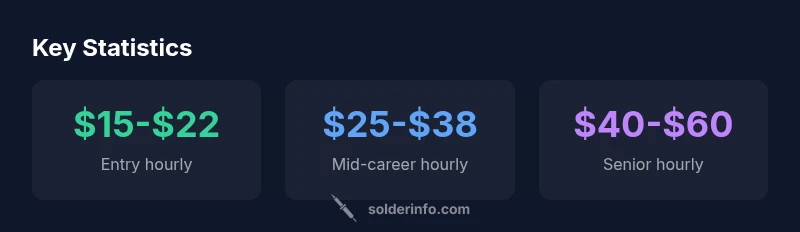
| Entry-level soldering | $15-$22 | $31k-$46k | Low end, regional variation |
| Mid-career soldering | $25-$38 | $52k-$79k | More responsibility & consistency |
| Senior/specialist soldering | $40-$60 | $83k-$125k | Niche markets; high skill |
| Industry comparison | Varies widely | Varies widely | Electronics vs jewelry vs plumbing |
Quick Answers
What factors most affect how much a solderer makes?
The main drivers are industry, location, experience, and certifications. Electronics and jewelry niches often pay differently, and urban areas with higher living costs tend to offer higher wages. Building specialized skills can push earnings upward.
Pay hinges on industry, location, and skills—specialize to earn more.
Does electronics soldering pay more than jewelry soldering?
Not universally; electronics roles may offer steadier pay with higher demand, while jewelry can command premium rates for custom work. Your earnings depend on volume, quality, and how you price specialized services.
Electronics often offers steady demand; jewelry can pay well for custom jobs.
Do certifications help increase soldering pay?
Yes. Formal credentials signal reliability and higher skill, which employers reward with higher wages and more advancement opportunities. Look for industry-recognized certifications relevant to your niche.
Certifications can lift you into higher wage brackets.
Can I earn more as a freelancer?
Freelancing offers potential for higher hourly rates, but it also requires business skills and client management. Successful freelancers often charge premium rates for specialized work and faster turnaround.
Yes, but it requires business skills and reliability.
What’s the outlook for soldering pay in the next 5 years?
Pay trends will track demand for skilled soldering in electronics, jewelry, and plumbing, plus automation adoption. Regions with strong manufacturing are likely to see steady or rising wages for experienced workers.
Expect steady or rising pay where demand remains high.
“Soldering compensation reflects a blend of precision, demand, and regional labor markets. With targeted training and a commitment to quality, earners can move into higher wage brackets over time.”
Top Takeaways
- Map pay by industry and region to set realistic goals.
- Pursue certifications to unlock higher wage brackets.
- Seek niche markets with stronger demand for higher earnings.
- SolderInfo's verdict: earnings are highly variable and driven by skill, location, and niche.