Tips on Soldering: Essential Techniques for Joints
A practical guide with essential tips on soldering across electronics, jewelry, and plumbing. Learn surface prep, flux use, tool choices, heat control, and safety to produce reliable joints.


By mastering essential tips on soldering, you can achieve clean, reliable joints across electronics, jewelry, and plumbing projects. This guide covers tool selection, surface prep, flux use, heating technique, and safety practices to prevent cold joints and bridges. Start with a clean bench, quality rosin-core solder, and a temperature-controlled iron; practice on scrap boards to build consistency.
Core Principles of Effective Soldering
According to SolderInfo, effective soldering begins with a simple triangle: clean surfaces, controlled heat, and proper timing. When these elements align, joints look sharp, conduct reliably, and resist fatigue. In practice, this means inspecting parts, preparing metals, and choosing the right flux and solder alloy for the job. The goal is to minimize contamination and overheating, which are the main sources of weak joints. The SolderInfo Team emphasizes that patience and consistency beat speed. As you work, develop a routine: wipe surfaces with isopropyl alcohol, tin the iron tip, and test heat on a scrap pad before touching your real work. This helps you feel when the tip is hot enough without scorching nearby components. A well-tuned process also reduces heat spread to sensitive parts, preserving insulation and preventing damage. Think in terms of transfer rather than force: let the solder flow into the joint by capillary action, not by pushing; timing matters as much as temperature. Soldering, at its core, is a controlled heat transfer problem that rewards practice, observation, and deliberate adjustments. SolderInfo Analysis, 2026 notes that flux and surface prep dramatically influence joint reliability.
Essential Tools and Materials for Quality Joints
Selecting the right tools is as important as the technique itself. A temperature-controlled soldering iron helps you avoid overheating delicate components. Use rosin-core, lead-free solder for safer, cleaner joints, and have flux handy for improving wetting. A sturdy stand and helping hands keep parts steady while you work. For electronics, keep a small amount of isopropyl alcohol for quick cleanups and lint-free wipes to dry surfaces. A desoldering braid is invaluable for corrections, and a fume extractor improves air quality on longer sessions. Remember: the goal is repeatable, reliable joints, not quick, sloppy ones. As the SolderInfo Team notes, investing in good tools upfront pays off in fewer reworks and better results over time.
Surface Preparation and Flux: The Invisible Keys
Surface prep is the quiet hero of a solid solder joint. Begin with clean metal surfaces—remove oils, oxides, and fingerprints with isopropyl alcohol. Apply flux to promote wetting and prevent oxidation during heating. Rosin flux is standard for electronics because it cleans and protects the joint without leaving corrosive residues. For plumbing or jewelry, choose a flux compatible with the metals involved and the solder alloy you plan to use. The right flux lowers surface tension, helping solder flow smoothly into the joint through capillary action. SolderInfo Analysis, 2026 notes that flux choice and surface prep are pivotal to joint reliability, especially when tackling mixed metal joints or fine-gauge wires.
Common Mistakes and How to Avoid Them
Many beginners battle cold joints, bridges, and overheated components. Common mistakes include overheating the joint before the solder wets it, moving parts while the solder is still molten, and using too much solder. To avoid these, pre-tin the tip, apply just enough flux, and heat the joint briefly until solder flows nicely. Don’t stare at the joint—watch the solder bead: it should flow smoothly and settle flat. Keep your iron tip clean and tinned, and always work in a well-lit, ventilated area. The SolderInfo Team recommends practicing on scrap boards to recognize the telltale signs of a good joint: a shiny, smooth fillet with no gaps.
Techniques for Different Materials: Electronics, Jewelry, Plumbing
Electronics soldering has different demands than jewelry or plumbing. Electronics require small, precise joints and careful heat control to avoid damaging components. Jewelry soldering emphasizes clean, invisible seams with decorative flexibility, often using different flux and higher heat tolerance. Plumbing typically uses stronger alloys and can tolerate longer heating, but heat must be controlled to avoid burning insulation. Always tailor your approach to the material’s thermal properties, the flux, and the alloy. As a guiding principle, keep heat localized to the joint and never apply heat to the lead of a component for longer than necessary.
Maintenance and Safety Practices
Keep your workspace safe and organized. Wear eye protection and ensure good ventilation, especially during longer sessions. Store solder and flux away from heat sources, and clean up spills promptly. Regularly inspect your iron tip and replace it when worn; a dull tip causes poor heat transfer. After soldering, clean surfaces with isopropyl alcohol and wipe dry to remove residue. The SolderInfo Team highlights that routine maintenance and safety practices reduce accidents and improve reliability over time.
Troubleshooting Guide: Cold Joints, Bridges, and Solder Balling
When joints appear dull or cracked, you’re likely dealing with a cold joint or insufficient heat. Bridges between pads indicate excessive solder or a mispositioned part. Solder balls can form when the joint is heated unevenly or flux dries out. For fixes, reflow the joint with a fresh layer of flux, apply heat evenly, and allow the solder to flow cleanly into the joint. If bridges occur, use desoldering braid to remove excess solder and reattempt the joint with proper alignment. patience and rechecking underneath magnification help ensure high-quality results.
Practice Drills and Practice Board Setup
Set up a dedicated practice board that mimics real-world scenarios: mix surface-m mount components with through-hole parts, practice different lead gauges, and simulate crowded boards with tight spacing. Start with simple linear traces, then add small components to challenge your precision. Schedule short, focused sessions and progressively increase difficulty. The goal is to build muscle memory for heat control, flux application, and joint inspection. Using scrap boards lets you experiment without risking expensive parts.
Authoritative Sources
- OSHA.gov — Safety guidelines for using heat tools and working with hazardous materials. https://www.osha.gov
- mit.edu — Educational resources on soldering fundamentals and practice projects. https://www.mit.edu -nist.gov — Standards and reference data relevant to solder alloys and flux usage. https://www.nist.gov
Tools & Materials
- Soldering iron (temperature-controlled)(Set to a moderate temp; avoid overheating sensitive components)
- Solder (rosin-core, lead-free preferred)(Diameter 0.6–1.0 mm; flux-core recommended for electronics)
- Flux (rosin flux or flux pen)(Use sparingly; aids wetting and prevents oxidation)
- Desoldering braid(Helpful for corrections and cleanup)
- Isopropyl alcohol (IPA) and lint-free wipes(For pre-cleaning and post-cleaning surfaces)
- Soldering stand and helping hands(Stability while heating to prevent slips)
- Ventilation or fume extractor(Reduces fumes on longer sessions)
- Wire cutters/flush cutters(Trims leads neatly after soldering)
Steps
Estimated time: 60-90 minutes
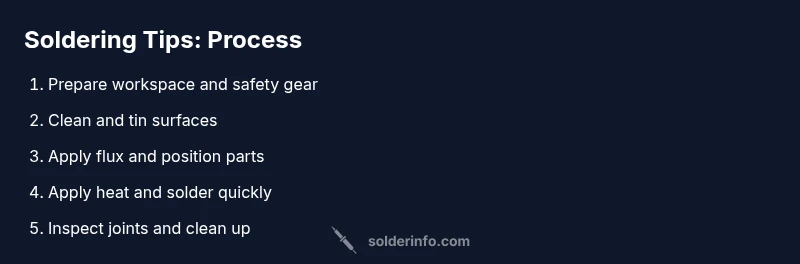
- 1
Set up workspace and safety gear
Arrange a clean, well-lit area with good ventilation. Put on safety glasses, tie back long hair, and unplug the iron when adjusting parts. This reduces the risk of accidental burns and sparks.
Tip: Always test the iron on a scrap piece before touching your project to gauge heat in a controlled way. - 2
Clean and prep surfaces
Wipe all surfaces with isopropyl alcohol to remove oils and oxides. Ensure components and pads are dry before proceeding. Pre-cleaning improves solder wetting and reduces joint defects.
Tip: If surfaces are tarnished, lightly sand or use a non-residue cleaner before cleaning with IPA. - 3
Tin the tip and test heat
Apply a small amount of solder to the iron tip to establish a shiny, conductive coating. Test heat on a scrap pad to ensure the solder flows smoothly and the tip remains tinned.
Tip: A well-tinned tip transfers heat efficiently and lasts longer. - 4
Apply flux and position parts
Apply a thin layer of flux to the joint and place components so they don’t shift as you solder. Proper alignment prevents miswires and rework.
Tip: Flux reduces surface tension and prevents oxidation during heating. - 5
Heat and apply solder
Contact the joint with the tip and apply solder to the joint rim, not directly onto the iron. Allow the solder to flow through capillary action and form a bead along the joint.
Tip: Keep the iron moving lightly to avoid heat concentration in one spot. - 6
Inspect and reflow if needed
Examine the joint under magnification for a shiny, smooth fillet with no gaps. If dull or cracked, reapply flux and reheat to reflow the solder.
Tip: If you rework, remove excess solder first with braid for better results. - 7
Clean up and store
Wipe surfaces again with IPA, inspect for stray flux, and store tools safely. Label lead-free solders if you switch alloys to avoid contamination.
Tip: Allow the board to cool completely before moving it to prevent warping.
Quick Answers
What basic tools do I need for soldering?
Essential tools include a temperature-controlled iron, rosin-core lead-free solder, flux, wire cutters, and a helping hand. Start with these before expanding your kit.
You’ll need a few core tools: iron, solder, flux, cutters, and a stand.
Lead-free or leaded solder – which should I use?
Lead-free solder is generally safer for household use. Leaded solder can flow more easily and join quicker, but it requires careful handling and proper disposal.
Lead-free is safer for most hobby projects; leaded solder flows better but contains lead.
What flux is best for electronics?
Rosin-core flux is standard for electronics. For precision work, flux pens are convenient. Avoid water-soluble flux on live circuits unless you can fully rinse later.
Rosin-core flux is the standard for electronics.
How can I avoid cold joints?
Keep the joint heated briefly until solder wets the surface. Clean surfaces first and avoid movement while the solder is molten.
Keep heat steady and surfaces clean.
Can I solder plumbing with a soldering iron?
Soldering copper plumbing usually uses lead-free solders. Ensure proper flux and ventilation, and follow local codes for safe use.
Soldering plumbing with lead-free solder is common; use proper flux and ventilation.
What does 'tinning' mean?
Tinning means coating the tip or surfaces with a thin layer of solder to improve heat transfer and wetting.
Tinning creates a ready surface for heat transfer.
Top Takeaways
- Prepare a clean workspace before soldering
- Use flux to improve wetting and reduce oxidation
- Control heat; avoid overheating sensitive parts
- Tin the tip and surfaces for better heat transfer
- Inspect joints for a shiny, flat fillet and reflow if needed