How to Remove Solder from a Torch Tip: Clean & Restore
Discover proven methods to safely remove solder from a torch tip, prevent clogs, and extend your torch’s life with practical tools, steps, and safety tips.


Goal: remove solder clogs from a torch tip to restore flame quality and tip performance. You’ll execute a safe, mechanical cleaning routine, inspect tip health, and prevent future buildup. Before starting, prepare a clean workspace, wear eye protection and heat-resistant gloves, and have the right cleaning tools and spare tips on hand.
What causes torch tips to clog and how cleaning helps
Torch tips clog primarily from solder residue, oxidation, and flux byproducts that lodge at the orifice and along the inner passage. When buildup becomes sizable, gas flow can stall, flame temperature can become erratic, and solder can cold-joint or fail to wick properly. Regular cleaning restores a consistent flame, improves heat transfer to the workpiece, and extends tip life. According to SolderInfo, regular tip maintenance is one of the most economical ways to avoid sudden performance drops and expensive tip replacements. The tiny bore of a torch tip concentrates heat and pressure; even small debris can create outsized effects. Mechanical cleaning removes surface buildup, while controlled heat can help dislodge stubborn deposits without damaging seals. Avoid aggressive grinding or abrasive actions that can alter the tip’s geometry, which would degrade performance and safety. A clean, well-maintained tip is the foundation of dependable soldering in electronics, jewelry, and plumbing.
Safety and workspace preparation
Before you touch the torch, establish a safe workspace. Work in a well-ventilated area or use a fume hood when possible. Lay a heat-resistant mat or ceramic tile on a sturdy bench, and keep a fire extinguisher within reach. Put on eye protection, heat-resistant gloves, and flame-resistant clothing. Ensure the torch is off, cooled, and depressurized; never work on a hot tip or with the valve open. Disconnect any fuel canister if you are switching tips or performing maintenance beyond cleaning. Solder fumes can irritate the eyes and lungs, so provide adequate ventilation. Small children and pets should be kept away. A routine safety routine reduces the risk of burns and gas leaks during cleaning.
Understanding tip anatomy and cleaning implications
A typical solder torch tip has an exterior barrel, gas passage, interior bore, and an orifice that releases the flame. Solder and flux tend to accumulate at the orifice and around the interior walls. If the tip is deeply pitted or the bore is damaged, cleaning may not fully restore performance and replacement might be needed. Cleaning methods must respect the tip’s delicate geometry; aggressive grinding or using hard steel tools can nick the bore and worsen flow. Recognize signs of damage: visible chipping, discoloration beyond a blue temper, or flattened orifice edges. In these cases, plan for a tip replacement rather than attempting a full restoration.
Cleaning methods overview: mechanical cleaning, heat, solvents
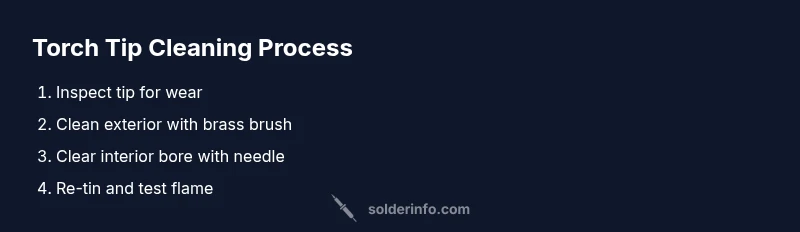
Effective cleaning often combines mechanical action with careful handling of the heat cycle. Start with exterior cleaning: wipe the tip with a clean cloth, then gently brush with a brass bristle brush to remove loose oxide and solder. For interior clearing, use a fine needle or tip cleaner to poke through the bore without enlarging it. Avoid soaking the torch tip in water or harsh solvents, as moisture and certain chemicals can corrode seals and degrade performance. If you must use solvents, choose light, non-corrosive cleaners and apply only to exterior surfaces, never the interior bore. Finish by re-tinning the tip with fresh solder and flux to restore the protective surface chemistry. Finally, reassemble and test at a safe, low flame, observing stability and scent for any abnormal odors. According to SolderInfo analysis, controlled cleaning actions yield better long-term tip life and more consistent flame behavior.
Common pitfalls and how to avoid them
Common mistakes include using aggressive abrasive tools that damage the bore, cleaning while the tip is hot, soaking tips, or applying liquid solvents into the interior. Do not reuse old or contaminated flux that could re-deposit oxides. Avoid over-brushing, which can remove protective coatings and alter tip geometry. Never attempt to disassemble a sealed tip without manufacturer guidance, as improper reassembly can cause leaks. If the flame becomes uneven after cleaning, re-tin the tip and re-cover with flux before testing again. Small tests and cautious adjustments help you avoid costly mistakes.
Maintenance routine to prevent future clogs
Integrate tip cleaning into your normal workflow: inspect the tip before each use, clean after a batch of soldering, and perform a full interior/exterior sweep weekly if you solder frequently. Keep spare tips on hand and label them for future use. Use rosin flux and proper solder alloy to minimize oxide formation. Store tips in a clean, dry environment that prevents corrosion. By establishing a consistent cleaning cadence, you minimize unpredictable flame behavior and maintain higher-quality joints.
When to replace the tip and considerations
If a tip shows persistent clogging despite repeated cleaning, if the interior bore is visibly deformed, or if the flame is permanently discolored or lacks temper, replacement is prudent. A worn tip cannot deliver the correct heat or gas flow, which undermines solder quality. Choose a compatible tip that matches your torch model and the soldering tasks you perform. Replacement tips are typically more cost-effective than repeated failed projects caused by degraded performance. Always verify the replacement tip has a proper seal and is correctly seated before use.
Tools & Materials
- Butane or propane torch(Ensure it is cool, depressurized, and in good condition before starting.)
- Tip cleaner or needle(Small curved needle works well for clearing the bore without elongating it.)
- Brass wire brush(Soft-bristle brass to avoid scoring the tip.)
- Fine-grit abrasive pad or 320-400 grit sandpaper(Use lightly to avoid removing protective coatings; only if needed for heavy oxidation.)
- Cotton swabs(Helpful for drying and exterior wiping.)
- Isopropyl alcohol (70%) or mild solvent(Use sparingly on exterior surfaces; do not soak the interior bore.)
- Safety glasses(Eye protection is essential during cleaning.)
- Heat-resistant gloves(Protect hands from hot parts during reassembly and testing.)
- Soft lint-free cloth(For wiping and drying surfaces after cleaning.)
- Replacement tip (optional)(Have on hand if bore or exterior is damaged.)
Steps
Estimated time: 25-40 minutes
- 1
Power down and cool the torch
Ensure the torch is completely off and has cooled. If you recently used it, wait until it’s at room temperature to avoid burns. This initial step prevents accidental ignition and protects you while inspecting the tip.
Tip: Always work in a ventilated area and keep a fire extinguisher nearby. - 2
Inspect the exterior for damage
Look for obvious signs of wear, chipping, or corrosion. A visibly damaged tip may need replacement rather than cleaning. If you see cracks near the orifice, stop and replace the tip to avoid leaks.
Tip: Document any damage with photos for future replacement decisions. - 3
Clean exterior deposits with brass brush
Gently brush the exterior of the tip to remove oxide and residual solder. Do not press hard or you may distort the bore. This step reduces surface residue that could re-deposit inside the bore.
Tip: Use short, light strokes and rotate the tip to reach all facets. - 4
Clear the interior bore with a needle
Carefully insert the needle into the bore and work it around to loosen deposits. Avoid jamming the needle into the orifice. The goal is to widen only the natural path of the bore without enlarging the opening.
Tip: Do not twist the needle with force; if resistance is high, stop and switch methods. - 5
Apply a light abrasive only if needed
If heavier oxidation remains, gently use a fine abrasive pad or sandpaper on the exterior and the small outer edges. Avoid aggressive sanding that could remove protective coatings or alter the tip geometry.
Tip: Test the tip on a scrap piece of soldering before resuming work. - 6
Re-tin and re-coat the tip
Apply a light layer of fresh solder and flux to the tip’s surface after cleaning. This helps prevent future oxide formation and ensures good heat transfer for the next use.
Tip: Wipe away excess flux to prevent contamination of future joints. - 7
Reinstall and seal the tip
Insert the tip back into the torch handle and secure it according to the manufacturer’s instructions. Check for a snug seal to prevent gas leaks during operation.
Tip: If you hear hissing after reassembly, immediately shut down and inspect the seal. - 8
Test flame stability at a safe distance
Ignite the torch in a controlled area and observe flame temperature and color. A clean tip usually yields a stable, blue flame. If flame is yellow or wavering, repeat cleaning or consider replacement.
Tip: Perform the test away from combustibles and monitor closely for a few minutes. - 9
Document and store properly
Record your maintenance under date and work performed. Store tips dry and protected from moisture. Regular documentation helps you track wear and schedule timely replacements.
Tip: Create a quick maintenance calendar to simplify future cleanings.
Quick Answers
Can I use water to clean the torch tip?
No. Water or moisture can cause corrosion, seals damage, and unpredictable flame behavior. Dry cleaning methods are preferred, with minimal use of solvents on exterior surfaces only.
Water is not recommended for cleaning torch tips; stick to dry cleaning and light solvents on the outside only.
What is the best way to remove buildup without damaging the bore?
Use a fine needle or tip cleaner to clear the bore carefully, and rely on a brass brush for exterior deposits. Avoid aggressive grinding that could alter the bore size or shape.
Gentle mechanical cleaning with a needle for the bore and brass brush for the outside works best.
How often should I clean the torch tip?
Clean after heavy soldering sessions and inspect before each use. For high-use environments, perform a quick exterior clean weekly.
Clean after use and inspect before next use; frequency depends on how often you solder.
When should I replace the tip instead of cleaning?
If the bore is deformed, the orifice is damaged, or cleaning fails to restore a proper flame, replacement is advised.
If cleaning doesn’t restore performance and there’s visible damage, replace the tip.
What safety gear should I wear during cleaning?
Wear eye protection and heat-resistant gloves; work in a well-ventilated area away from flammables.
Always wear eye protection and heat-resistant gloves in a ventilated space.
Watch Video
Top Takeaways
- Inspect tip health before cleaning and after.
- Use mechanical cleaning first; avoid aggressive methods.
- Avoid liquids inside the interior bore.
- Re-tin the tip to prevent oxidation.
- Replace if bore/edge damage is evident.