How to Solder with a Torch: A Practical Step-by-Step Guide
Learn how to solder with a torch safely and effectively. This comprehensive guide covers tools, flux, heat control, joint prep, troubleshooting, and tips for durable, clean soldered joints across electronics, plumbing, and jewelry projects.


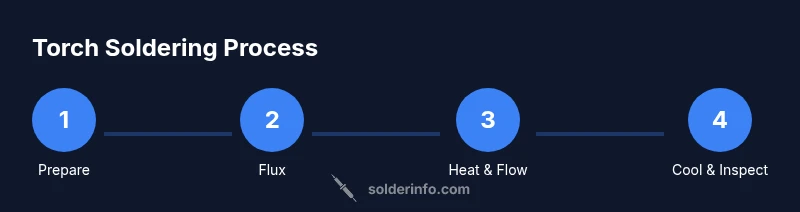
With a hand-held torch, you can solder metals by heating the joint and letting solder flow. Start by cleaning and fluxing the surfaces, select a compatible solder and flux, and use the smallest practical flame. Apply heat evenly to the joint until the solder flows and fills the gap, then allow it to cool undisturbed.
Safety first: torch soldering fundamentals
Torch soldering introduces significant heat and fumes, so safety is non-negotiable. Always wear safety glasses or a face shield, heat-resistant gloves, and a breathable mask if you’re working with flux fumes. Work in a well-ventilated area or under a fume hood, and keep a fire extinguisher or sand bucket nearby. Never leave a lit torch unattended, and keep your work surface clear of flammable materials. By understanding the risks and choosing proper PPE, you reduce the chance of burns or inhalation injuries while improving control over your joints. According to SolderInfo, adopting a consistent safety routine is the foundation for repeatable, high-quality torch soldering.
In industry and hobby circles, many incidents are avoidable with simple precautions and a clean, organized workspace. Plan your workflow before you ignite the flame, know where your clamps and supporting tools will live, and set up a dedicated, heat-resistant plate or mat to protect your bench. Small habits—checking fuel levels, testing flame stability, and storing solvents properly—pay off with fewer mishaps and steadier joints.
Workspace setup and ventilation
A dedicated, well-ventilated workspace is essential when using a torch. Choose a location with a clear radius for movement, away from flammable items. Place a non-combustible mat or ceramic tile under your work area to absorb heat and prevent scorching. Ensure you have good air movement; a small shop fan or a vented window can dramatically reduce flux fumes. Keep your torch and fuel canister on a stable, level surface away from the edge of the bench to prevent spills or tip-overs. Label and store solvents, cleaners, and flux in closed cabinets to minimize fumes in the breathing zone. By controlling the environment, you establish repeatable heat control and reduce the risk of accidental fires.
Tools, materials, and workspace organization
Gather a dedicated set of tools for torch soldering: a compatible torch (propane or MAP gas), adjustable flame, flux, solder (lead-free is common for electronics and plumbing), heat sinks, clamps or “third hands,” needle-nose pliers, small wire cutters, a cleaning solvent, and a dry cloth. Organize these items within easy reach to minimize interruptions during the joint. A compact work stand helps you position components at the right height, while a heat-resistant bracelet or glove protects your forearm during longer sessions. Soldering iron tips aren’t interchangeable with torch work; treat the torch as a separate tool with its own maintenance routine.
Surface prep and flux selection
Surface preparation is the difference between a dull, gray joint and a bright, shiny fill. Start by cleaning metals with a mild solvent to remove oils, then scuff oxidation or plating with a fine abrasive to expose fresh metal. Flux is essential for preventing oxidation during heating and for promoting solder flow. Rosin-based flux is common for electronics, while water-washable flux might be preferred for plumbing with copper. Ensure flux is compatible with your solder alloy and the metals you’re joining. A clean, fluxed surface reduces the chance of cold joints and improves capillary action so the solder flows smoothly into the joint.
Joint fit-up and thermal buffering
A well-fitted joint ensures consistent solder fill without gaps. Dry-fit pieces first to ensure proper alignment, then secure them with clamps or third-hand tools to prevent shifting during heating. Where heat can spread, use copper heat sinks or modified clamps to draw heat away from sensitive areas. For small jewelry and electronics joints, consider using masking tape or heat shields to protect nearby components. The goal is to control heat transfer so the joint reaches the right temperature without overheating adjacent parts.
Choosing and adjusting your torch flame
Most torch work benefits from a steady, smaller flame rather than a large, hot plume. Start with a neutral flame (where the flame’s inner cone is not rich in oxygen or fuel) and adjust as needed for a clean, blue-hot blue edge without excessive soot. If you need more heat, gradually open the gas valve while maintaining a compact nozzle distance. A bright, clean flame helps you see the joint and the solder’s flow front. Regularly check for a stable flame before touching the joint, and never tilt the torch toward your material after ignition to avoid flash heating.
The heat application sequence: heat transfer and flux management
Apply heat to the joint, not the solder directly. Begin by heating the base metal evenly, then bring the flux into the heated zone to activate surfaces. When the joint is warm enough, touch the solder near the joint and let capillary action draw it into the gap. Move the flame along the joint as needed to avoid overheating a single spot. This technique reduces the risk of burns, minimizes oxidation, and produces a smooth, uniform fill. Practice with scrap pieces to dial in your rhythm and heat.
Solder selection and flow control
Choose a solder alloy compatible with your metals and the intended use. For electronics, lead-free solders such as Sn-Ag-Cu blends are common; for plumbing and jewelry, softer solders or silver-bearing alloys may be appropriate. The flux you select should facilitate flow and corrosion resistance; rosin flux is common for electronics, while acid and water-based fluxes may be used for plumbing in appropriate contexts. Start with thin to medium-diameter solder wires and feed slowly as the joint accepts heat. If the solder balls or beads instead of flowing, re-clean, re-flux, and re-heat with a brief pass to restart the flow.
Cooling, inspection, and rework
Let the joint cool naturally; quenching can introduce stress or cracks. Inspect for a smooth, continuous fillet around the joint with no gaps or dull areas. Wipe away excess flux after cooling to prevent corrosion. If you observe a cold joint or poor wetting, re-apply flux, gently reheat the joint, and feed a small amount of solder until the joint fills. For critical joints, a gentle second reflow after cleaning can improve mechanical strength and electrical continuity.
Troubleshooting common torch-soldering issues
Common problems include cold joints, overheating adjacent parts, flux fumes, and uneven flow. Cold joints appear dull or cracked and often require reflow with fresh flux. Overheating nearby components can melt insulation or degrade coatings; protect sensitive parts with heat shields and keep heat away from plastics. If flux fumes become too strong, increase ventilation or relocate the work area, and ensure you’re using the recommended flux for the task. As you gain experience, you’ll recognize heat buildup signs—shimmering flux, a bright glow around the joint, and the glisten of solder forming a capillary bead—before a failed joint occurs.
Tools & Materials
- Adjustable propane or MAP gas torch(Prefer a compact, controllable flame; a small torch head helps with precise heat)
- Flux (rosin-based preferred for electronics)(Choose flux compatible with your solder and metals)
- Solder (lead-free preferred for electronics; option for plumbing/jewelry as needed)(Select a compatible alloy: Sn-Ag-Cu for electronics; soft solder for plumbing)
- Heat sinks or clamps(Protect heat-sensitive components and distribute heat)
- Third-hand or helping hands(Keep parts steady during heating)
- Needle-nose pliers and wire cutters(Handle wires and small components with precision)
- Burn-resistant gloves(Protect your hands during heating and cleanup)
- Safety glasses(Protect eyes from flux fumes and molten solder splashes)
- Ventilation or fume hood(Minimize inhalation of flux fumes)
- Fire extinguisher or sand bucket(Critical for immediate response to flare-ups)
- Cleaning solvents and lint-free cloth(Remove oils and residue before and after soldering)
Steps
Estimated time: 30-45 minutes
- 1
Inspect workspace and safety gear
Check ventilation, fire safety equipment, and PPE. Confirm the torch is in good condition and the work surface is clear of flammables.
Tip: Always have a fire-safe plan before lighting the torch. - 2
Prepare parts and secure them
Position parts with clamps or helping hands. Dry-fit first to confirm alignment and spacing, then secure them.
Tip: Tack small parts with a minimal amount of solder to hold position. - 3
Clean and flux the joint
Remove oils and oxidation from contact surfaces, then apply flux evenly to the joint.
Tip: Flux should cover both mating surfaces for best wetting. - 4
Select and adjust torch flame
Set the torch to a neutral or slightly reducing flame appropriate for the metal and joint size.
Tip: A small, steady flame improves control and reduces splatter. - 5
Preheat the joint lightly
Warm the metal evenly to near the solder’s flow temperature without overheating surrounding areas.
Tip: Avoid direct heat on sensitive components or plastics. - 6
Feed solder to the joint
Bring the solder to the heated joint and allow it to flow through capillary action. Do not melt solder directly in the flame.
Tip: Work slowly and maintain even heat for consistent wetting. - 7
Inspect wetting and fill
Look for uniform fillet formation and complete coverage without gaps.
Tip: If necessary, reheat slightly and apply a small amount of solder to fill any voids. - 8
Cool and clean the joint
Let the joint cool naturally, then wipe away excess flux and inspect for smoothness.
Tip: Cooling too quickly can warp thin parts; avoid quenching. - 9
Test the joint
Gently test for mechanical strength and electrical continuity if applicable.
Tip: A gentle wiggle test can reveal hidden weak spots. - 10
Address defects if found
Reflux, reheat, and reflow the joint as needed to fix cold spots or oxidation.
Tip: Don’t reuse contaminated flux; reapply fresh flux before retrying. - 11
Clean up and store
Turn off the torch, ventilate the area, and store tools in a safe, dry place.
Tip: Wipe tools after use to prevent corrosion and residue buildup. - 12
Review and reflect
Note what worked well and what could be improved for next time. Adjust technique based on outcomes.
Tip: Keep a small log of techniques and alloys used for future projects.
Quick Answers
Is torch soldering safe for electronics?
Yes, torch soldering can be safe for electronics when you use proper heat control, proper flux, and protect sensitive components. Avoid overheating ICs and plastic housings.
Torch soldering is safe for electronics if you control the heat and protect sensitive parts.
What fuels are recommended for torch soldering?
Propane or MAP gas torches are common for small, controlled heat. Choose a fuel with a steady flame and adjustability suitable for your joint size.
Propane or MAP gas torches are typical choices, offering steady control.
Can I use a torch for copper pipes?
Yes. For copper plumbing, use a compatible flux and lead-free solder. Ensure you purge oxidation and protect nearby joints from heat.
A torch can join copper pipes with the right flux and solder.
What metals are best for torch soldering?
Soft metals like copper, brass, and many jewelry alloys respond well to torch soldering. Dissimilar metals may require special alloys and prep.
Copper, brass, and many jewelry alloys solder well with a torch.
Do I always need flux for torch soldering?
Flux is usually required to protect surfaces and promote solder flow. Some specialty solders or pre-tinned joints may reduce flux needs.
Flux is typically essential for torch soldering.
What safety gear should I have on hand?
Wear eye protection, heat-resistant gloves, and have ventilation. Keep a fire extinguisher nearby and never work unattended.
Protective gear and ventilation are essential for torch work.
Watch Video
Top Takeaways
- Prepare and flux surfaces before heating.
- Control heat with a small, steady flame.
- Watch solder flow and avoid overheating adjacent areas.
- Cool naturally and inspect joints after cooling.
- Practice on scrap to improve consistency.