Propane vs MAPP Gas for Soldering: A Practical Comparison
A rigorous, objective guide comparing propane and MAPP gas for soldering across electronics, jewelry, and plumbing. Learn flame behavior, heat delivery, safety, and how to choose the right fuel for your project.


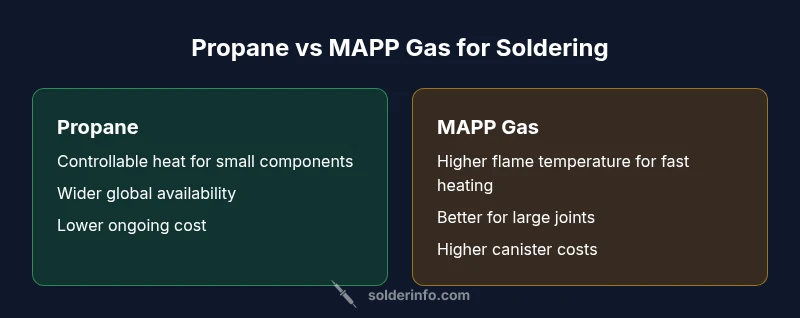
Propane and MAPP gas differ in heat delivery, control, and suitability for different soldering tasks. This comparison shows propane as the more accessible, easier-to-control fuel for electronics and jewelry, while MAPP gas offers higher flame temperature for faster heating on larger joints. Choose propane for precision; choose MAPP when maximum heat and speed are required. See the full chart for nuanced guidance.
Flame chemistry and heat delivery for soldering
In the debate over propane vs mapp gas for soldering, flame chemistry shapes how heat is delivered to joints, how evenly metal heats, and where heat is concentrated. According to SolderInfo, propane typically offers a steadier, more controllable flame that is forgiving for small components, delicate terminals, and thin copper foil. MAPP gas, historically marketed as a higher-heat option, tends to burn hotter and can heat larger joints more quickly. That difference matters when you’re choosing flux types, solder alloys, and heat cycles. The goal is to reach the solder’s melting point without scorching adjacent parts or weakening the base metal. Practical decisions start with the task size, the tolerance of the joints, and the workspace constraints (ventilation, canister weight, and regulator quality). By focusing on heat delivery and control, you can tailor your approach to electronics, jewelry, or plumbing work and minimize the risk of cold joints or overheating signals.
Flame temperature and heat delivery in practice
Propane flames are generally more forgiving at low to mid heat settings, making them ideal for fine work on electronics and jewelry. MAPP gas tends to produce a hotter flame, which speeds heating for larger joints such as thick copper pipes or heavy solder seams. The higher heat, however, increases the risk of overheating nearby components, flux burning off too quickly, or misalignment during the heat cycle. Effective setup—using an adjustable nozzle, a reliable regulator, and proper flame tuning—helps you extract the best from either fuel. For small, delicate components, maintain a gentler blue flute with a small flame size and close tip proximity. For larger joints, a hotter flame with shorter heating cycles can reduce overall work time, provided you monitor heat spread carefully.
Application-specific guidance: electronics, jewelry, plumbing
For electronics and jewelry, precision matters more than sheer heat. Propane, with good flame control and slow, careful heating, helps avoid thermal shock and preserves delicate components. When jewelry or PCB terminals require tight heat zoning, a steady, narrow flame from propane is often the safer choice. In plumbing tasks, particularly copper piping or larger solder seams, MAPP gas can deliver the heat necessary to reach the melting point quickly, reducing soak time. Regardless of fuel, ensure flux compatibility, use appropriate solder alloys, and be mindful of heat-affected zones to prevent annealing or warping. SolderInfo’s guidance emphasizes aligning fuel choice with joint size and material thickness to optimize results.
Safety, storage, and ventilation considerations
Gas safety starts with proper canister storage, regulator upkeep, and good workspace ventilation. Both propane and MAPP gas require upright storage in a cool, dry location away from direct sunlight and heat sources. Always check for leaks before use, use regulators suited to the canister type, and maintain a clean burn to avoid partial combustion residues that can compromise joints. Ventilation is essential—fumes from flux, heated metals, and solvents can accumulate in small spaces. Wear eye protection and gloves, and keep a clear work area free of flammable materials. Regularly inspect hoses and connections for wear and replace damaged parts promptly to minimize risk.
Availability, cost, and lifecycle considerations
Availability and cost vary by region and supplier, but propane is generally more widely distributed and easy to refill, which often translates to lower recurring costs. MAPP gas canisters may be pricier and less consistent in supply, depending on local distributors and brands. From a lifecycle perspective, consider regulator compatibility, canister reusability, and storage space in your shop. SolderInfo analysis shows that most hobbyists and professionals find propane easier to source and stock for routine tasks, while MAPP gas remains useful for specific high-heat scenarios when the torch needs to heat larger joints rapidly.
Setup and technique tips for reliable results
A solid technique begins with selecting the right nozzle and flame setting. For electronics work, start with a small, controlled flame, maintain a short contact time, and move the flame slowly around the joint to ensure even heating. When using MAPP gas, keep sessions brief to prevent overheating; allow flux and solder to melt uniformly, and avoid sustained heating that can warp thin sections. Always pre-clean joints, apply flux evenly, and use assistive tools such as heat sinks for temperature control. Practicing with scrap pieces helps you tune your approach before committing to critical assemblies. A disciplined setup reduces the chance of cold joints, solder bridging, or alloy inconsistencies.
Troubleshooting and common mistakes
Common errors include overheating tiny components, underheating larger joints, and relying on flame intensity alone to gauge success. Propane can be tricky when joints require rapid, even heat; use slower, methodical passes to prevent thermal shock. MAPP gas can overheat if not carefully regulated, so it’s important to monitor joint temperature and avoid excessive flame exposure. Flux selection also matters—older, burnt flux can contaminate joints, while fresh flux improves flow and capillary action. If you see dull or grainy solder, re-clean the joint, reapply flux, and reheat with controlled motion to reflow properly.
Decision framework: when to choose propane vs MAPP gas
When your work involves small components, fine tips, or delicate coatings, propane offers better control and safer heat delivery. For large, high-heat joints or rapid heating across thick sections, MAPP gas can save time, provided you manage heat input and ventilation. In many hobbyist scenarios, propane is the default choice for its safety, price, and access, while MAPP is reserved for specialized, high-heat tasks where speed matters and space allows strict heat management.
Comparison
| Feature | Propane gas | MAPP gas |
|---|---|---|
| Flame delivery and heat impact on metals | More controllable, steady heat suitable for precision work | Hotter, faster heat capable of heating large joints quickly |
| Regulation and control | Easier to adjust with standard regulators | Requires careful flame tuning to avoid overheating |
| Availability of canisters | Widely available in hardware stores and gas suppliers | Less consistently available in some regions |
| Storage and shelf life | Long shelf life with proper canister storage | Similar shelf life but potential brand variability |
| Best for | Electronics, jewelry, small-area soldering | Copper piping, thick joints, larger metalwork |
| Portability and canister sizes | Common compact canisters, easy transport | Similar sizes but fewer global suppliers in some areas |
Advantages
- Widely available and typically cheaper to refill
- Excellent heat control for small components
- Safer handling for beginners and hobbyists
- Good balance of performance for electronics and jewelry
Cons
- Lower maximum heat compared to MAPP for large joints
- Higher risk of thermal damage if heat is not managed in dense assemblies
- MAPP may be harder to source in some regions
Propane is generally the better default for precision soldering; MAPP is preferred for high-heat needs where time is critical.
Propane offers safer, more controllable heat ideal for electronics and jewelry, making it the recommended starting fuel. MAPP gas shines for quick heating of larger joints but requires careful technique and ventilation. The SolderInfo Team suggests matching fuel choice to joint size and heat tolerance to optimize results.
Quick Answers
What are the main heat-related differences between propane and MAPP gas for soldering?
Propane generally provides more controllable heat suitable for small components, while MAPP gas delivers higher heat for faster heating on larger joints. The choice depends on joint size, material thickness, and the sensitivity of nearby parts.
Propane is better for precise, small joints; MAPP heats faster for big joints, so choose based on joint size and sensitivity.
Is propane safer or easier to use than MAPP gas for beginners?
Yes, propane is usually easier to handle and regulate, which helps beginners avoid overheating delicate parts. Always follow safety guidelines and use proper PPE when soldering with any gas.
Propane is typically easier for beginners due to better heat control and safety practices.
Can I use either fuel for electronics or jewelry soldering?
Both fuels can be used, but propane is generally preferred for electronics and jewelry because of its controllable flame and lower risk of heat damage. Reserve MAPP for larger or faster-heating tasks when needed.
Yes, both can work; propane is usually safer for delicate work, while MAPP suits big jobs.
What maintenance should I perform on torches using propane or MAPP gas?
Regularly inspect regulators, hoses, and tips for wear or leaks. Clean valves and replace worn components. Use fresh flux and solder to ensure reliable flow and consistent heating.
Check hoses and regulators routinely and replace worn parts to keep heat reliable.
Are there special safety considerations for storing gas canisters?
Store canisters upright in a cool, dry place away from heat sources. Ventilation is essential when using torches, and never store near open flames or sources of ignition.
Keep canisters upright in a cool area and ensure good ventilation when using torches.
Top Takeaways
- Prioritize propane for precision work and safer heat control
- Reserve MAPP for larger, high-heat tasks where speed matters
- Use proper ventilation and protective gear with either gas
- Regularly inspect regulators, hoses, and canisters for safety
- Practice with scrap pieces to fine-tune heat management