Can You Solder with Propane? A Practical Guide for Beginners
Discover whether propane can be used for soldering, when it’s appropriate, and how to do it safely across electronics, plumbing, and jewelry projects. Expert guidance from SolderInfo on setup, techniques, and safety.


According to SolderInfo, propane can be used for soldering in portable setups and for many non-electronic applications where heat control is feasible. It provides a hot, adjustable flame but requires careful flame management and strict safety practices. For electronics or delicate jewelry work, consider specialized torches or alternative heat sources. Overall, propane is a viable option when used correctly.
Can Propane Power Your Soldering Projects?
Propane as a heat source has a long history in DIY soldering because it offers portability and high flame temperature. The SolderInfo team emphasizes that propane excels in situations where you need to work away from a mains-powered torch or a large workshop setup. It’s particularly useful for plumbing joints, basic jewelry repairs, and some metalwork tasks where joint accessibility is good and heat can be distributed evenly. However, the heat must be controlled to avoid overheating delicate components or melting substrates. When used with the right technique, propane can be a practical choice for many hobbyist applications, while professional electronics work may benefit from lighter, more precise tools.
Safety First: Understanding propane hazards and safe practices
Propane is flammable and forms heavier-than-air pockets near the ground. In enclosed spaces, it can accumulate, displacing oxygen. Proper ventilation, a uncluttered workspace, and a clear exit path are essential. Wear safety glasses, fire-resistant gloves, and long sleeves to protect skin from splashes of molten solder. Always test for gas leaks before lighting the torch using soapy water or a detector, and keep a fire extinguisher within reach. The goal is to minimize risk while maintaining a steady heat source. Soldering with propane benefits from a calm, methodical approach rather than rushed, high-pressure attempts.
When propane shines: suitable tasks and notable limits
Propane shines in outdoor or makeshift setups where electrical power is unavailable. It’s well-suited to plumbing joints, basic jewelry fixes, and metal fabrication where joints are open, large, or require heat from a broader area. For tiny surface-mount electronics, fine copper-wiring, or ultra-fine joints, propane’s flame can be too aggressive and risk damage. In these cases, smaller butane or micro-torch options or regulated heat guns may be preferable. The key is to plan heat application and protect heat-sensitive parts.
Equipment essentials: torches, tips, and fuel choices
Selecting a propane torch with a controllable flame is critical. Look for a model with adjustable pressure, a stable stand, and a nozzle suitable for soldering tasks. A 1-pound or larger propane cylinder is common for hobby projects, but always check compatibility with your torch. Pair the torch with the appropriate flux and solder alloy for your material family (electronics flux for circuit boards, rosin flux for metals, lead-free solder for most consumer electronics, or hard solder for plumbing). Safety gear and a clean workspace round out the setup.
Surface prep and flux: setting the stage for a strong joint
Clean surfaces are non-negotiable for good solder joints. Use isopropyl alcohol or appropriate cleaners to remove oils, dust, and oxides from mating surfaces. Dry the parts completely before heating. Apply flux evenly to prevent oxidation during heating; flux also helps the solder flow and adhere. The choice of flux can affect the joint’s reliability, especially on copper, brass, or silver alloys.
Heating technique: how heat should travel through the joint
Heat should be distributed evenly and slowly, avoiding direct, concentrated bursts on any one spot. Move the flame in gentle, circular motions to preheat the joint and surrounding metal. Once the target temperature is approached, bring solder to the joint and let capillary action draw it into the seam. Remove heat promptly once the solder flows and cool naturally. Patience is essential; rushing often creates voids or cold joints.
Solder types and flux compatibility: pick the right combo
Choose solder alloy based on your application: electronics typically use lead-free solders with rosin flux, while plumbing may require hard solders and different flux types. Jewelry often benefits from silver-bearing or gold-cadmium-free solders, depending on metal compatibility. Always verify flux compatibility with your solder. Improper pairing can lead to weak joints, corrosion, or unsightly residues.
Jewelry soldering with propane: extra care for fine pieces
When working with jewelry, your joints are often small and require a delicate touch. Use a fine point nozzle and a controlled flame, and keep piece temperatures as low as practical to avoid warping. Pre-cleanments and slow heating are crucial. If you need precision, consider a micro-torch or hot-head option designed for jewelry. In all cases, protect stone settings and be mindful of heat-treatable metals.
Electronics soldering with propane: caution and alternatives
For most electronics, propane is not the first choice due to the need for precise heat control and risk of component damage. If you choose propane, practice on sacrificial test boards and use heat sinks to draw heat away from sensitive ICs. Many hobbyists prefer laptop or bench-top air-assisted micro-torches for electronics work because they offer finer flame control. Remember that flux choice and joint cleanliness drive success as much as heat management does.
Plumbing soldering with propane: processes and precautions
Plumbing joints, especially copper tubes, can be soldered with a propane torch when joints are accessible and heat can be evenly applied. Dry-fit the joint first, then clean and flux thoroughly. Use a heat sink or wooden blocks to protect nearby fittings. Gradually apply heat and feed solder into the joint until capillary action seals the seam. Allow the joint to cool undisturbed.
Troubleshooting common propane soldering problems
If a joint fails to flow, re-clean surfaces and reapply flux. If the flame is too intense, reduce heat and move the torch away; overheating can cause oxidation or scorching. If you notice dull or dirty solder, ensure you cleaned the metal surface thoroughly and that flux remained active during heating. For jewelry and electronics, verify that the chosen solder and flux are appropriate for the metal and component types.
Quick start: a practical project flow and time estimate
For a simple copper plumbing joint, plan for a 45-75 minute session including setup, fluxing, heating, soldering, and cooling. Sketch a plan, prepare the workspace, assemble parts, perform a mock dry-fit, and then proceed with heat and solder. Always test your work on scrap pieces first to refine your technique and reduce risk. SolderInfo’s guidance emphasizes patience and precise heat control for reliable results.
Tools & Materials
- Propane torch with adjustable flame(Choose a model with a stable base and a controllable flame for even heating.)
- Propane cylinder (1 lb or larger)(Ensure compatibility with your torch and check for gas leaks before use.)
- Heat-resistant work surface(Protects the bench and prevents heat damage to underlying materials.)
- Solder alloy (lead-free for electronics; appropriate alloy for plumbing/jewelry)(Use the correct alloy for your task and metal family.)
- Flux (rosin flux for metals; acid or water-soluble flux as required)(Flux prevents oxidation and assists solder flow.)
- Flux brush(Small, heat-resistant brush for even flux application.)
- Safety gear (safety glasses, heat-resistant gloves, long sleeves)(Protects eyes and skin from splashes and radiant heat.)
- Ventilation or fume extractor(Helps disperse fumes in enclosed spaces.)
- Clamps or helping hands(Keeps parts steady during heating.)
Steps
Estimated time: 45-75 minutes
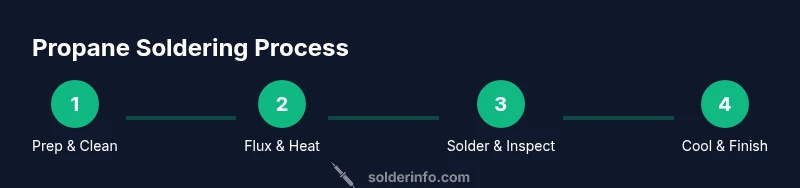
- 1
Prep workspace and parts
Set up a clean, ventilated area. Dry-fit joints to confirm alignment, then degrease and dry surfaces to remove oils or residues before fluxing.
Tip: Dry-fit first to avoid repositioning heated parts. - 2
Clean and flux joints
Scrub edges with a brush or sandpaper to remove oxides, then apply flux evenly to all mating surfaces.
Tip: A light, even coat of flux helps solder flow and prevents oxidation. - 3
Light and adjust the torch
Ignite the torch with a proper lighter or igniter, and set the flame to a well-distributed cone suitable for joint size.
Tip: Aim for a balanced flame; a roaring flame increases risk of overheating. - 4
Heat the joint gradually
Move the flame around the joint to preheat evenly, keeping heat away from plastic or heat-sensitive parts.
Tip: Avoid direct, focused bursts on any one area. - 5
Apply solder and monitor flow
Touch solder to the joint’s outer edge once preheated; allow capillary action to pull solder into the seam.
Tip: If solder beads/drops, you’re overheating or flux may be depleted. - 6
Cool and inspect
Remove heat, allow the joint to cool naturally, then inspect for smooth, uniform fillet and signs of oxidation or gaps.
Tip: Quench with water after a long heat cycle only if the material type allows.
Quick Answers
Can propane solder electronics?
Propane can reach soldering temperatures, but it can be risky for sensitive electronics. If you must use propane, practice on dummy boards, use heat sinks, and ensure you have excellent ventilation. In most electronics projects, finer heat control tools are preferred.
Propane can work, but for electronics it's best to practice and consider safer tools for delicate components.
Is propane hot enough for jewelry soldering?
Propane provides a hot, adjustable flame that can handle many jewelry joints. The key is precision and short heat bursts to avoid warping or heat damage to stones. For tiny pieces, consider a micro-torch designed for jewelry.
Yes, propane can work for jewelry with careful heat control and the right nozzle.
Safety gear needed for propane soldering?
Wear safety glasses, heat-resistant gloves, and long sleeves. Ensure good ventilation and keep a fire extinguisher nearby. Keep bystanders away from the workspace and never leave a lit torch unattended.
Always wear protective gear and maintain good ventilation when using propane.
What metals work best with propane heat?
Propane can solder many common metals like copper, brass, and steel, depending on flux and solder type. For aluminum or stainless steel, special alloys and controlled heat are often required. Always verify metal compatibility before starting.
Copper and brass are common, but check compatibility for your metal family.
Are there safer alternatives to propane for precision work?
Yes. For electronics and tiny jewelry joints, micro-torches, butane, or regulated heat guns offer finer control. For plumbing, acetylene or MAP-Pro combinations may sometimes be used, but always prioritize controlled heat and protective gear.
There are more precise options than propane for small joints.
How long should I let a joint cool after soldering?
Allow the joint to cool gradually to avoid thermal shock and potential cracking. Rapid cooling can cause microfractures; give it several minutes to reach ambient temperature.
Let it cool slowly for a strong, reliable joint.
Watch Video
Top Takeaways
- Master heat, not just flame power.
- Use the right flux and solder for your metal.
- Propane is versatile but not ideal for ultra-fine electronics.
- Practice on scrap metal to build confidence.
- The SolderInfo team emphasizes safety and controlled heating for best results.