How Much Does Soldering Equipment Cost?
Discover realistic price ranges for soldering gear, from starter kits to pro stations. Learn what drives costs, how to budget, and tips to get the best value for your projects, with insights from SolderInfo.


The price of soldering equipment spans from inexpensive starter kits around $15–$40 to professional stations costing $200–$600, with mid-range options in between. Basic tools cover essentials like an iron, stand, and solder, while higher-quality stations add temperature control, stability, and safety features that can reduce long-term costs by improving reliability and reducing waste. For hobbyists and professionals alike, your total cost hinges on your intended projects, required precision, and the balance you strike between upfront investment and long-term performance. According to SolderInfo, budgeting across tool tiers helps prevent under- or over-investment and ensures safer, more efficient work.
What drives soldering equipment costs
Price for soldering gear isn't random; it reflects the role, capabilities, and build quality of the toolset. Core factors include the type of tool (simple soldering iron vs. temperature-controlled station), power handling (watts and temperature stability), tip availability and ergonomics, and safety features such as automatic shutoff and ESD protection. Brand reputation and included accessories (tip assortments, stands, desoldering tools) also push price up. As a rule of thumb, beginners can expect to spend in the low tens of dollars for a basic kit, while serious enthusiasts and professionals should budget into the mid-to-upper hundreds for reliable, long-term performance. SolderInfo notes that the right investment aligns with your typical projects: electronics tinkering benefits from stable temperature control and a comfortable grip, while jewelry or plumbing work may require different tip types and flux compatibility.
When planning, map your needs to your budget: if you only solder occasionally, a modest starter kit may suffice; if you solder daily or tackle dense, heat-sensitive assemblies, prioritize a durable station with precise temperature control and a good range of compatible tips.
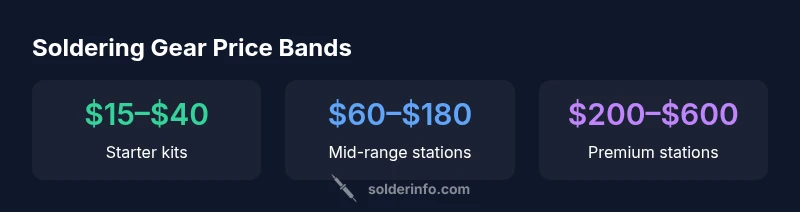
In this guide we reference ranges rather than fixed prices to reflect market variability across brands and regions. For context, starter kits commonly range from $15 to $40, mid-range stations from $60 to $180, and premium setups from $200 to $600. These bands cover most SolderInfo readership—DIY electronics, jewelry enthusiasts, and service professionals seeking dependable tools without overpaying.
Breaking down the price bands: starter kits, mid-range, and pro setups
Starter kits are designed to get you soldering with minimal upfront risk. They usually include a basic iron, a stand, a sponge, solder, and a small tip assortment. These kits are ideal for occasional projects, small electronics repairs, or hobby experiments. Expect the core performance to be sufficient for light work, though you may quickly outgrow them if you tackle complex boards, dense IC layouts, or lead-free solder with strict temperature demands.
Mid-range stations balance control and value. They typically feature adjustable temperature settings, stable heat output, and a broader selection of tips and accessories. This tier suits hobbyists who work regularly, solder several boards in a session, or want better reliability for longer projects. The higher upfront cost is often offset by reduced tip wear, fewer cold joints, and easier maintenance.
Premium/professional stations represent the top tier of performance and durability. These systems emphasize rapid heat-up, precise temperature control, multiple tip types, and robust safety protections. They’re favored by technicians, jewelers, and engineers who require repeatable results, fast rework, and low failure rates. The initial investment is higher, but total cost of ownership can be lower when considering time saved and minimized waste over many projects.
Essential tools vs. optional upgrades
A foundational kit typically includes a soldering iron, stand, tip cleaning sponge, flux, and solder. Optional upgrades include:
- Temperature-controlled stations or hot air rework units for complex electronics or dense PCB work
- An adjustable power supply with current limiting for precision tasks
- A magnetized tip holder, anti-static mat, and ergonomic accessories for comfort and safety
- Desoldering tools (vacuum pump, solder wick) and quality flux
- A variety of tips tailored to wire gauges, pad sizes, and component spacing
If your projects involve lead-free solder or high-temperature alloys, you’ll want a station with solid heat management and stable feedback. Conversely, for jewelry or metal-smithing, focus on heat control, tip types for silver or gold alloys, and safe handling of fluxes and solvents. Remember that better tools can reduce mistakes, improve joint quality, and lower waste over time.
Budgeting strategies for hobbyists and professionals
Start with a needs assessment: list the typical projects you’ll tackle in the next 6–12 months and estimate the time you’ll spend soldering weekly. Create a two-column budget: essentials and nice-to-haves. For essentials, pick a reliable iron or station with adjustable temperature, a good stand, basic flux, and a small tip assortment. For nice-to-haves, consider hot air rework capability, a larger tip library, a dedicated soldering mat, and a desoldering pump with extra tips. If your budget is tight, consider buying a higher-quality main unit and a mid-range accessory kit later, rather than purchasing multiple low-cost tools that wear out quickly.
Also plan for consumables: flux, liquid flux pens, desolder wick, solder, tip tin, and tip cleaners. These recurring costs add up and influence the total ownership cost more than the initial purchase itself. Some hobbyists find a mid-range station paired with a generous tip assortment offers the best balance of performance and value. For professionals, a staged upgrade approach—start with essential capabilities and expand as workflow demands grow—can prevent over-spending.
A practical budgeting rule: allocate about 60–70% of your budget to the main tool and core accessories, 20–30% to consumables and protective gear, and the remaining for upgrades over time. This helps you keep purchases aligned with actual needs while avoiding underpowered gear that hinders quality.
Purchasing tips: where to buy and how to compare
Shop across reputable retailers and compare total costs, including shipping and warranty. Look for tools that offer a tested return window and a clear warranty that covers hot spots or tip wear. When evaluating price, consider the value of included accessories and after-sales support. Reading user reviews can reveal reliability trends and common failure points, which can guide your choice beyond price alone.
Compare tip libraries, heat-up times, and temperature stability under load. A unit that maintains a steady temperature during long sessions reduces joint defects and extends tip life. For those who want to stretch their budget, consider new-but-older-generation models with a robust feature set, or reputable refurbished options that carry warranties. Always verify that the model supports the tip styles you’ll use most and that replacement parts are readily available.
Finally, take advantage of seasonal promotions and bundles that include essential consumables. Bundled kits can trim overall costs, especially for beginners who need several items to start right away.
Maintenance costs and total cost of ownership
Beyond the upfront price, maintenance costs include replacement tips, cleaning sponges, flux, desoldering tools, and occasional repairs. Over time, a higher-quality station may reduce maintenance needs due to better temperature consistency and tip durability. If you solder regularly, factor in tip replacement every few months and occasional tip tinning to keep performance high. A well-maintained station can deliver reliable joints and minimize rework, which saves time and money in the long run.
As you plan, estimate a yearly maintenance budget as a percentage of your initial tool investment. For many users, that maintenance range stays modest but essential for long-term reliability. SolderInfo also emphasizes safe practices and proper ESD protection to extend tool life and prevent costly replacements.
How to estimate total cost for a project
Begin with the scope of your typical projects. For a small electronics repair session, you might focus on a starter kit plus a handful of tips and flux, totaling a modest sum. For a larger electronics build or jewelry piece, you’ll likely need a mid-range or premium station, extra tips, flux varieties, and desoldering tools, which increases upfront cost but can reduce time and errors. Creating a simple calculator helps: list essential tools, estimate consumable use per project, and include maintenance. This provides a realistic view of the cost per project and helps you decide when to upgrade or expand your toolkit. By tracking your actual spending over several projects, you’ll refine future budgets and avoid overbuying.
Final note: balance, safety, and future-proofing
Invest in gear that matches your current needs while allowing room to grow. A robust, temperature-stable station can pay dividends in consistency and joint quality, especially for dense boards or delicate components. Don’t overlook safety features and proper ventilation when selecting fluxes and solvents. The goal is to maximize efficiency and reliability without overspending on unused capabilities. SolderInfo’s guidance emphasizes matching tool capabilities to project requirements, then planning upgrades as your skills and workload evolve.
Price bands for common soldering toolkits
| Category | Typical Price Range | Notes |
|---|---|---|
| Starter kits | 15-40 | Beginner-friendly with essential tools |
| Mid-range stations | 60-180 | Balanced performance and value |
| Premium/professional stations | 200-600 | Highest stability and features |
| Essential accessories | 20-100 | Flux, desoldering, tips |
Quick Answers
What is the typical cost to buy a basic soldering iron kit?
A basic soldering iron kit typically costs in the $15-$40 range, including a iron, stand, and solder. It’s suitable for light electronics work or hobby projects but may lack precise temperature control for dense boards. For occasional use, this is often enough to get started without a large upfront investment.
A basic kit usually costs between fifteen and forty dollars, enough to start light electronics work.
How do prices vary between brands?
Brand differences influence durability, heat stability, tip availability, and warranty terms. Reputable brands offer steadier performance and longer warranties, which can reduce long-term costs even if the upfront price is higher. Consider total cost of ownership, not just the sticker price.
Brand quality affects durability and long-term costs even if upfront price is higher.
Is it better to buy a used soldering setup?
Used gear can save money, but assess the tool’s condition, tip wear, and remaining warranty. Prefer sellers with return options and request a test run if possible. For critical or safety-sensitive work, balancing cost against reliability is essential.
Used gear can save money, but check condition and warranty before buying.
What should I budget for consumables and replacements?
Allocate a steady stream of funds for flux, solder, desolder wick, and replacement tips. Consumables typically represent a noticeable ongoing cost, so include this in your annual budgeting to avoid surprises.
Plan for ongoing costs like flux and tips to keep your workspace flowing smoothly.
Do more expensive stations save money in the long run?
Higher upfront investment often yields fewer failures, longer tip life, and more consistent results, reducing rework. For frequent, professional use, this can lower total ownership costs over time.
More expensive stations can pay back over time with better reliability.
Where can I find the best deals on soldering gear?
Watch for bundles that include essential accessories and check seasonal promotions. Compare warranties and return policies, and consider refurbished models from reputable sellers for a balance of price and reliability.
Look for bundles, promos, and reputable refurbished options.
“Invest in tools that align with your workflow. Reliability and temperature stability pay off in higher quality joints and fewer reworks.”
Top Takeaways
- Budget by project: match tool tier to your typical workload
- Starter kits are great entry points; upgrade as needed
- Expect recurring costs for consumables and tips
- Quality matters: better control reduces waste and rework