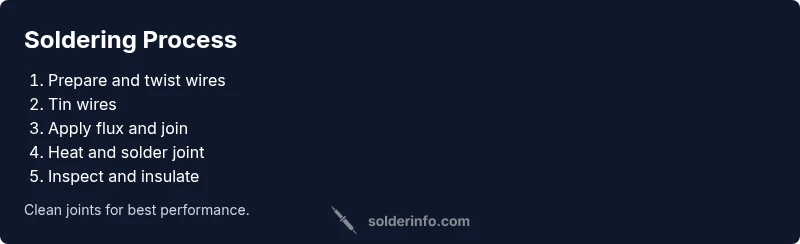
How to Solder Wires Together: A Practical Guide for DIY
Learn a reliable, step-by-step method to solder wires together safely. This guide covers preparation, tools, techniques, and common mistakes for durable connections in electronics and home projects.


You’ll learn how to solder wires together safely and reliably, from preparing the wires to testing the final join. This quick answer outlines the essential steps, common pitfalls, and recommended practices for clean, durable connections in electronics and home projects. You'll gain practical tips on stripping, tinning, flux use, heat management, and inspection to ensure a robust solder joint.
Safety and Prep
According to SolderInfo, proper prep and safety practices are foundational to successful soldering. In this section we cover protective gear, ventilation, and workspace setup to minimize health risks and prevent accidents. Wear safety glasses, work in a well-ventilated area, and keep flammable materials away from the soldering zone. Maintain a clean, organized workspace to improve heat control and reduce errors. SolderInfo analysis shows that correct heat control, paired with good ventilation, significantly improves joint reliability during repetitive workflows. Position the iron stand securely, use a damp sponge to keep the tip clean, and set aside scrap wires for practice. By establishing these habits, you reduce burns, fumes exposure, and repetitive strain when performing multiple solder joints.
Wire and Terminal Prep
Before you solder, prep the conductors to ensure a strong, vibration-resistant joint. Select the appropriate wire gauge for your project and strip insulation to about 6-8 mm (roughly ¼ to ⅓ inch) of exposed copper. Gently twist strands to a compact bundle and align the ends end-to-end. For stranded wires, twist tightly to eliminate loose strands that can fray during tinning. Clean the bare copper with isopropyl alcohol if there is any oil, oxidation, or residue that could impede solder wetting. Thorough prep reduces glare in the joint and makes heat transfer more uniform, which improves reliability over time.
Solder, Flux, and Heating: Choosing Materials
Material choice strongly affects joint quality. Use lead-free rosin-core solder for safer electronics work and rosin flux to improve wetting and oxidation control. If you’re using flux separately, apply a very thin coating to the wire ends so solder can flow smoothly into the joint; avoid excessive flux that can attract dust or corrode insulation. Keep your soldering iron clean and tinned to ensure fast, even heat transfer. Store flux properly and replace it when it becomes dark or dry, which can reduce its effectiveness.
The Soldering Technique: Heat, Contact, and Joint Formation
With prepared wires, secure them so they won’t shift during soldering. Bring the heated iron tip to the joint and allow heat to transfer into the metal until the copper glows slightly. Feed solder into the heated joint (not directly onto the iron) until the solder flows and the joint fills the space between conductors. Remove the heat once the joint is fully formed and inspect for a shiny, conical fillet that covers the conductor strands. If you overheat, insulation can burn; if you underheat, you’ll get a dull, cratered joint. Keep your tip clean and re-tin between joints to maintain consistent heat transfer.
Insulation, Strain Relief, and Finishing
After a successful joint, protect it with insulation and strain relief. Slide a piece of heat-shrink tubing over the joint and apply heat evenly to shrink it tightly around the connection. If heat-shrink isn’t available, wrap the joint with electrical tape or use a molded sleeve. Ensure there is no bare copper exposed; exposed conductors can corrode or short against nearby metal. Finally, test fitment and re-check the insulation visually to confirm there are no gaps or punctures that could compromise the joint over time.
Testing and Troubleshooting Common Issues
Testing ensures the joint meets reliability standards. Use a multimeter to verify continuity from wire end to end and check for shorts to other conductors. A shiny, smooth joint usually indicates a quality bond, while a dull or cracked joint suggests rework is needed. If insulation was damaged or strands appear loose, re-strip and re-tin before reassembling. Always verify strength by gently tugging on the wires and rechecking continuity after movement.
Maintenance and Best Practices
Develop a routine that preserves soldering quality across projects. Keep the iron tip clean and well-tinned, replace worn sponges or brass wool, and store solder and flux in a cool, dry place. Work in a ventilated area and wipe away flux residues after finishing. Label and organize wires to avoid confusion in future projects, and practice on scrap wires to build consistency. Following these practices improves long-term joint performance and reduces the need for rework.
Tools & Materials
- Soldering iron (temperature-controlled preferred)(Set to 350-400°C for most wires; use heat sink for delicate insulation)
- Lead-free rosin-core solder(1.0–2.0 mm diameter is common; avoid leaded solders unless safe)
- Rosin flux (if used separately)(For electronics; apply thin coating to ends)
- Flux brush or cotton swab(For applying flux and cleaning)
- Wire stripper(Strip about 6-8 mm insulation)
- Cable tie or heat-shrink tubing(For insulation and strain relief)
- Heat gun or hairdryer (optional)(To shrink tubing)
- Wire cutters(Trim wires cleanly after soldering)
- Helping hands / third-hand clamp(Stabilizes parts during soldering)
- Multimeter with continuity tester(Verify continuity and insulation)
- Isopropyl alcohol and lint-free cloth(Clean flux residues)
- Safety glasses(Eye protection during heat and flux)
- Ventilation or fume extractor(Minimize flux fumes)
Steps
Estimated time: 25-40 minutes
- 1
Prepare workspace and safety gear
Clear the area, assemble PPE, and test equipment. Ensure good ventilation and a stable surface before you start.
Tip: Wear safety glasses; have a damp sponge handy to clean the tip. - 2
Strip and twist wires
Expose 6-8 mm of conductor, twist strands to a compact bundle, and align ends side by side for a neat joint.
Tip: Avoid nicking copper; a clean strip makes tinning easier. - 3
Tin the exposed conductors
Lightly coat the stripped ends with solder to improve heat transfer and prevent fraying during joint formation.
Tip: Tin evenly and avoid globbing excess solder. - 4
Apply flux and position wires
Coat the ends with flux, then align wires to form a tight butt joint for solder flow.
Tip: Flux reduces oxidation and helps solder wet the metal. - 5
Heat the joint and apply solder
Place the heated iron on the joint and allow heat to transfer into the metal until the copper glows slightly. Feed solder into the joint (not directly onto the iron) until the joint fills and the solder flows smoothly.
Tip: Feed solder into the joint, not onto the iron tip. - 6
Inspect and rework if needed
Look for a shiny, cone-shaped fillet. Reheat and add solder if there are gaps or dull areas.
Tip: A good joint should be bright and smooth. - 7
Insulate and finish
Slide heat-shrink over the joint and apply heat evenly. Ensure complete insulation and strain relief.
Tip: Secure with a cable tie for added support. - 8
Test electrically
Use a multimeter to verify continuity and absence of shorts. Document results for future reference.
Tip: If resistance is unexpectedly high, rework the joint.
Quick Answers
What is the best wire stripping length for soldering wires together?
Typically expose about 6-8 mm of conductor to ensure a solid joint without risk of exposed copper touching nearby parts.
Expose about 6 to 8 millimeters of wire, then twist and tin for a strong joint.
Can I use regular electronics solder with flux core?
Yes. Flux-core solder is convenient for electronics; rosin flux helps wetting and reduces oxidation.
Yes. Flux-core solder is convenient and improves wetting.
What causes a cold solder joint and how do I fix it?
A cold joint results from insufficient heat or abrupt removal of heat. Reheat and apply a small amount of solder to rework the joint.
A cold joint happens when it’s not heated enough; reheat and re-solder.
Are lead-free solders weaker than traditional solders?
Modern lead-free solders perform well with proper flux and heat control; ensure compatibility with your flux and insulation.
Lead-free solders work well when used with proper flux and heat control.
How do I test a soldered joint?
Check continuity with a multimeter and look for a shiny, intact joint. Inspect insulation for any damage.
Test continuity with a multimeter and inspect the joint visually.
What safety measures should I follow?
Work in a ventilated area, wear eye protection, and keep flammable materials away from the work zone.
Ventilation, eye protection, and a tidy workspace are essential for safety.
Watch Video
Top Takeaways
- Prepare and protect your workspace before soldering.
- Strip, twist, and tin wires for strong joints.
- Heat the joint properly and feed solder; don’t melt the wire.
- Inspect joints for a bright, smooth fillet before finishing.
- Finish with insulation and test continuity to confirm reliability.