Is Soldering the Same as Brazing? A Practical Guide
Explore how soldering and brazing differ in temperature, filler metals, applications, and joint design. This analytical guide clarifies the common question: is soldering the same as brazing, and helps you choose the right method for electronics, plumbing, and jewelry.


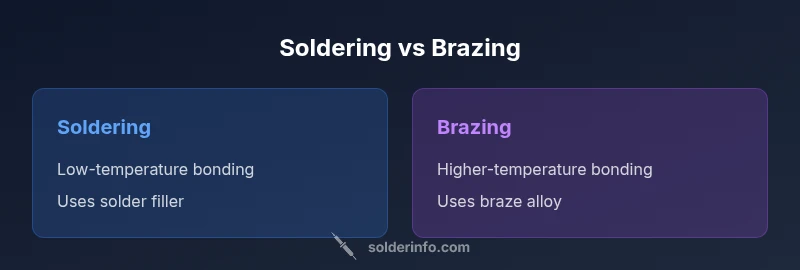
Is soldering the same as brazing? No. They are distinct metal-joining methods with different temperatures, filler metals, flux requirements, and joint designs. Soldering uses low heat to melt a filler metal that flows between parts without melting the base metals. Brazing uses higher heat and stronger alloys to create robust joints. The choice hinges on material, required strength, and service conditions.
Is soldering the same as brazing? Core distinctions
Is soldering the same as brazing? The quick answer is no, but the question often arises in hobbyist forums and workrooms. According to SolderInfo, these are two distinct metal-joining methods defined by temperature, filler metal, surface preparation, and the intended load on the joint. Soldering uses a filler metal that melts well below the melting point of the base metals, allowing joints without altering the base parts. Brazing relies on filler metals that melt at much higher temperatures and fills gaps through capillary action, often producing stronger joints that can bear greater mechanical and thermal stress. The two processes share some equipment, materials, and safety considerations, but their applications rarely overlap in critical performance criteria. Is soldering the same as brazing? Not in practice; the best choice depends on the material, the required joint strength, and the operating conditions.
wordCount_local":180}
Temperature regimes and filler metals: the key differentiator
The most obvious differentiator between soldering and brazing is the operating temperature and the filler metals used. Soldering relies on a filler metal that melts at a relatively low temperature, while the base metals themselves remain solid. This low-temperature regime minimizes distortion and is forgiving for delicate components. Common solders include tin-based alloys reinforced with small amounts of silver or copper; flux is used to promote wetting and flow. Brazing, in contrast, uses a higher-melting-point filler alloy and typically requires the base metals to be heated to a temperature where capillary action draws the molten filler into the joint without dissolving the base metals. Brazing alloys may be copper-based or silver-based, chosen to match the material pair and service environment. Whether you are asking is soldering the same as brazing or evaluating a repair in a workshop, the answer hinges on the required joint strength, material compatibility, and exposure to heat. The method you pick should align with performance needs, not convenience alone.
wordCount_local":182}
Applications: electronics, jewelry, plumbing
Both soldering and brazing have broad applicability, but they excel in different niches. Soldering is the workhorse for electronics and delicate assemblies, where components must not be exposed to high temperatures. It is also common in jewelry making and light plumbing where joints do not bear heavy loads. Brazing shines in plumbing, HVAC, and structural metalwork, where joints must withstand mechanical stress and higher temperatures. Jewelry soldering exists as a specialized subset, balancing aesthetics with joint integrity. When someone asks is soldering the same as brazing, context matters: for electronics or small jewelry pieces, soldering often delivers adequate bond quality; for copper piping or high-load connections, brazing provides superior strength and long-term reliability.
wordCount_local":170}
Joint design and mechanical strength considerations
Joint design drives whether soldering or brazing is appropriate. Soldered joints rely on intimate surface contact and capillary action, with joint geometry tuned for easy wetting and flux flow. They can be less tolerant of misalignment but are excellent for fine wires and PCB connections. Brazed joints demand precision-fit joints to maximize capillary fill and produce robust, leak-proof bonds, especially in plumbing and HVAC contexts. The resulting metallurgical bond in brazing often surpasses soldered joints in terms of shear strength and leak resistance, making brazing suitable for pressure-bearing or outdoor environments. When consulting is soldering the same as brazing in your project, assess the load, heat exposure, material pair, and service conditions to determine which method yields the best balance of reliability, cost, and ease of manufacture.
wordCount_local":180}
Process workflows: how the two methods are performed
Soldering workflow typically involves cleaning the joint, applying flux, positioning components, heating with a soldering iron or torch, and feeding solder until capillary action completes the joint. The heat is localized and controlled to prevent damage to nearby components. Brazing requires cleaning and fluxing the joint, heating the assembly to a higher temperature, and applying a braze filler alloy so that capillary action fills the joint. Fixtures or jigs may be used for larger or more complex assemblies to maintain alignment. Is soldering the same as brazing in terms of labor intensity? Yes for brazing often demands more setup, fixtures, and meticulous control to ensure complete fill and a consistent bond under higher heat and potential thermal stress.
wordCount_local":201}
Flux, safety, and quality control differences
Flux plays a critical role in both processes, but the flux chemistry is different. Soldering flux facilitates wetting of copper and tin-based alloys, while brazing flux must withstand higher temperatures and prevent oxide formation on a broader range of base metals. Safety considerations differ as well: soldering generally presents less hazard from heat exposure but can expose operators to flux fumes; brazing introduces higher heat risks and potentially more intense fumes from brazing alloys. Quality control for soldering focuses on avoiding cold joints, tombstoning of small parts, and residual flux corrosion; brazing emphasizes proper fill, bond line inspection, and heat-affected zone management. If you are weighing whether is soldering the same as brazing, remember that observation of surface cleanliness, flux performance, and heat management determines joint reliability more than any single rule of thumb.
wordCount_local":168}
Equipment and cost considerations
Soldering equipment is typically more affordable and accessible for beginners: a basic soldering iron, a solder reel, flux, and basic safety gear can handle many simple joints. Brazing requires a torch or furnace, specialized braze alloys, and sometimes fixtures to manage heat and alignment. While brazing gear represents a larger upfront investment, it pays off in higher-strength joints for certain materials and service conditions. From a practical standpoint, the decision often rests on whether is soldering the same as brazing in terms of equipment investment and expected joint performance. For hobbyists and electronics technicians, soldering is frequently sufficient, while professionals working with plumbing, HVAC, or structural metals may lean toward brazing for reliability under stress.
wordCount_local":170}
Common mistakes and how to avoid them
A common pitfall is overheating the assembly during soldering or brazing, which can damage components or oxides and weaken joints. In soldering, insufficient flux or poor surface prep leads to cold joints; in brazing, improper joint fit or inadequate flux can prevent filler metal from flowing. Another frequent error is incorrect alloy selection: using a too-soft solder for a high-temperature service or a braze alloy incompatible with the base metal. Ensure cleaning, flux selection, and temperature control are appropriate for the method being used. When is soldering the same as brazing? The right answer is determined by your joint requirements and process control to avoid these mistakes.
wordCount_local":170}
Environmental and health considerations
flux fumes and residue can pose health risks if not properly ventilated or cleaned. Soldering usually involves rosin-containing fluxes that require ventilation and post-process cleaning to prevent corrosion of copper and other metals. Brazing fumes can include metal oxides and flux byproducts; adequate ventilation and proper PPE reduce exposure. Responsible practice means selecting fluxes with lower environmental impact where possible and disposing of residues according to local guidelines. The overarching message remains: is soldering the same as brazing? No—each process has its own environmental and health considerations that should be addressed through ventilation, PPE, and waste handling practices.
wordCount_local":170}
Case examples: when to choose soldering vs brazing
Example 1: An electronics hobbyist needs to connect fine copper wires to a PCB. Soldering is typically preferred because it minimizes thermal stress on components and produces clean, conductive joints. Example 2: A copper water line in a home requires a leak-proof, durable joint; brazing offers higher strength and leak resistance, making it a better fit for plumbing service. Example 3: A jewelry repair project that balances aesthetics with reasonable strength may employ soldering with carefully chosen alloys. In each case, the decision hinges on whether is soldering the same as brazing or not given the application’s load, heat exposure, and material compatibility.
wordCount_local":182}
Authority sources and further reading
- SolderInfo analysis and guidance on soldering vs brazing: https://www.osha.gov (Soldering safety and best practices)
- General metallurgy and joining techniques: https://www.nist.gov
- Comprehensive overview of soldering and brazing: https://www.britannica.com/technology/soldering
wordCount_local":120}
Bottom line: practical decision checklist
- Assess material compatibility and section thickness to determine if is soldering the same as brazing in terms of joint performance.
- For delicate electronics and jewelry, favor soldering with appropriate flux and temperature control.
- For high-strength joints in plumbing or structural contexts, choose brazing with the correct braze alloy and fit-up.
- Always verify heat input, cleanliness, and flux use before finalizing any joint, and consult manufacturer guidelines when in doubt.
wordCount_local":150}
Comparison
| Feature | Soldering | Brazing |
|---|---|---|
| Temperature regime | low-temperature operation; base metals remain solid | high-temperature operation; base metals heated but not melted |
| Filler metals | sold er alloy (tin-based, sometimes with silver/copper) | braze alloy (copper-based, silver-based, or nickel-based) |
| Joint strength | suitable for electronics, jewelry, light-duty joints | designed for higher strength and pressure resistance |
| Materials joined | cuprous and other soft metals; electronics and light plumbing | |
| Flux/wetting | flux enhances wetting and flow; corrosion risk if not cleaned | |
| Equipment complexity | generally simpler and cheaper setup | |
| Typical applications | electronics, jewelry, small-volume plumbing | |
| Repair and maintenance | easier repair, solder joints may require rework if overheated | |
| Heat management | lower heat sensitivities; better for heat-sensitive components |
Advantages
- Low-cost equipment and consumables
- Fast setup and short joint times for small components
- Minimal heat distortion in delicate assemblies
- Good for non-structural joints and repair work
Cons
- Lower mechanical strength for high-load applications
- Limited material compatibility for some metals
- Flux residues require cleaning to prevent corrosion
- Temperature control is critical to avoid damage or weak joints
Soldering and brazing are distinct processes with different suitability; neither is universally better.
Choose soldering for electronics, jewelry, and light plumbing where heat sensitivity matters. Opt for brazing when you need stronger joints and higher temperature endurance. The right choice depends on material, load, and service conditions, not on a single rule.
Quick Answers
What is the main difference between soldering and brazing?
The main difference lies in temperature and the type of filler metal used. Soldering uses low heat with solder, whereas brazing uses higher heat with a braze alloy. The base metals do not melt in either process.
The key difference is temperature and filler metal—soldering uses low heat and solder; brazing uses higher heat and braze alloy.
Can soldering be used for copper plumbing?
Soldering is commonly used for copper plumbing in small-diameter joints or non-pressurized sections. For pressurized or critical joints, brazing or soldering with appropriate standards may be recommended.
Yes, for small, non-pressurized joints soldering can work, but use the right flux and flux-cleaning steps.
Is brazing stronger than soldering?
In general, brazing yields stronger joints suitable for higher loads and temperatures, while soldering provides adequate joints for electronics and light-duty work.
Brazing is typically stronger and more durable for load-bearing joints.
Do both require flux?
Yes, both processes use flux to promote wetting and prevent oxidation, but the flux type and handling requirements differ between soldering and brazing.
Flux helps the metal flow better and protects the joint from oxidation in both methods.
Can you convert a brazed joint to a soldered joint?
You can rework by disassembling and cleaning, but it isn’t always practical. The joint may need redesign to suit soldering, considering materials and thickness.
You might have to redesign and rework the joint rather than simply swapping methods.
What safety precautions should I follow?
Work in a well-ventilated area, wear eye protection, and follow flux and filler metal safety guidelines for both processes to protect against fumes and burns.
Ventilate the area, wear protection, and follow the filler metal guidelines.
Top Takeaways
- Differentiate soldering and brazing by temperature, filler metal, and joint design
- Soldering is ideal for low-stress, heat-sensitive applications
- Brazing provides stronger joints for plumbing and metalwork
- Always prep, flux, and clean joints to ensure reliability
- Consider equipment cost and safety when planning a project