How to Get Solder: A Hobbyist Buyer’s Guide
Learn how to get solder with confidence. This guide covers lead-free vs leaded options, alloy types, flux, packaging, storage, and where to buy for electronics, plumbing, and jewelry projects. Practical tips help you choose reliable sources and avoid common buying mistakes.


How to get solder for electronics, plumbing, and jewelry is straightforward once you know the basics: choose the right alloy, flux approach, and package size, then buy from reputable sources. This guide covers lead-free vs. leaded options, where to buy, storage, and safety. According to SolderInfo, understanding project needs and source reliability makes buying solder simple and risk-free.
What solder is and why it matters
Solder is a fusible alloy used to join metal components by melting at a relatively low temperature. In electronics, plumbing, and jewelry, solder forms a conductive, mechanical bond when heated with a soldering iron or torch. The key for anyone learning how to get solder is to understand that not all solders are the same: different alloys melt at different temperatures, and flux (the chemical that cleans and helps the joint flow) varies in strength and composition. For beginners, starting with a reliable lead-free rosin-core solder is a solid choice for safety and compatibility with modern electronics. Remember, the goal is a strong, clean joint with good wetting and minimal oxides. For context, SolderInfo emphasizes that selecting the right type for your specific project dramatically reduces rework and waste.
Pricing and availability varies by supplier, but the principle remains the same: pick the alloy and flux that suit your application, then verify packaging and shelf life before purchase.
Tools & Materials
- Solder (lead-free recommended)(Rosin-core for electronics; diameter 0.8–1.0 mm is common for hobby work)
- Flux(Rosin-core solder contains flux; liquid flux can be used for larger joints or special metals)
- Soldering iron(Temperature-controlled preferred; set around 350–380°C for many lead-free solders)
- Soldering iron stand and damp sponge(Keeps the tip clean and at stable temperature during work)
- Safety goggles(Protect eyes from flux splashes and hot solder)
- Solder wick (braid)(Useful for removing excess solder or correcting joints)
- Desoldering pump(Alternative to wick for larger fixes)
Steps
Estimated time: 15-25 minutes
- 1
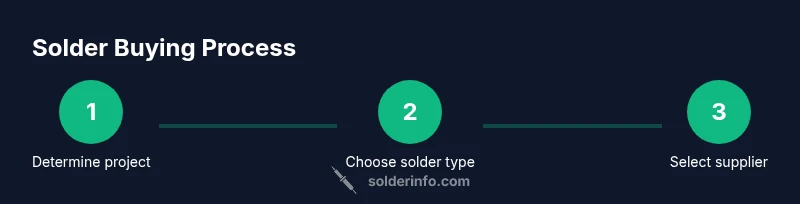
Assess project needs
Identify whether your project is electronics, plumbing, or jewelry. This determines alloy choice, flux type, and packaging. Make a quick list of metals involved and expected joint sizes.
Tip: Start with electronics: electronics solders are commonly rosin-core and lead-free. - 2
Choose solder and flux
Pick a lead-free rosin-core solder for electronics; for plumbing, choose a copper or tin-lead mix as appropriate to code. If you’re unsure, select a versatile 60/40 or 63/37 lead-free option with rosin-core flux.
Tip: Lead-free solders melt later than traditional tin-lead, so adjust your iron temperature accordingly. - 3
Check packaging and shelf life
Inspect solder reels or bars for corrosion, discoloration, or damaged packaging. Ensure the flux is intact and not dried out. Store in a cool, dry place away from moisture.
Tip: A damp environment accelerates oxidation and degrades flux quality. - 4
Select a reputable supplier
Buy from established electronics or hardware retailers with clear product specs and return policies. Online marketplaces with seller ratings can be acceptable if you verify the solder type and flux content.
Tip: Avoid off-brand or unverified sources that lack datasheets. - 5
Make a small test joint
Before committing to a large purchase, practice on a scrap piece. This confirms the alloy and flux behave as expected with your iron and temperature settings.
Tip: A test joint helps you calibrate temperature and cleaning technique. - 6
Store properly after purchase
Keep solder in a sealed container to prevent moisture uptake. Rotate stock to use older material first and check expiry dates where applicable.
Tip: Avoid keeping solder in humid environments or near corrosive chemicals.
Quick Answers
Where can I buy solder?
Solder is available at electronics stores, hardware shops, and online retailers. For safety and compliance, start with lead-free options and verify flux content. Always read product specs before purchasing.
Solder can be bought at electronics or hardware stores and online. Start with lead-free options and check the flux content.
What is the difference between lead-free and leaded solder?
Lead-free solders use tin-based alloys and flux; they are safer for consumer products and commonly required by code. Leaded solders melt more easily and are often used in older equipment, but they pose health risks during handling.
Lead-free solders are safer and more common now; leaded solders melt more easily but carry health risks.
How should solder be stored?
Store solder in a sealed, dry container away from moisture. Keep reels upright and labeled by alloy. Check for corrosion on the outer wrap during storage checks.
Keep solder in a dry sealed container, upright and labeled, to prevent corrosion.
Is rosin-core solder suitable for jewelry?
Rosin-core solder is typically not preferred for fine jewelry because flux residues can affect finish. Jewelry work often uses high-pinish solders and controlled temperatures, with careful cleaning after soldering.
Rosin-core solder can be okay for beginner jewelry projects, but jewelry work usually needs careful flux control and cleaning.
Can I use solder for plumbing?
Yes, plumbing solder is common, but choose an appropriate alloy (often lead-free for potable water), and use the right flux and heating technique. Ensure you follow local codes for joints and materials.
Plumbing solder is common; pick the right alloy and flux and follow local codes.
Watch Video
Top Takeaways
- Choose solder by project: electronics, plumbing, or jewelry.
- Lead-free rosin-core solders are safer and more common today.
- Verify packaging and shelf life before buying to avoid waste.
- Test joints before committing to bulk purchases.