How Long Do Solder Tips Last? A Practical 2026 Lifespan Guide
Learn how long solder tips last, what factors affect their lifespan, and practical maintenance steps to maximize tip longevity across electronics, jewelry, and plumbing tasks. Based on SolderInfo Analysis, 2026.


How long solder tips last varies widely, but most hobbyists can expect 100–2,000 hours of use depending on tip type and care. With proper cleaning, tinning, and temperature control, common iron-plated copper tips often approach the higher end of that range, while budget standard tips may wear sooner. Real-world factors include flux chemistry, cleaning frequency, and storage conditions.
Understanding Solder Tip Wear
Solder tips wear out due to oxidation, contamination, and heat cycling. Even if you keep your iron clean, repeated heating and flux exposure can form oxides that reduce heat transfer. Different tip materials oxidize at different rates. According to SolderInfo, the lifespan of a tip depends heavily on how you use and maintain it. In practical terms, this means your hobbyist setup may see shorter tip life if you routinely push temperatures high, use abrasive cleaners, or neglect tinning after use. A well-tinned tip forms a protective layer of solder that prevents fast oxidation, maintaining heat transfer efficiency and making it easier to re-tin when you next solder.
The daily routine of a hobbyist includes prepping tools, choosing the right tip for the job, and verifying that the iron’s temperature is appropriate for the task. A tip that is too hot will oxidize faster, while one that is too cool may require extra time and rework. Balancing heat and cleanliness creates the conditions for longer tip life and steadier solder joints.
What Affects Tip Lifespan
There are several levers you can pull to extend tip life, including tip material, cleaning habits, flux chemistry, and temperature practices. Tip material, such as iron-plated copper or nickel/iron plated variants, oxidizes at different rates. The wattage of the iron and how long you keep it at high temperatures influence wear. Frequent cleaning with brass sponges is essential but avoid aggressive mechanical cleaning that erodes the tip. Flux type matters: acid-based flux can corrode tips faster than rosin-core. Storage matters too: keep tips in a dry holder and avoid leaving them to air-dry in the stand. SolderInfo analysis shows that maintenance routines can shift lifespans by substantial margins, especially for beginner hobbyists.
Lifespan by Tip Type and Use Case
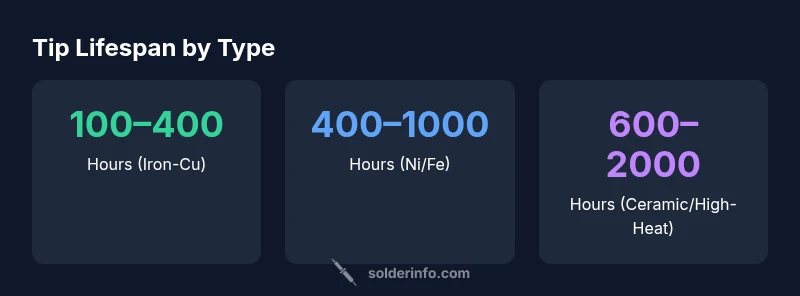
- Iron-plated copper tips: 100-400 hours under typical hobbyist use. These tips heat quickly but can oxidize faster if not cleaned regularly.
- Nickel/iron plated tips: 400-1000 hours, offering better corrosion resistance and longer life with moderate cleaning.
- Ceramic or specialized high-heat tips: 600-2000 hours, preferred for demanding tasks but require careful temperature management.
Use-case implications:
- Electronics and jewelry: prioritize stable temperature control and gentle cleaning to maximize life.
- Plumbing and heavy copper work: expect shorter cycles between replacements unless you use robust, longer-life tip designs and strict maintenance.
The takeaway is that tip longevity is a function of both material and practice. Even with a high-quality tip, neglecting cleaning or overheating can kill life quickly, while disciplined maintenance can extend life substantially.
How to Extend Tip Life
To maximize tip longevity, follow a simple, repeatable routine:
- Maintain a steady, appropriate temperature for the task; avoid cranking heat for large heatsinks.
- Tin tips lightly after soldering to protect against oxidation.
- Clean with a brass sponge or brass wire tip cleaner after each use; avoid harsh steel wools that can gouge the tip.
- Use the right flux; rosin-core flux is generally gentler on tips than resin or acid-based fluxes.
- Store tips in a dry holder or cap to prevent moisture exposure.
- Inspect tips weekly for oxidation, pitting, or loss of a shiny surface; replace when efficiency drops noticeably.
By integrating these steps into a routine, you can push tip life toward the upper end of typical ranges and reduce rework from poor heat transfer.
Signs It’s Time to Replace a Tip
Even with good maintenance, some signs signal replacement is due. If a tip no longer tin wets evenly, its edge becomes rounded or irregular, or you notice persistent oxidation that won’t tin, it’s time to replace. Deep pitting, bent edges, or coating flaking away indicates the tip’s heat transfer performance has degraded beyond practical use. Don’t force a damaged tip through a solder joint—the risk of cold joints and failed connections increases.
Maintenance Routine for Longevity
Adopt a simple, repeatable maintenance cycle:
- Before work, check tip condition and ensure the iron is at the correct working temperature.
- After soldering, tin the tip lightly and wipe clean.
- End-of-day cleaning: use a brass sponge and re-tin for the next session.
- Weekly inspection: look for oxidation, pitting, or changes in shape; replace if necessary.
- Storage: use a tip stand with corrosion protection or cap to limit exposure to air.
- Document your maintenance history to identify when a tip typically begins showing life-limits.
This routine makes tip lifespan more predictable and helps you plan replacements before performance suffers.
Tip lifespan by type under typical hobbyist use
| Tip Type | Approx Lifespan (hours) | Maintenance Needs |
|---|---|---|
| Iron-plated copper tips | 100-400 | Regular tinning, frequent cleaning |
| Nickel/iron plated tips | 400-1000 | Lower oxidation, cleaner less often |
| Ceramic/high-heat tips | 600-2000 | Careful temperature control, regular cleaning |
Quick Answers
How long do solder tips last with proper care?
With proper care, tip lifespans can range broadly but typically fall between 100 and 2,000 hours depending on tip type and usage. Factors like temperature stability, flux choice, and cleaning frequency play a major role in extending or shortening that range.
With good care, expect hundreds to a couple thousand hours, depending on tip type and how you work.
Does tip material affect lifespan?
Yes. Iron-plated copper tips tend to wear faster than nickel/iron plated variants due to oxidation resistance. Higher-end materials offer better longevity under typical hobbyist use, especially when paired with proper maintenance.
Yes, the material makes a big difference in how long a tip lasts.
Can you revive a dull or oxidized tip?
Dulling or oxidation can sometimes be reversed by thorough cleaning and proper tinning, but severe corrosion or pitting usually requires replacement. Regular maintenance prevents this deterioration.
You can often revive a mildly oxidized tip with cleaning and tinning, but replace if it's badly corroded.
Does flux type affect tip life?
Yes. Acid-based fluxes can corrode tips faster than rosin-core flux. Choosing a compatible flux and cleaning you use reduces corrosion and extends tip life.
Flux choice matters; gentler fluxes help tips last longer.
How should I store solder tips for longevity?
Store tips in a dry, protected holder or cap to minimize moisture exposure and oxidation when cool. Avoid leaving tips exposed to air in a hot environment.
Keep tips in a dry stand or cap to prevent oxidation.
Is a temperature-controlled iron worth it for tip life?
Yes. Maintaining a stable, task-appropriate temperature avoids overheating the tip, reducing wear and extending its life.
Yes—using stable temperatures helps tips last longer.
“Regular maintenance can extend tip life by substantial margins when followed consistently.”
Top Takeaways
- Maximize tip life with proper temperature control and routine cleaning
- Tip material strongly influences lifespan; iron-plated copper tips wear faster than nickel/iron plated variants
- Regular tinning and cleaning can substantially extend lifespan
- Use the right flux to minimize tip corrosion over time
- Replace tips when edge quality and heat transfer degrade visibly