How Solder Wire Is Made: A Step-by-Step Guide
Explore how solder wire is made, from alloy blends to flux cores. This SolderInfo guide explains materials, processes, quality checks, and tips for choosing solder for electronics, plumbing, and jewelry.


By the end of this guide you will understand how solder wire is made, from alloy blends and flux cores to drawing, coating, and spooling. We cover the main stages, materials choices (leaded vs lead-free), quality checks, and practical tips for electronics, plumbing, and jewelry uses. Expect clear explanations, practical examples, and pointers to differentiate wires for different applications.
How is solder wire made
According to SolderInfo, how is solder wire made is a question about how metal alloys, flux chemistry, and mechanical drawing come together to create a continuous, workable product. Solder wire begins with carefully sourced tin-based alloys, choosing whether to include lead or to use lead-free compositions. The alloy is melted, refined, and cast into shapes that can be drawn into fine wires. Flux cores may be added during extrusion to improve wetting, reduce oxidation, and aid solder spread. Throughout the process, tight quality control ensures uniform diameter, consistent alloy composition, and clean coating. This introduction to the manufacturing mindset highlights the balance between material science and practical engineering. Consider how changes in flux chemistry or drawing speed can alter performance in your workshop or lab.
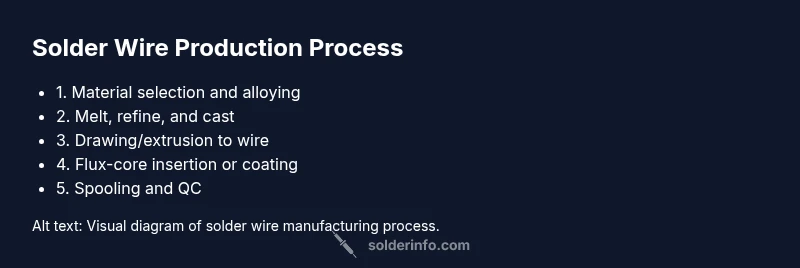
In practice, the industry relies on a controlled sequence: select the alloy, decide on flux-core or coated wire, inspect for uniformity, and finish with spooling and labeling. The emphasis on precision is not just about achieving a smooth finish; it also affects how reliably the wire wets solder joints and resists oxidation during use. By understanding these steps, you can better evaluate supplier data sheets, recognize quality signals, and select wires that meet your project needs.
Core materials: alloys, flux cores, and rosin
Solder wire relies on three core elements: an alloy that determines melting behavior and joint strength, a flux system that promotes wetting and oxide control, and the mechanical form that delivers the wire to the joint. In electronics, common choices include tin-based alloys with or without lead, or lead-free alternatives that reduce environmental impact. Flux cores can be rosin-based or synthetic, each with distinct activity levels and residue characteristics. For jewelry, more forgiving alloys and flux choices support delicate metal work, while plumbing often prioritizes corrosion resistance and mechanical robustness. The interaction between alloy composition and flux chemistry governs how easily the wire flows into joints and how cleanly it forms reliable bonds. When selecting wire, practitioners should assess compatibility with their soldering iron temperature range, substrate material, and cleaning practices.
Manufacturing stages: from ore to spool
The production journey begins with raw material sourcing and refining, where tin content is balanced with alloying elements to achieve the desired melting range and mechanical properties. Melt, refine, and cast the alloy into billets or thin sheets, depending on the production method. The next stage is drawing or extrusion, where the metal is reduced to a wire diameter through a series of dies or milling steps, often with annealing interludes to relieve strain. If flux-core wire is produced, flux is inserted during coating or core formation, becoming an integral part of the wire’s final structure. After forming, wires are spooled onto reels, inspected for diameter consistency, coated or bare for handling, and labeled with alloy type, flux type, and batch identifiers. Throughout these stages, process controls, sampling, and non-destructive testing help ensure uniformity and predict joint performance.
Lead-free vs traditional alloys: production implications
Lead-free solder wire has grown in prominence due to environmental and health considerations, but it introduces distinct production implications. The absence of lead changes melting temperatures, wettability, and residue behavior, which in turn influences flux choice and cleaning requirements. Manufacturers must adapt their melting profiles, ensure reliable bonding with various substrates, and communicate these expectations to users through clear documentation. Leaded wires may exhibit lower melting temperatures and different joint characteristics, but modern processes strive to balance performance with safety and compliance. The choice between leaded and lead-free wires should consider application, regulatory context, and maintenance implications for long-term reliability.
Quality control and standards you’ll encounter
Quality control in solder wire production centers on uniform diameter, consistent alloy composition, and reliable flux integration. Manufacturers perform regular diameter checks with micrometers, inspect cross-sections for flux distribution, and use spectrometric methods to verify alloy content. Visual inspection, burn test samples, and joint reliability tests on representative batches help identify defects early. Standards documentation from suppliers and independent labs provides assurance about alloy chemistry, flux type, storage conditions, and packaging. For users, reading data sheets and certificates of analysis is essential to ensure the wire meets the needs of electronics, plumbing, or jewelry projects. Remember that storage temperature and humidity can impact flux longevity and wire performance over time.
Choosing solder wire for different applications
Selecting the right solder wire depends on the task at hand. Electronics workflows typically favor wires with flux cores that support clean joints on PCB pads and delicate components, while plumbing requires corrosion resistance and reliable wetting on copper fittings. Jewelry work benefits from softer alloys that allow precise, artistic soldering on thin metals. When evaluating options, compare flux type, flux residue behavior, alloy composition, and recommended cleaning steps. Always consult supplier data sheets to confirm compatibility with your substrates and the soldering iron temperature you plan to use. For mixed-material projects, consider wires that balance ease of use with the durability your final assembly demands.
Practical considerations and safety in manufacturing
Manufacturing solder wire involves handling molten metal, flux vapors, and moving machinery. Practical safety steps include working in well-ventilated areas, using fume extraction, and wearing appropriate PPE such as gloves, eye protection, and heat-resistant clothing. Proper material handling minimizes contamination and oxidation risks that could degrade wire quality. In workshop settings, maintain clean storage to avoid moisture ingress, which can compromise flux cores or cause corrosion during storage. For those evaluating suppliers, verify packaging integrity, batch traceability, and clear safety data for flux materials. These precautions help ensure a reliable product and a safer working environment.
Tools & Materials
- Tin-based solder alloy ingots (lead-containing or lead-free)(Primary source material; ensure purity and proper alloy composition.)
- Flux core material (rosin-based or synthetic flux)(For flux-core wires or flux coating; select compatible with alloy.)
- Protective equipment (gloves, goggles, fume hood)(Essential for safe handling of molten metals and fumes.)
- Casting equipment (melting crucibles, molds)(Used if manufacturing in-house or validating supplier controls.)
- Wire drawing or extrusion setup(Crucial to achieve desired diameter and mechanical properties.)
- Quality control tools (calipers, micrometer, spectrometer)(Ensure uniform diameter and precise alloy composition.)
- Packaging materials and labeling(Accurate batch records and clear warning labels.)
Steps
Estimated time: 2-3 weeks per batch
- 1
Prepare alloy charge and flux selection
Select the base tin alloy and decide whether to use a leaded, lead-free, or blended formulation. Choose flux-core strategy or surface coating based on intended application and cleaning requirements. Confirm safety measures are in place before heating materials.
Tip: Document your chosen alloy and flux for traceability. - 2
Melt and refine the alloy
Charge the alloy into a suitable crucible and apply controlled heating to form a homogeneous melt. Monitor temperature to avoid oxidation and refine impurities through settling and filtration as needed.
Tip: Use inert atmosphere when possible to minimize oxidation. - 3
Cast into billets or forms
Once refined, cast the molten alloy into billets or preforms compatible with the next drawing stage. Maintain even solidification to prevent internal stresses.
Tip: Allow adequate cooling to avoid cracking and ensure uniform cross-section. - 4
Draw into wire with controlled diameter
Pass the cast alloy through a sequence of dies to reach the target wire diameter. Apply annealing cycles to relieve strain and preserve ductility.
Tip: Measure diameter frequently during drawing to maintain consistency. - 5
Incorporate flux core or apply coating
If producing flux-core wire, integrate flux into the core before final coating. For coated wires, apply a uniform flux layer to the outer surface as needed.
Tip: Excess coating can cause flux starvation or dirty joints. - 6
Spool, label, and perform QC
Wind the finished wire onto reels, apply accurate labeling (alloy type, flux type, batch), and conduct final QC checks for diameter, surface finish, and joint wettability.
Tip: Document batch records and retention samples for traceability.
Quick Answers
What materials are used to make solder wire?
Solder wire is typically tin-based, with either lead-containing or lead-free alloy formulations. Some wires include a flux core or a flux coating to improve wetting and reduce oxidation. The exact composition depends on the intended application and regulatory requirements.
Solder wire uses tin alloys, with options for lead or lead-free versions, and often flux to help wet joints.
What is flux-core solder wire and why is it popular?
Flux-core solder wires contain flux within the core, which helps solder flow and minimizes oxidation during heating. This reduces the need for separate flux application and can simplify the soldering process, especially in electronics and jewelry work.
Flux-core wires have flux inside, making soldering easier and more reliable in many cases.
How does lead-free solder wire differ in manufacturing?
Lead-free wires require different alloy formulations and sometimes adjusted flux chemistry to achieve reliable wetting and joint strength. Regulations encourage lead-free options for environmental reasons, but production must adapt to maintain performance.
Lead-free wires use different alloys and flux setups to ensure good joints without lead.
Are there safety concerns when manufacturing solder wire?
Yes, manufacturing involves molten metals, flux fumes, and hot machinery. Proper ventilation, PPE, and standard operating procedures are essential to protect workers and ensure product quality.
There are safety concerns with molten metal and fumes; use ventilation and PPE.
Can solder wire be recycled or remanufactured?
Solder scrap can be recycled, and alloy recovery is common in industry. Flux residues must be handled according to safety guidelines, and supplier instructions should be followed for disposal.
Solder waste can be recycled, but flux residues need proper handling.
What standards govern solder wire quality?
Quality is governed by supplier data sheets, internal QC, and industry standards related to alloy composition, flux type, and packaging. Always verify with COA or material safety data when available.
Check supplier data and standards to ensure the wire meets expectations.
Watch Video
Top Takeaways
- Master the alloy-flux relationship for different applications
- Lead-free wires require compatible flux and cleaning practices
- Quality control is essential for consistent joint performance
- Choose wire based on substrate and soldering method
- Store and handle flux and wire properly to preserve performance