How Solder Is Made: From Tin Ore to Ready Alloys and Flux
An in-depth, step-by-step guide explaining how solder is made, covering raw materials, lead-free and traditional alloys, refining, forming, safety, and practical applications for electronics, plumbing, and jewelry.


How solder is made describes how tin-based alloys are engineered for reliable metal joining in electronics, plumbing, and jewelry. The process starts with refining tin ore, blending small amounts of lead or lead-free additives, then melting and forming the alloy into ingots or wire. For electronics, popular lead-free blends balance melting point, wetting, and mechanical strength, while safety and environmental concerns guide material choices. This overview answers what ingredients are used, how blends are designed, and what forms solder takes in real-world work.
What is solder and how solder is made
Solder is a fusible alloy used to join metals with a low melting point. The question how solder is made sits at the intersection of metallurgy and electronics, plumbing, and jewelry fabrication. According to SolderInfo, the core idea is to produce a tin-rich alloy whose melting temperature is well below the metals being joined. Historically, lead was a common additive, but contemporary practice favors lead-free formulations for safety and environmental reasons. The full story of how solder is made involves refining tin, selecting compatible alloying elements, melting and blending, and shaping the material into convenient forms such as ingots, wires, or preforms, followed by flux coating for reliable wetting. Understanding these steps clarifies why different solders perform differently under heat, how joints wet, and how flux and cleaning influence results across disciplines. The phrase how solder is made threads through every choice, from materials to processing, and explains differences you’ll see in electronics, plumbing, and jewelry work.
Raw materials: Tin, lead, flux, and additives
The basis of most solders is tin, chosen for its low melting point and good wetting on common metals like copper and steel. Depending on the application, lead may be present (historically) or replaced with safer additives. Flux is essential to prevent oxidation and to improve wetting during soldering. In the production of solder, producers also select trace elements such as silver, copper, or antimony to tweak melting behavior, mechanical strength, and creep resistance. The phrase how solder is made becomes practical here: you mix raw tin with the chosen alloying elements, add flux systems appropriate to the final use, and then form the material into ingots or wires. The quality of raw materials directly affects yield, consistency, and joint reliability.
Traditional vs lead-free alloys
Traditional solders used tin-lead blends because of their reliable melting behavior and ductility. With regulatory pressure and health concerns, most modern markets have shifted to lead-free alloys such as tin-silver-copper (SAC) families or other tin-rich formulations. Lead-free options typically feature a higher tin content and carefully balanced small amounts of silver, copper, or bismuth to maintain a workable melting range. In teaching labs and hobby contexts, it’s common to compare the classic 60/40 tin-lead solder with lead-free alternatives, noting that lead-free variants often require slightly higher soldering temperatures and can behave differently in long-term creep under load. This section highlights that how solder is made in modern practice prioritizes safety, compliance, and performance across electronics, plumbing, and jewelry applications.
Formulating the alloy: ratios and purity
The heart of how solder is made lies in formulation. Molten alloy must balance melting point, viscosity, surface tension, and corrosion resistance. Tin is the primary constituent, with small percentages of other metals chosen to tailor flow and joint strength. Purity matters because impurities can create brittle joints or inconsistent fillets. Manufacturers control the entire chain: from ore refinement to alloying kettle chemistry, to rigorous sampling and assay of each batch. For electronics and precision work, tight control over trace contaminants—such as antimony, zinc, or nickel—is essential. The result is a stable, repeatable solder that behaves predictably in a range of temperatures while remaining compatible with flux chemistry. As you study how solder is made, you’ll notice the emphasis on disciplined process control and traceability, which SolderInfo finds crucial for repeatable results.
Refining, alloying, and quality control
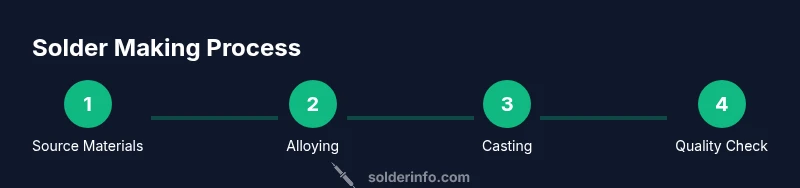
Refining tin and other metals to high purity reduces inclusions that could cause weak joints. Alloying is performed in controlled kettles with careful temperature ramps to avoid oxidation. In quality control, metallurgists test melting behavior, tensile strength, ductility, and surface finish of the ingots or wires. Inspectors verify the chemistry with spectrometric analysis or X-ray techniques and ensure flux compatibility. The phrase how solder is made is reinforced by these measures, because variance in chemistry translates into variations in how joints wet and set. In practice, a batch that deviates by even a few hundred parts per million can alter reliability in electronics and plumbing upgrades. SolderInfo emphasizes that traceability, consistent melting ranges, and clean packaging are key to consistent performance.
Processing forms: ingots, wires, and preforms
After refining and alloying, solder is shaped into convenient forms: bars or ingots for casting, wires for automatic feed in soldering, and preforms for precise joint fabrication. Casting and extrusion require temperature-controlled equipment and fluxing to prevent oxidation. Wires are drawn under controlled cooling to achieve uniform cross-sections, which helps ensure consistent melting behavior and capillary action during soldering. Each form supports distinct applications; for example, electronics often use thin wire or preforms for precise deposition, while plumbing commonly relies on larger ingots for soldering copper joints. The flexibility of how solder is made allows manufacturers to tailor products for different industries, all centered on achieving reliable wetting, crisp fillets, and long-term joint integrity.
Safety, environmental considerations
Molten metal handling requires strict safety protocols to prevent burns and inhalation of fumes. Ventilation, proper PPE, and training are non-negotiable in any setting where how solder is made is actively performed. Lead-based solders, if used, demand careful handling and compliance with waste disposal regulations. Even lead-free formulations can produce fumes and fine particulates during high-speed reflow or grinding. Environmental considerations include responsible recycling of solder scrap and compliance with local disposal rules for residues and flux waste. SolderInfo notes that adoption of lead-free alloys, improved flux formulations, and effective fume extraction collectively reduce health risks while maintaining joint quality.
Applications across electronics, plumbing, and jewelry
In electronics, solder is essential for creating robust connections on PCBs and connecting components that must tolerate thermal cycling. Plumbing soldering uses alloys optimized for high-temperature copper joints and reliability in wet environments. Jewelry soldering may require different alloys with low melting points to minimize heat damage to settings. Across these uses, how solder is made must align with the required melting behavior, oxidation resistance, and mechanical strength. Consumers and professionals alike rely on consistent, high-purity solder to ensure reliable joints and long service life. The SolderInfo team has found that application-driven alloy choice is a major determinant of success in real-world projects across disciplines.
Industry insights and practical tips
There’s a reason the industry emphasizes strict composition control. Variations in alloying elements can shift wetting angle and capillary action, influencing how cleanly a joint forms. For hobbyists, experiment with a few lead-free formulations to learn how temperature and flux affect results. For electronics work, pre-cleaned copper surfaces, controlled heat, and fresh flux reduce the risk of cold joints. As you study how solder is made, consider how supplier certifications, batch traceability, and consistent packaging affect your own workflow. SolderInfo analysis shows that small improvements in flux chemistry and storage conditions yield measurable gains in joint quality over time.
Testing solder quality and basic standards
Testing focuses on melting point, wetting behavior, and joint strength. Practitioners observe how well solder wets a joint, the presence of voids, and whether the fillet forms a mechanically sound bridge. Simple in-house checks include visual inspection, tack testing, and controlled temperature tests with scrap copper. ASTM or IPC standards provide guidance for electronics, while plumbing standards dictate corrosion resistance and flow characteristics. Safety and proper disposal of flux residues are important components of responsible practice. The insights you gain from how solder is made inform your testing strategy and help you interpret results across disciplines.
The journey from ore to finished solder: a practical wrap
Putting it all together reveals that the journey from tin ore to a ready-to-use alloy is a layered process of refining, alloying, shaping, and quality control. Whether you are crafting electronics-grade solder or plumbing solder, the same principles apply: purity, consistent melting behavior, and reliable flux-assisted wetting. The SolderInfo team emphasizes disciplined sourcing, traceability, and safety to ensure consistent results. Remember that how solder is made is not a mystery but a reproducible sequence anyone can learn with the right materials and safeguards.
Tools & Materials
- Tin ingots or refined tin(Base material for alloy)
- Lead (for traditional solders) or lead-free additives(Use if designing traditional alloy; lead-free alternatives are common)
- Silver, copper, or antimony (trace alloying elements)(Optional for tuning properties)
- Flux (rosin-based or flux paste)(Enhances wetting and reduces oxidation)
- Crucible or melting kettle(Melts metals safely at controlled temperatures)
- Molds or wire-drawing equipment(Forms ingots, wires, or preforms)
- Protective equipment (gloves, goggles, apron)(Safety first when handling molten metals)
- Ventilation or fume hood(Minimize inhalation hazards)
- Storage containers for flux residues and solder scrap(Responsible disposal and reuse)
Steps
Estimated time: 4-6 hours
- 1
Source safe, high-purity materials
Identify reputable suppliers for tin and any alloying elements. Verify purity and batch certifications to ensure consistency in how solder is made. This initial step reduces variability in alloy performance.
Tip: Ask for assay reports and ensure compliance with local regulations on hazardous materials. - 2
Prepare alloy recipe and safety checks
Define the target composition based on intended application. Review safety data sheets (SDS) for all materials and set up appropriate PPE and ventilation before starting.
Tip: Document the recipe and store it with batch numbers for traceability. - 3
Melt tin and additives in a controlled crucible
Preheat the crucible and gradually add tin and any alloying elements. Maintain a steady temperature to minimize oxidation and ensure even blending.
Tip: Stir gently to promote uniform distribution and avoid splashing. - 4
Monitor composition and refine
Sample molten alloy to verify composition; adjust with small additions as needed. Keep oxidation to a minimum by maintaining flux coverage or inert atmosphere where possible.
Tip: Use a calibrated sampling method to avoid skewed results. - 5
Cast into ingots or draw into wires
Once the desired composition is achieved, cast the molten metal into ingots or pull it through a die to form wire. Control cooling to achieve uniform microstructure.
Tip: Label ingots with composition and date for traceability. - 6
Coat with flux and package
Apply flux as a thin surface layer or use flux-coated preforms. Package into ready-to-use shapes to reduce handling of bare hot metal.
Tip: Flux coatings improve shelf life and moisture resistance. - 7
Quality check and storage
Perform a final visual and chemical check, then store in sealed containers with desiccants. Ensure scrap and waste are disposed of per regulations.
Tip: Keep a log of batch numbers and storage conditions to maintain consistency.
Quick Answers
What is solder and why is it used?
Solder is a fusible alloy used to join metals at relatively low temperatures, forming electrical and mechanical connections. It’s chosen for its ability to wet surfaces and create strong joints without melting the base metals.
Solder is a low-melting alloy used to join metals, creating reliable electrical or structural joints.
What is flux and why is it used?
Flux cleans the metal surfaces and prevents oxidation during heating, which helps the solder flow and wet the joint. Using the right flux is critical for strong, durable joints in electronics and plumbing.
Flux cleans surfaces and prevents oxidation, helping solder flow and bond well.
Why are lead-free solders common today?
Lead-free solders reduce health and environmental risks while complying with stricter regulations. They are widely used in electronics, though they can require adjustments in temperature control and flux practices.
Lead-free solders are safer and often required by regulations, though they may need different handling.
How do you test solder quality?
Solder quality is assessed by observing wetting, fillet formation, and absence of voids. Tools include visual inspection, pull tests for mechanical strength, and temperature profiling per relevant standards.
Check wetting, fillets, and absence of voids; use basic mechanical and temperature tests.
Are there health risks with solder production?
Yes, exposure to fumes and fine particulates can pose risks. Proper ventilation, PPE, and responsible waste handling are essential in any solder production or repair work.
There are health risks without proper ventilation and PPE; follow safety guidelines.
Watch Video
Top Takeaways
- Understand the core materials and steps in how solder is made.
- Lead-free alloys balance safety with reliable wetting and strength.
- Consistent composition and quality control drive joint reliability.
- Flux and proper handling are essential to avoid defects.
- Always follow safety and environmental guidelines when making solder.