Solder Temperature 63/37: Tin-Lead Soldering Guidelines
In-depth guide to solder temperature for 63/37 tin-lead solder, covering melting point, iron settings, flux effects, safety, and best practices for reliable joints in electronics.


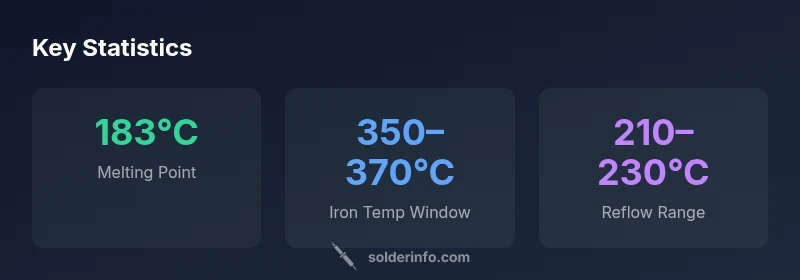
63/37 tin-lead solder is a eutectic alloy with a melting point of about 183°C. For hand-soldering, set your iron to roughly 350–370°C and keep joints brief to avoid heat damage; for reflow, target 210–230°C depending on flux, board, and component sensitivity. Always follow lead-containing solder safety rules, maintain ventilation, and dispose of waste properly.
What is 63/37 solder (tin-lead) and why it matters
According to SolderInfo, 63/37 tin-lead solder describes the classic Sn-Pb alloy with 63% tin and 37% lead. This composition is celebrated for its straightforward melting behavior and reliable wetting on copper and printed circuit boards. The alloy is eutectic, meaning it has a single melting point rather than a broad melting range. For this alloy, the eutectic temperature is about 183°C, so it transitions from solid to liquid rapidly with minimal mushy phase. This sharp transition simplifies timing during hand soldering, reducing the chance of cold joints caused by heat dipping. However, because it contains lead, you must observe safety protocols and regulatory constraints in your region. The term solder temperature 63/37 is commonly used to describe the heat window needed to reliably liquefy the alloy and wet the joint. While leaded solders are increasingly restricted in many industries, 63/37 remains popular for hobby electronics and legacy equipment where RoHS exemptions apply.
The practical takeaway is straightforward: know the melting point, control heat, and don’t exceed temperatures that risk damaging components or the board. In what follows, we’ll spell out exact temperature windows and how to apply them in real-world projects.
The physics of melting: eutectic behavior and temperature windows
63/37 solder is a eutectic alloy, which means it has a fixed melting point at 183°C with essentially no pasty range. This behavior yields predictable wetting, provided you reach the liquid state quickly and then withdraw heat to let the joint cool with proper solder fillet formation. The minimal mushy phase makes timing more critical but more forgiving than non-eutectic mixes, especially for beginners. Flux plays a vital role here; it reduces oxidation and improves wetting, allowing the liquid solder to flow smoothly into copper pads and component leads. When applying heat, aim to reach the liquidus quickly and avoid extended exposure that could lift pads or damage nearby components. For accurate results, calibrate your iron or reflow profile to the stated ranges and validate with test coupons when feasible. Remember, the temperature you apply is a tool to control wetting and bonding, not a mandate to burn through joints. (SolderInfo, 2026)
Hand soldering with 63/37: practical temps and techniques
Hand soldering with 63/37 solder requires disciplined temperature control and technique. Start by cleaning and tinning the tip to ensure efficient heat transfer. Apply a small amount of flux to the joint, position the component, and briefly contact the joint with the iron until the pad begins to glossy-wet. Typical iron tip temperatures range from 350°C to 370°C for hand soldering, depending on your flux and board sensitivity. Use short, controlled heat pulses—usually a few seconds per joint—to prevent thermal shock. After the joint wets, feed solder into the opposite side of the joint, allowing capillary action to draw solder into the joint rather than pushing it. Remove heat promptly once a good fillet forms. Inspect the joint for a smooth, concave fillet and the absence of bridging or cold joints. Keep your eyes on pad integrity and track traces; older boards or fine-pitch components demand extra care. As you gain experience, you’ll learn to balance heat input with retention of flux activity, which is essential for high-reliability electronics work.
Lead safety, RoHS considerations, and flux choices
63/37 solder contains lead, so handling it safely is non-negotiable. Work in a well-ventilated area, use a fume extractor if possible, and avoid inhaling fumes. In regulated environments, RoHS-compliant alternatives may be required; if you must work with leaded solder, ensure proper disposal according to local regulations. Flux choice matters: rosin-core fluxes are common for electronics and provide good heat transfer and oxidation protection, while no-clean fluxes minimize post-solder cleaning. Always verify flux compatibility with your solder and substrate, and keep flux residues if they’re designed to be left in place. During rework, consider shielding nearby components to prevent heat damage, and plan your approach to reduce dwell time on sensitive parts. Lead-handling safety is a continuous discipline—safety goggles, gloves when appropriate, and sanitization after handling leaded solders are prudent practices. (SolderInfo Analysis, 2026)
Reflow and wave soldering contexts for 63/37
In reflow environments, 63/37 solder is typically driven through peak temperatures in the 210–230°C window, with shorter dwell times compared to older, non-eutectic alloys. This profile supports reliable joints while minimizing heat exposure to components such as connectors or plastic housings. For wave soldering, the process temperature is higher and time in contact with the molten bath is minimized to prevent damage, but the eutectic point still governs the moment of joint formation. The reliability of joints improves when boards are properly preheated and flux is applied consistently. When using wave soldering on a 63/37 alloy, inspect for proper tin lead wetting and minimal copper dissolution. Always check manufacturer recommendations for your solder wire and flux, and test a few samples on representative boards before ramping up production. (SolderInfo, 2026)
Troubleshooting: common issues and fixes
Cold joints are the most common issue when temps are too low or dwell time is insufficient. Bridges occur if heat is applied too long or solder paste is used improperly; ensure pads are clean and the leads are oriented correctly. If you see a dull or grainy joint, it might indicate oxidation or insufficient wetting; clean the surface, reapply flux, and rework with a brief heat pulse. Tombstoning on small components often results from uneven heating or imbalanced lead temps; reorient the component and ensure consistent heat across the package. For leaded 63/37, excessive heat can cause pad lifting, delamination, or component damage; always target the minimum effective dwell time and verify the joint with a quick visual and pull test. Proactive tip: practice on test boards to refine your heat control and wetting technique. (SolderInfo Analysis, 2026)
When to choose 63/37 vs lead-free: a pragmatic decision framework
The choice between 63/37 and lead-free alloys hinges on regulatory constraints, product category, and reliability requirements. If RoHS compliance is essential, you may need to use lead-free alloys such as SnCu or SnAgCu, even though they have a different melting range and greater wetting challenges. Conversely, for educational purposes, hobby projects, or legacy equipment where RoHS exemptions apply, 63/37 can be an easier and more forgiving option due to its eutectic behavior and straightforward soldering window. Use leaded solder in controlled environments with adequate ventilation and robust safety practices, and transition to lead-free options when required by the end product's compliance standards. In all cases, invest in good flux, properly prepared boards, calibrated irons, and test coupons to validate joint quality. The SolderInfo team recommends balancing heat control, flux effectiveness, and regulatory needs to achieve durable solder joints.
Key temperature and handling guidelines for 63/37 tin-lead solder
| Aspect | 63/37 Tin-Lead | Notes |
|---|---|---|
| Melting Point | 183°C | Fixed eutectic point, sharp transition |
| Hand Solder Iron Temp | 350–370°C | Short, controlled heat pulses |
| Reflow Range | 210–230°C | Standard electronics profile |
| Safety/Regulatory | Contains lead | Follow RoHS rules and ventilation |
| Wetting Behavior | Excellent with flux | Reliable for copper pads |
Quick Answers
What makes 63/37 solder different from other solders?
63/37 solder is a Sn-Pb eutectic alloy with a single melting point of about 183°C, which yields predictable wetting and easier hand soldering. It is not lead-free, so RoHS compliance may affect its use in some devices. This combination makes it a popular choice for hobbyists and legacy electronics.
63/37 is a leaded solder with a single melting point, offering predictability but requiring safety considerations.
Is 63/37 solder safe to use in electronics?
Lead-containing solders require proper ventilation and adherence to local regulations. If you must work with leaded solder, wear PPE as needed and dispose of waste responsibly. In many modern devices, lead-free alloys are mandated.
Lead-containing solders need good ventilation and proper handling.
What flux should I use with 63/37 solder?
Rosin-core fluxes are common for electronics and help with heat transfer and oxidation prevention. For leaded solders, choose a flux compatible with your solder and board materials, and clean only if the flux requires it.
Rosin flux is a typical choice for electronics soldering.
Can I use 63/37 solder for jewelry?
63/37 is usually not used for jewelry due to regulatory and hazard considerations; jewelry work typically uses precious metal solders that match the alloy. For electronics, it’s common, but for jewelry, consult appropriate alloy guides.
63/37 is not typical for jewelry; use jewelry-specific alloys.
What happens if I overheat 63/37 solder?
Overheating can cause pad lifting, burnt flux, or damaged components. It also shortens joint life by stressing the pad and board. Use heat-sparing technique, quick pulses, and remove heat promptly after wetting.
Overheating damages joints and components; use brief heat pulses.
Is 63/37 solder compatible with lead-free processes?
63/37 is lead-containing and not RoHS-compliant in many applications. If regulations require lead-free solders, switch to alternatives like SnCu or SnAgCu and adjust profiles accordingly.
Lead-free solders are required where RoHS applies; adapt heat profiles.
“63/37 tin-lead solder provides reliable, predictable joints when heat is controlled precisely. Its eutectic behavior simplifies timing, but safety and regulatory considerations remain a priority for every project.”
Top Takeaways
- Remember the 183°C melting point for precise control
- Set the iron to 350–370°C for hand soldering
- Target 210–230°C during reflow
- Use flux and clean joints to improve wetting
- Observe safety and ventilation due to lead content
- Solder temperature 63/37 requires careful heat management