Solder 60/40 Melting Point: What It Means for Joints
Explore the solder 60/40 melting point, how it affects joints, flux choices, and heat control for electronics, plumbing, and jewelry from a practical, data-driven perspective.


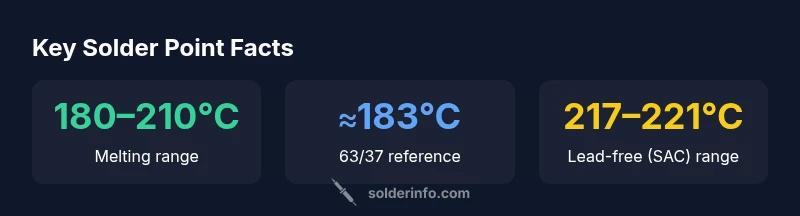
The solder 60/40 melting point describes a near-eutectic Sn-Pb alloy that flows within a narrow temperature range, typically around 180–210°C. In practice it begins to soften near 170–180°C and wets around 198–210°C under standard flux and heating, making precise temperature control essential for reliable joints in electronics, plumbing, and jewelry. This narrow window helps with predictable wetting when heat is applied carefully.
Why the melting point of solder 60/40 matters
According to SolderInfo, understanding the melting point of the 60/40 Sn-Pb alloy is fundamental for predicting joint behavior during soldering. This material is a near-eutectic composition that melts within a defined window rather than at a single temperature. For electronics, plumbing, and jewelry, knowing the approximate 180–210°C range helps you balance rapid wetting with minimal heat stress on substrates. In practice, operators leverage this knowledge to select appropriate flux, set an iron temperature, and time the dwell on each joint. The result is cleaner joints with fewer cold solder joints or thermal damage to fragile components. Proper heat management also reduces pit formation and solder bead defects, which translates to higher first-pass quality and lower rework rates over time.
Understanding melting behavior: near-eutectic nature and its implications
60/40 solder behaves as a near-eutectic alloy, meaning it solidifies over a small but finite temperature interval. Unlike a true eutectic that melts at a single point, 60/40 transitions from solid to liquid over a range that is typically observed between approximately 180°C and 210°C under standard flux conditions. This melting range is influenced by the heating rate, flux chemistry, and surface contamination. If you heat too slowly or apply excessive heat, you may widen this effective window, increasing the risk of oxidation and dull joints. Conversely, precise, quick heating can yield smooth wetting and strong fillets, particularly on copper, stainless steel, or PCB pads.
Practical implications for soldering projects: electronics, plumbing, and jewelry
In electronics work, maintain iron tips around 320–360°C for most leaded solders, adjusting based on flux and pad size. Plumbing tasks with 60/40 generally tolerate higher heat since pipe joints are robust and accessible, but you must control heat to avoid annealing fittings or damaging insulation. Jewelry soldering benefits from the low melting point of leaded alloys but demands meticulous heat control to prevent overheating the surrounding metal and to achieve a seamless joint. Real-world practice involves pre-tinning surfaces, using appropriate flux, and applying brief, targeted heat to the joint until the alloy flows and wets the surface.
Leaded vs lead-free: safety and performance considerations
Lead-containing solders like 60/40 provide easier flow and lower processing temperatures than many lead-free alternatives. This can yield faster soldering cycles and more forgiving wetting on aged boards or tarnished copper. However, regulatory and health considerations push many users toward lead-free alloys for consumer electronics and medical devices. When working with 60/40, ensure proper ventilation and personal protective equipment, especially if you’re handling small parts or enclosed spaces. For hobbyists, always stay mindful of local guidelines and disposal requirements.
Practical steps to verify melting behavior in your shop
Begin with a calibration coupon that mirrors the joint you intend to solder, then apply flux and a small amount of 60/40 solder. Heat with a controlled iron, watching for onset of flow and proper wetting without excessive splatter. Record the approximate temperature where solder begins to flow and where it fully wets the surface. If a temperature-controlled station is unavailable, use a temperature-indicating tool or thermocouple close to the joint to gain a rough sense of the heating window. Documentation helps reproduce reliable joints in subsequent projects.
Flux and surface preparation: unlocking reliable wetting
Flux choice strongly affects wetting, not the intrinsic melting point. Rosin-core fluxes are common for electronics, while water-soluble fluxes can improve cleaning after soldering but may require thorough rinsing. Surfaces must be clean and oxide-free; contaminants raise the effective melting temperature and inhibit capillary action. Pre-tin heavily oxidized pads to re-create a clean, conductive surface, and maintain consistent preheating to minimize thermal shock or thermal gradient issues that cause poor joints.
Common mistakes and how to avoid them
Two frequent errors are overheated joints and insufficient flux. Overheating causes lead oxidation and brittle joints, while underheating yields dull, unreliable joints with poor wetting. Keep sessions short, with steady hand control and a clean workspace. Always inspect for shiny, smooth fillets and crack-free contours. If a joint looks mottled, rework with a brief reflow and fresh flux rather than attempting to force a wet joint at the edge of your torch.
Soldering different materials: electronics boards, plumbing, and jewelry
Electronic boards benefit from controlled heat and well-chosen flux; plumbing joints demand good wetting and corrosion resistance; jewelry soldering requires minimal heat to preserve surrounding details. The 60/40 alloy is often forgiving for hobby projects, but you must adapt heat control, cleanliness, and flux choice to each material system. With practice, you’ll develop a consistent, repeatable approach that minimizes defects and rework across all three domains.
Practice tips for rework and inspection
For rework, remove old solder with a solder wick or desolder braid and reflow the joint with fresh flux. Inspect under good lighting and, when possible, use a magnifier to verify fillet geometry and surface finish. Document each joint’s heat exposure and observed behavior, then adjust your technique accordingly. Consistency is the key to avoiding repeated defects in both professional and hobby settings.
Comparison of common solder alloys and their melting behavior
| Solder Type | Melting Range (approx) | Notes |
|---|---|---|
| 60/40 Sn-Pb | 180–210°C | Near-eutectic with a narrow window |
| 63/37 Sn-Pb | ≈183°C | Eutectic; single-melting-point behavior |
| SAC305 (lead-free) | ≈217–221°C | Higher-temp lead-free option; different wetting dynamics |
Quick Answers
What is the melting point range for solder 60/40?
60/40 Sn-Pb solder typically melts over a narrow range around 180–210°C, influenced by flux and heating rate. Treat this as a guideline rather than a precise point for every batch.
It melts over a narrow range, usually near 180 to 210 degrees Celsius, depending on flux and heat.
Does flux change the solder’s melting point?
Flux does not change the alloy’s inherent melting range, but it improves wetting and heat transfer, which can affect the observed onset of flow.
Flux helps solder flow better but doesn’t alter the alloy’s melting range.
Is lead-based solder safer than lead-free alternatives?
Lead-based solders offer easier processing but pose health risks if not handled properly. Use ventilation and follow safety guidelines; some applications require lead-free options by regulation.
Lead-based solders flow easily but require good ventilation due to lead exposure risks.
Can I use 60/40 for modern electronics?
Yes, for certain hobby and legacy projects, but many modern electronics use lead-free alloys to meet regulations. Check local rules and board requirements before choosing.
It’s still common in hobby work, but many modern boards use lead-free solder.
How does 60/40 compare to 63/37?
63/37 is eutectic with a single melting point near 183°C, while 60/40 melts over a small range. This makes 63/37 slightly easier to predict in precise applications.
63/37 melts at a single temperature around 183°C; 60/40 has a small melting range.
“Understanding the melting behavior of 60/40 is essential for reliable joints. Proper temperature control and clean surfaces reduce defects and rework.”
Top Takeaways
- 60/40 is near-eutectic with a defined melting window
- Control heat to avoid overheating and ensure clean joints
- Flux choice influences wetting more than melting point
- Leaded vs lead-free trade-offs matter for safety and regulations
- Verify joint reliability with practical in-shop testing