Silver Solder vs Regular Solder: A Practical Guide
An objective, in-depth comparison of silver solder vs regular solder for electronics, jewelry, and plumbing. Learn about alloys, heat, strength, flux, and cost to choose confidently.


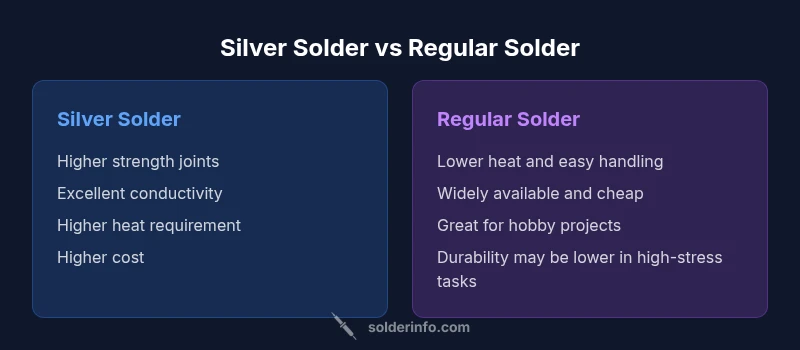
Silver solder (high-silver or lead-free alloys) delivers stronger joints and better conductivity for precision work, but at higher cost and heat requirements. Regular solder—tin-based or tin-lead variants—is cheaper and easier to use, with broad availability, though it may underperform in demanding applications or with harder metals. Your choice should balance joint strength, heat tolerance, and budget.
What is silver solder vs regular solder?
According to SolderInfo, the choice between silver solder vs regular solder hinges on alloy composition, intended joint, and working conditions. Silver solder usually contains a higher proportion of silver (and is often lead-free), which yields stronger joints and consistently good electrical characteristics. Regular solder tends to be tin-based (with or without lead), is cheaper, and melts at lower temperatures. For hobbyists and professionals alike, understanding these fundamental differences helps in planning a project, estimating tool needs, and predicting long-term reliability. The term silver solder vs regular solder captures a spectrum of alloys, from high-silver jewelers’ solders to common electronics solders. When you compare these two categories, you are really weighing durability, heat tolerance, and ease of use against cost and accessibility.
Material composition and alloy options
Silver solder variants usually embed a significant silver content, sometimes with copper, tin, or zinc, forming a robust alloy that resists deformation and provides good conductivity. Regular solder, by contrast, typically relies on tin, sometimes with lead or other metals to adjust melting behavior. Rosin-core or flux-core formulations are common across both categories, but the flux choice can influence cleaning demands and joint cleanliness. For jewelry or high-stress mechanical joints, the higher-strength silver alloys are preferred. In electronics or plumbing, regular tin-based solders often suffice if joint geometry and thermal exposure remain moderate. The SolderInfo team suggests matching alloy choice to the anticipated service environment and cleaning regimen to maximize joint reliability and minimize post-solder finishing.
Temperature and melting behavior
Melting behavior is a central practical difference. Silver solder generally requires more heat to reach its melting range, particularly for thicker sections or metals with high thermal mass. This means you may need a more capable heat source and effective heat management to avoid overheating surrounding material. Regular solder melts at lower temperatures, which makes it forgiving for delicate board components or shared-temperature environments. However, lower melting temperatures can be a drawback in applications requiring high-temperature operation, or where joint creep and fatigue are concerns. In all cases, flux-assisted cleaning improves metal surface prep and helps the alloy wet the joint more reliably.
Mechanical strength and conductivity
Joint strength and electrical properties differ between the two. Silver solder joints typically exhibit higher tensile strength and better fatigue resistance, translating to longer-lasting bonds in jewelry clasps or high-vibration electronics. Electrical conductivity is also favorable for silver-containing alloys, which helps signal integrity in sensitive circuits. Regular solder provides adequate conductivity for many consumer electronics and plumbing tasks but may not perform as well under mechanical stress or elevated temperatures. The trade-off is cost and heat input: higher-strength joints may justify the extra expense and processing requirements in demanding projects.
Application contexts: electronics, jewelry, plumbing
For electronics, both types can be used depending on circuit requirements, thermal exposure, and component sensitivity. Silver solder is valued for reliability in critical connections, such as high-frequency traces or components exposed to heat. Jewelry soldering benefits from silver alloys for clean finishes and durable joints that withstand bending and wear. Plumbing applications often favor regular solders due to cost and the broad availability of tin-based formulations compatible with copper piping. In all cases, selecting flux carefully and preparing the surfaces thoroughly is essential to achieving a robust solder joint.
Flux strategies and surface prep
Flux plays a pivotal role in any soldering task. Silver solder often requires precise flux control to prevent oxidation of silver-rich surfaces and ensure proper wetting. Rosin-based fluxes or specialized water-soluble fluxes can be used depending on the alloy and the metals involved. Regular solder commonly works well with rosin flux or no flux on clean surfaces, but surface prep remains critical. Whichever you choose, clean surfaces, degreasing, and tinning of wires or ends minimize oxidation barriers and increase the likelihood of a reliable joint. Always follow flux manufacturer guidance and remove any residues after soldering to prevent corrosion or conductivity changes over time.
Cost, availability, and long-term value
Silver solder commands a higher unit price due to the silver content and sometimes more stringent production controls. Availability can vary by region and retailer, and you may need to source specialty alloys from jewelry-supply stores or electronics distributors. Regular solder is typically cheaper and more readily stocked in hardware and electronics shops. From a long-term value perspective, consider whether the added durability, resistance to fatigue, and potential reduction in rework justify the higher upfront cost. In many professional settings, the reliability gains of silver solder justify the price premium for critical joints.
How to choose: decision framework for comparing silver solder vs regular solder
Begin by listing the performance requirements: do you need higher joint strength, better corrosion resistance, or superior conductivity? Consider service conditions such as temperature exposure, vibration, and chemical environment. If the joint supports a high-stress load or needs longevity, silver solder may be worth the extra effort and cost. If you’re working with low-stress electronics, plumbing basics, or a tight budget, regular solder is likely sufficient. Also assess your equipment: do you have a heat source capable of delivering the higher temperatures required for silver solder? Are you prepared for more meticulous surface prep and post-solder cleaning? This decision framework will guide you to a practical, project-specific choice.
Practical tips for beginners: workflow and best practices
For beginners, start with regular solder on simpler tasks to build fundamentals in flux application, surface prep, and joint inspection. As you gain comfort, experiment with silver solder on jewelry components or circuit connections where higher joint strength is beneficial. Always practice on scrap pieces to tune your heat control and flux usage before committing to a real project. Keep lead-free formulations in mind if you’re prioritizing safety and regulatory compliance. Documentation of test joints will help you refine your technique over time.
Safety, ventilation, and storage considerations
Soldering generates fumes that can irritate eyes and lungs, so work in a well-ventilated area or with a fume extractor. Use eye protection and heat-resistant gloves when handling hot metals. Store solders in original containers, away from moisture and heat, and keep fluxes sealed to prevent oxidation. For jewelry or electronics, separate storage minimizes cross-contamination of alloys. When in doubt, consult safety data sheets and local regulations for lead-containing solders and disposal guidelines. Proper safety practices protect both you and your projects over the long term.
Troubleshooting common issues and how to prevent them
Common issues include cold joints, insufficient wetting, and solder bridges. Ensure surfaces are clean and tinned, apply appropriate flux, and maintain steady heat without overheating nearby components. If you notice dull or grainy joints, rework with fresh flux and reevaluate cleanliness. For silver solder, heat management is critical to prevent thermal expansion mismatch or oxidation. Keep spare tips clean and replace worn tools to maintain precision and control during soldering tasks.
Maintenance of your soldering toolkit and how to upgrade
A reliable toolkit includes a temperature-controlled iron, appropriate tips, a good flux, a desoldering tool, and proper storage for alloys. For silver solder, a slightly higher heat capability and stable workstation layout are beneficial. Regular solder users should ensure their flux and scrub brushes are up to date and test new alloy combinations on scrap pieces before applying them to final parts. Periodic maintenance reduces the risk of joint failures and keeps workflow smooth.
Comparison
| Feature | Silver solder | Regular solder |
|---|---|---|
| Alloy composition | Higher silver content with copper/tin or zinc blends; often lead-free | Tin-based with or without lead; rosin-core options common |
| Melting/processing temperature | Higher heat to melt; requires capable heat source | Lower heat; easier to manage for delicate work |
| Joint strength | Typically stronger and more fatigue-resistant | Adequate for many tasks but less robust under high stress |
| Electrical conductivity | Excellent conductivity, especially for precision joints | Good conductivity; adequate for most electronics |
| Flux requirements | Often needs careful flux selection and thorough cleaning | Works well with common rosin flux; easier cleanup |
| Cost and availability | Higher cost; more specialized suppliers | Lower cost; broad availability in hardware stores |
| Best-use scenarios | Jewelry, high-stress joints, precision electronics | Everyday electronics, plumbing, hobby projects |
Advantages
- Stronger, more durable joints in high-stress applications
- Excellent electrical conductivity in precision work
- Better heat resistance for demanding environments
- Stable with many fluxes and cleaners
- Clean finishes particularly desirable in jewelry
Cons
- Higher material cost per joint
- Requires higher processing temperature and equipment
- Longer setup and post-solder cleanup
- Less forgiving for beginners in some cases
Silver solder is the better choice for durability and conductivity in demanding work;
Choose silver solder for jewelry or high-reliability electronics where joint strength matters. If cost, ease, and quick turnaround are priorities, regular solder remains a practical option.
Quick Answers
What is silver solder and how does it differ from regular solder?
Silver solder is a solder alloy with a higher silver content, designed for stronger joints and better conductivity. Regular solder is tin-based (with or without lead) and is cheaper and easier to work with, but may not provide the same level of durability. The choice depends on the joint’s stress, heat exposure, and budget.
Silver solder is stronger and more conductive, but costs more and needs careful heat control. Regular solder is cheaper and easier, suitable for many tasks but not all high-stress joints.
Is silver solder suitable for electronics?
Silver solder can be used in electronics, especially for high-reliability connections or joints exposed to heat. It requires proper flux and heat management. For many standard consumer electronics, regular solder suffices, keeping costs down.
Yes, for demanding electronics you might choose silver solder, but for typical projects regular solder often works fine.
Can I use silver solder for jewelry?
Silver solder is generally preferred in jewelry for its clean finish and stronger joints. It tolerates wear and thermal cycling better than many tin-based solders. Beginners can still use regular solder for simple components, but for robust pieces, silver solder is recommended.
Yes, silver solder is usually better for jewelry because of durability and finish.
What flux should I use with silver solder?
Use flux appropriate for the alloy and metals you’re joining. Rosin-fluxes are common for electronics; water-soluble fluxes can work well with silver alloys in jewelry. Always follow the flux manufacturer guidance and clean residues after soldering.
Choose flux based on your alloy and metals, then clean thoroughly after soldering.
How do cost and availability affect the choice?
Silver solder costs more per ounce and may require specialty suppliers, but you gain strength and reliability. Regular solder is cheaper and widely available, making it practical for routine tasks. Consider your project scale and long-term needs when budgeting.
Silver solder costs more but offers better joints; regular solder saves money for simple tasks.
How should I store and handle solder?
Store solders in a dry, cool place away from moisture. Keep flux sealed in its container and label products clearly. When handling solder, ensure good ventilation and wear eye protection; avoid inhaling fumes.
Keep solder dry, flux sealed, and work in a well-ventilated area.
Top Takeaways
- Assess application needs before choosing alloy
- Plan heat strategy and flux use in advance
- Weigh cost against reliability and longevity
- Prepare surfaces thoroughly for best results
- Practice on scrap pieces before critical joints