What to Solder Copper Pipe With: A Complete Guide
Learn the best lead-free solders, flux types, and tools for copper pipe joints. Step-by-step instructions, safety tips, and leak-free troubleshooting.


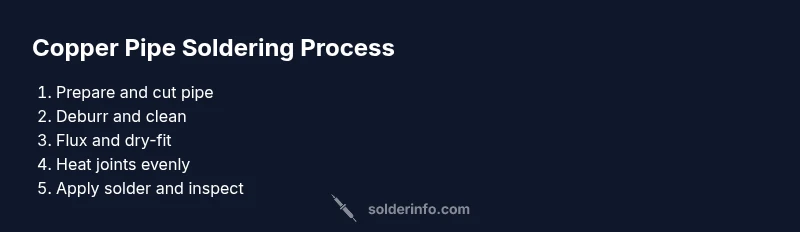
You will learn how to choose lead-free solder for copper pipe, prepare surfaces, and make leak-free joints. This guide covers fitting selection, flux options, proper heating, and a thorough leak test. You’ll need basic plumbing tools, lead-free solder, flux, and a propane/Map torch. Follow the 6-step workflow for solid results.
Why proper copper pipe soldering matters
Soldering copper pipe isn’t just about making a connection; it’s about creating a durable, leak-free seal that lasts for years. The choice of solder, flux, and technique directly affects joint integrity, internal water quality, and system pressure stability. For potable water lines, health and code compliance dictate lead-free solders and appropriate flux. The SolderInfo team emphasizes that choosing the right materials and practicing clean technique reduces the risk of leaks, corrosion, and future reruns of the repair. This section explains why every joint matters, and how careful prep and technique pay off with fewer service calls and happier end users.
Overview of solder types and flux choices
Copper pipe joints typically use soft solders designed for plumbing. For water lines, lead-free alloys are the standard due to health and code requirements. The flux you choose also matters: rosin-based flux (or water-soluble flux designed for plumbing) helps solder flow and bond, while acid-based flux is generally avoided for potable water. The right combination improves capillary action, reduces oxidation, and produces a cleaner joint. In practice, expect to see flux-coated wire or paste flux paired with a compatible lead-free solder. Remember that flux alone doesn’t seal the joint; it prepares the metal surfaces for solder flow and adhesion. As you plan your project, keep in mind that meticulous surface prep is often more important than the solder grade you pick. According to SolderInfo, consistency in heating and careful cleaning are the keys to durable copper pipe joints.
Preparing the workspace and measuring cut pipe
Prepare your workspace with good ventilation and a stable surface. Measure the pipe sections using a ruler or tape measure, mark the cut points, and use a high-quality pipe cutter to make straight, square cuts. Squared ends ensure that the fittings seat fully and the solder can wick evenly around the joint. After cutting, immediately remove burrs from the inside and outside of the pipe with a deburring tool to prevent damage to the joint and to keep the seam clean for solder flow. A clean, dry surface minimizes the chance of contaminants that could hinder adhesion. Replace any worn tools and ensure the pipe remains free of oil, dust, or fingerprints before proceeding.
Deburr, clean, and dry-fit the joints
Deburr both the pipe end and the fitting socket to avoid gaps or gaps where solder could pool. Wipe away any oil or residue with a clean cloth. Dry-fit the joint to verify that the pipe slides fully into the fitting with a snug, straight alignment. If you notice any misalignment, trim and re-cut the pipe to restore proper fit. A dry-fit check helps you anticipate potential issues before you apply flux and heat the joint, saving you time and preventing repeated heating cycles.
Fluxing and tinning for smoother solder flow
Apply flux evenly to the outside of the pipe and the interior of the fitting. The flux acts as a barrier to oxidation and promotes solder flow into the joint. For most beginners, a light, uniform coat works best; avoid pooling flux, which can clog the joint. In some cases, you’ll tin the pipe end lightly by applying a thin layer of solder to the fluxed area to initiate capillary action. Choose flux compatible with your solder and pipe material, and follow the manufacturer’s instructions for longevity and compatibility. Proper fluxing is crucial for achieving a clean, watertight joint with minimal effort.
Heating technique and applying solder
Heat the joint evenly with a propane or Map gas torch, moving the flame around the joint to avoid overheating one side. When the pipe and fitting are warm to the touch and the flux begins to sizzle, touch the solder wire to the seam and let it flow around the joint; withdrawal of the heat should occur as soon as the solder fills the joint, not after excessive melting. Avoid overheating that could melt nearby fittings or damage insulation. Practice steady hands and a slow, continuous feed of solder to achieve a consistent, filleted joint along the entire circumference. Do not apply solder to the flame directly; let the heat do the work of drawing solder into the joint.
Cool, inspect, and test the joint for leaks
Allow the joint to cool naturally; avoid forceful tapping that could crack the solder. Wipe away any residual flux once cooled to prevent corrosion or staining. Perform a leak test by pressurizing the system or performing a soap-bubble test at the joint. If bubbles appear or you see a damp spot after the test, rework the joint by reapplying flux, reheating, and adding more solder. If you must redo a joint, cut back and re-solder the section rather than reusing the existing joint. Diligent testing immediately after installation saves time and avoids future service calls.
Troubleshooting common issues and best practices
Even with careful prep, issues can arise. A cold joint appears dull and grainy; reheat and reapply solder around the seam with cleaner flux. A pinhole leak indicates insufficient solder or gaps; rework by cleaning, fluxing, heating evenly, and applying more solder. Overheating can cause copper annealing or damage to nearby components; keep the flame moving and monitor heat input. Maintain a tidy workspace, have spare flux and solder on hand, and don’t rush crucial steps. Consistent practice and proper technique produce reliable joints that stand up to pressure over time.
Tools & Materials
- Pipe cutter (for copper)(Ensure clean, square cuts; use a true compression cutting tool.)
- Deburring tool / reamer(Remove burrs from both ends to prevent galling.)
- Lead-free solder for copper pipe(Choose solder approved for potable water lines.)
- Flux for copper pipes (rosin-based or water-soluble)(Avoid acid flux for potable water.)
- Propane or Map gas torch(Keep a safe distance and use with a heat shield.)
- Pipe cleaning pads or sandpaper (80-120 grit)(Clean surfaces for better solder bonding.)
- Clean, lint-free rags(Dry and wipe surfaces after fluxing.)
- Heat shield or non-flammable mat(Protect surrounding materials from heat.)
- Safety glasses and gloves(Protect eyes and hands from heat and flux.)
Steps
Estimated time: 45-60 minutes
- 1
Measure, cut, and square
Mark the required length, cut squarely with a pipe cutter, and verify that ends are true and free of burrs. Square cuts ensure complete seating of fittings and even solder flow.
Tip: Maintain steady pressure and rotate the cutter around the pipe to avoid jagged ends. - 2
Deburr and clean the ends
Remove burrs from both the outside and inside of the cut ends. Clean the surfaces with a rag to remove dust, oil, or fingerprints that could hinder adhesion.
Tip: Deburrs on the inside reduce the chance of a misfit and help solder wick around the joint. - 3
Dry-fit and dry wipe
Assemble the pipe and fitting without solder to confirm fit. Wipe the joint to remove any moisture or oil before fluxing.
Tip: A proper dry-fit reduces rework and ensures a clean joint path. - 4
Flux the joint
Apply a thin, even coat of flux to both the pipe end and the interior of the fitting. Flux aids solder flow and reduces oxidation during heating.
Tip: Avoid pooling flux; too much flux can cause debris to form and impede flow. - 5
Heat and apply solder
Heat the joint evenly with the torch; when the joint is hot enough, touch the solder to the seam and let it flow around the joint. Remove heat once the seam is filled.
Tip: Move the flame in a circular pattern and avoid direct contact between the torch tip and the pipe to prevent overheating. - 6
Cool, inspect, and test
Allow the joint to cool naturally, then inspect for a smooth, even fillet. Perform a leak test by pressurizing the line or applying a soap solution to detect bubbles.
Tip: If leaks are found, rework the joint rather than attempting to patch it.
Quick Answers
Can I use regular solder with lead for copper water pipes?
No. Most codes require lead-free solder for potable water lines to prevent health risks. Use a lead-free alloy and appropriate flux for drinking-water systems.
Lead-free solder is required for drinking-water pipes to protect health; use compatible flux and follow local codes.
Is a torch required for every copper joint?
A torch is typically needed for copper piping, especially for larger diameters. For very small or short runs, soldering can be possible with careful technique, but a torch makes reliable joints easier.
A torch is usually required, especially for larger pipes. Use it with caution and proper safety gear.
What should I do if a joint leaks after testing?
If a joint leaks, re-clean the joint, reapply flux, reheat evenly, and add more solder as needed. If the joint remains leaky, replace the faulty segment.
If there’s a leak, rework the joint with fresh flux and solder, and re-test.
Can I reuse fittings or do I need new ones?
Fittings should be in good condition without corrosion or damage. If in doubt, replace to ensure a reliable seal.
If a fitting is damaged or corroded, replace it for a dependable joint.
What is the best way to test a copper pipe joint for leaks?
Perform a pressure test or a soap-bubble test on the joints after cooling. Look for bubbles or wet spots and address any issues before pressurizing the system.
Test with pressure or soap bubbles; fix leaks before finalizing the install.
Are there any safety concerns when soldering copper pipes?
Yes. Use eye protection, gloves, and proper ventilation. Keep fuel sources away from combustibles and follow manufacturer instructions for all tools.
Wear safety gear and work in a ventilated space to stay safe.
Watch Video
Top Takeaways
- Lead-free solder is essential for potable water lines.
- Clean, deburr, and dry-fit prior to soldering.
- Flux and even heating are critical for reliable joints.
- Test joints thoroughly to prevent leaks.