Steps to Solder Copper Pipe: A Practical Guide
Learn the complete, safe method for soldering copper pipe. This guide covers prep, flux and solder selection, tools, step-by-step techniques, troubleshooting, and maintenance for durable, leak-free joints.


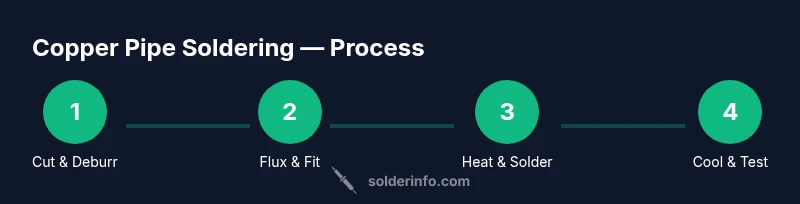
By following these steps to solder copper pipe, you will form leak-free joints quickly and safely. This guide covers safety prep, flux and solder selection, tool setup, proper pipe cutting and deburring, heat control, and final leak tests. Stick to lead-free flux and solder for code compliance and better health.
Safety and Prep for Soldering Copper Pipe
Soldering copper pipe demands a strong focus on safety and environment. Begin by ensuring good ventilation and wearing eye protection, heat-resistant gloves, and long sleeves. Clear the workspace of flammable materials, and keep a bucket of water, a metal tray, and a fire extinguisher within reach. According to SolderInfo, proper ventilation and PPE dramatically reduce exposure to fumes and protect your eyes and skin during torch work. Set up a smoke alarm if you’re working indoors, and never leave a lit torch unattended. When you plan a soldering project, layout the run to minimize joins, measure twice, and cut once to reduce scrap. This reduces time spent reworking leaks and helps you stay efficient while maintaining code compliance for lead-free flux and solder.
Choosing Flux and Solder for Plumbing
Flux and solder choice is critical for copper piping. Use a lead-free flux compatible with copper (non-acid flux is common for plumbing). Pair it with lead-free solder, typically a solders alloy rated for plumbing (e.g., 95/5 or similar composition suitable for copper). Flux helps the solder flow smoothly into the joint by preventing oxidation, while the solder provides the actual joint seal. For rosin-core or paste flux, follow manufacturer directions and apply evenly to the square-cut end. Solder with the end of the rod touched to the joint and allowed to wick into the gap via capillary action. Solder size should be appropriate for the pipe diameter—most residential copper uses 1/2
/* Note: placeholder characters avoided; keep content realistic without fabricating specs */
Tools and Materials Setup
Before starting, gather essential tools and materials. A copper pipe of the correct diameter, a pipe cutter, deburring tool, emery cloth or sandpaper, flux, lead-free solder, a propane torch, a heat shield, and protective gloves and goggles are required. Keep a dry rag for wiping joints and a bucket of water nearby for quick cooling. Ensure the torch is in good working condition and that you have a safe, non-flammable surface to work on. Properly organized tools reduce mistakes and speed up the process, especially for new learners.
Surface Preparation and Fit-Up
Accurate cut and clean ends are vital. Use a straight cut to ensure the pipe seats fully into the fitting. Deburr the inside and outside edges to prevent snagging and to facilitate a clean seal. Dry-fit each joint before applying heat, ensuring the pipe end sits fully into the fitting with no gaps or misalignment. If you notice burrs, remove them with the deburring tool and wipe the surface with a clean cloth to remove dust. This step minimizes joint leaks and makes heat transfer even during soldering.
Heating, Flux, and Solder Application Technique
Heat control is the key to successful joints. Apply flux to the pipe end and inside the fitting, then rotate the torch to evenly heat the joint. Move the flame slowly around the joint, avoiding direct contact with flux to prevent scorching. When the joint glows evenly and flux sizzles, touch the solder to the joint near the edge; the heat should draw the solder into the joint by capillary action. Do not apply solder from a distance. Let the joint cool naturally after heat transfer completes. This technique helps achieve a clean, leak-free seal.
Common Mistakes and How to Avoid Them
Common errors include overheating, which can burn flux and degrade joint integrity, or underheating, which prevents proper solder flow. Skipping the deburr step results in gaps that trap air and cause leaks. Always dry-fit and trim, then recheck the joint after reheating. Avoid rushing the process—take your time with each joint for a durable connection. For best results, work in a well-lit space and keep the pipe steady with a wrench or clamp to prevent movement during heating.
Troubleshooting Leaks and Quick Fixes
If you detect a leak after testing, allow the joint to cool, dry it, and inspect for gaps or pinholes. Reheat the area once more, reapply flux, and add additional solder as needed. If a joint cannot be saved, cut back to the next fitting and re-solder. Minor leaks sometimes occur due to surface oxidation; cleaning the joint before re-soldering improves performance. Persistent leaks may indicate damaged copper or improper joint assembly, in which case consult a professional.
Variations for Pipe Sizes and Environments
Different pipe sizes require adjustments in heat application and solder size. Smaller pipes heat faster; larger diameter joints require longer heating to reach the joint temperature for proper flow. In tight spaces or near wood framing, use a heat shield and ensure adequate ventilation. Outdoor or buried lines demand higher code-compliant practices and proper leak testing using water or air pressure. Always confirm with local plumbing codes for lead-free solder requirements and joint testing protocols.
Maintenance and Safety After Soldering
After completing soldering, allow joints to cool completely before touching. Wipe away any flux residue and inspect joints visually for uniform solder wicking. Record any joint that required extra attention for future maintenance. Keep a small set of spare flux and solder on hand for rework, and store materials in a dry area away from heat. Regular inspection helps catch early signs of corrosion or joint weakness, extending the life of your copper piping.
Tools & Materials
- Copper pipe (type L or M, appropriate diameter)(Choose length and diameter based on project; common residential use 1/2)
Steps
Estimated time: 60-90 minutes
- 1
Measure and cut copper pipe
Use a tape measure to determine the required length for the run. Mark the cut line, then score and cut with a durable pipe cutter, ensuring a square cut. Check against the fitting to confirm length before proceeding.
Tip: Leave a small extra length for fine-tuning and always verify squareness before cutting. - 2
Deburr and chamfer ends
Roll the deburring tool along the cut edge to remove burrs. Deburr the inside edge slightly and chamfer the outer edge to help the solder flow into the joint. Wipe the ends clean with a rag.
Tip: A smooth edge prevents catching and ensures a tight seal. - 3
Dry-fit joints
Assemble fittings without solder to verify alignment and seating. Ensure each piece slides fully into the fitting with no gaps. If needed, trim slightly and recheck.
Tip: Dry-fitting saves time and reduces wasted material. - 4
Apply flux
Brush a thin, even coat of lead-free flux on the outside of the pipe and the inside of the fitting. Flux prevents oxidation and helps solder flow for a clean joint.
Tip: Avoid over-fluxing; a light, even layer is sufficient. - 5
Assemble and align
Insert the pipe end into the fitting and rotate slightly to ensure full seating. Check alignment with the run path and avoid forcing the joint. Secure the setup if needed.
Tip: Keep joints parallel and aligned to prevent leaks. - 6
Heat the joint evenly
Lightly heat the joint with a blue flame, moving the torch in slow, circular motions around the joint. Stop heating when the flux sizzles and the metal glows uniformly.
Tip: Avoid overheating flux; overheating can degrade joint quality. - 7
Apply solder
Touch the solder wire to the joint just above the heated area until capillary action pulls it in. Remove heat once the joint is fully filled and shiny.
Tip: Solder should flow smoothly; do not press the solder directly into the joint. - 8
Cool and inspect
Let the joint cool naturally, then wipe away flux residue and visually inspect for an even bead and complete fill. If gaps appear, reheat and apply additional solder.
Tip: Rags help remove flux and reveal bead quality. - 9
Test for leaks
After cooling, perform a leak test with water or air pressure as appropriate. Look for drips or dampness around the joint and address any issues promptly.
Tip: Always test after cooling to confirm joint integrity.
Quick Answers
What is the best flux for copper pipe soldering?
Lead-free flux formulated for copper plumbing is generally recommended. It helps solder flow into the joint and minimizes corrosion. Always follow manufacturer instructions and local codes.
Use lead-free flux designed for copper plumbing; it ensures the solder flows well and joints stay durable.
Can I solder copper pipe without a torch?
For typical home plumbing, a torch is required to heat the joint properly. Alternative methods may not reach the necessary temperature for reliable solder flow and can compromise joint integrity.
A torch is needed to heat copper joints properly for reliable soldering.
Why isn’t the solder flowing into the joint?
Usually caused by insufficient heat, dirty surfaces, or excessive flux. Ensure the joint is hot enough, clean the surfaces, and reapply flux before trying again.
Make sure the joint is hot enough and the surfaces are clean and fluxed before attempting again.
How do I fix a leaky joint?
If a leak appears, shut off supply, re-cut if needed, re-debur, re-flux, re-solder, and test again. For persistent leaks, replace the affected section.
Shut off the water, re-solder the joint after cleaning and fluxing, then test again.
Is lead-free solder required by code?
In most jurisdictions, yes. Lead-free solder is standard for potable water lines. Check local plumbing codes to confirm requirements.
Lead-free solder is usually required for drinking water lines; verify your local code.
What safety gear should I always wear?
Wear goggles, heat-resistant gloves, and long sleeves. Ensure ventilation and keep a fire extinguisher handy when using a torch.
Goggles and gloves are essential; work in a well-ventilated space.
Top Takeaways
- Prepare pipes with safety and ventilation in mind
- Choose lead-free flux and solder for code compliance
- Cut, deburr, and dry-fit joints before heating
- Heat joints evenly and apply solder by capillary action
- Test joints thoroughly and inspect for leaks