Solder Torch for Copper: A Practical DIY Guide
Learn how to choose, use, and maintain a solder torch for copper piping and jewelry. This guide covers safety, torch types, flux, techniques, troubleshooting, and maintenance for reliable copper solder joints.


In this guide you will learn how to choose and safely use a solder torch for copper applications, whether piping or jewelry. You will understand torch types, flame control, flux options, and step by step techniques to create clean, reliable copper joints. By the end you will confidently complete copper soldering projects with proper safety and best practices.
Why a solder torch for copper matters
Copper is prized for its excellent conductivity and malleability, but it also demands careful heat management. A solder torch for copper lets you apply heat precisely where the joint forms, encouraging solder to flow smoothly and wet the metal surface. When you control the flame and preclean the surfaces, you minimize oxidation and avoid scorching the copper. The result is stronger, more durable joints with a clean finish. SolderInfo emphasizes that success with copper relies on disciplined heat placement, not on blasting the entire piece with a big flame. A well-tuned torch makes copper projects predictable, whether you are joining pipes or creating small jewelry components. With practice, the same technique translates across plumbing, electronics, and jewelry work, giving you reliability and confidence on every project.
Selecting the right torch for copper work
Choosing the right torch starts with matching your project size to flame power. For small copper jewelry parts or sheet work, a compact handheld torch that uses propane or butane is convenient and easy to control. For larger copper piping, you may need a higher capacity torch or a regulator that delivers a steady, adjustable flame. A neutral flame is generally preferred for copper because it heats evenly without adding extra oxygen, which can oxidize copper and darken the surface. Map gas blends or high quality propane give clean burns and steady heat. Practice with scrap copper to learn how the flame behaves and how quickly you must move to prevent overheating. SolderInfo notes that correct flame type and flame size are essential for consistent wetting and strong joints.
Safety first: PPE and setup
Safety must guide every copper soldering session. Wear ANSI approved safety goggles, heat resistant gloves, and a snug protective apron. Work in a well ventilated area or under a dedicated exhaust hood to manage flux fumes. Keep a metal stand or fireproof mat under the work and have a damp sponge handy to manage heat and clean the joint. Check the torch for leaks and test the fuel line before starting. Never leave a lit torch unattended and keep a fire blanket within reach. Good safety practices reduce risk and give you room to focus on technique. SolderInfo supports a strong safety framework as the foundation of all copper soldering work.
Surface prep and flux options for copper
Clean copper surfaces thoroughly to remove oxides and oils. Use a clean scrub pad or fine steel wool, then wipe with isopropyl alcohol and dry. For piping, deburr and square cut ends to ensure a clean fit. Flux is critical to prevent oxidation and to help solder flow; rosin based flux works well for electronics and jewelry, while plumbing flux is formulated for outdoor and heat cycling scenarios. Apply a thin, even layer to all mating surfaces. When heat is applied, flux protects the copper and promotes capillary action that draws solder into the joint. Consistent cleaning and flux application dramatically improves joint reliability.
Copper piping vs jewelry: technique differences
Copper piping joints require strong, watertight seals and often use thicker solder beads. For piping, apply flux to the entire joint, then heat evenly with a steady, circular motion to avoid cold joints. Jewelry work uses smaller joints and finer wires, so heat must be applied quickly and precisely to prevent melting or discoloration. In both contexts, the goal is controlled heat and fast action: heat the joint, apply solder, and remove heat before the solder flows past the joint. Clean flux residue with a damp sponge to prevent corrosion. With practice you can achieve professional level finishes in both piping and jewelry work. SolderInfo reinforces that consistent temperature control is the key to success.
Common mistakes and how to fix them
Overheating copper is a frequent problem that dulls flux and causes oxidation. Insufficient surface cleaning leads to poor wetting and cold joints. A weak torch can fail to bring the joint to solder temperature in time, producing a brittle seam. Always freshen the flux and rewarm the joint if it looks dull or oxidized. If solder beads away from the joint, reposition, reflux, and reheat with a steady motion. Do not heat the entire piece at once; concentrate heat on the joint only. Discipline with heat control resolves most copper soldering challenges and yields reliable results every time.
Advanced techniques for neat copper joints
As you gain experience, try pre tinning copper surfaces to improve wetting. A thin layer of solder applied to the surface acts as a primer, so reheating the joint for a final pass results in a smooth fillet. For thin copper sheets, switch to a smaller tip and minimize heat drift by using a light touch and short heat pulses. In piping, use flux assisted capillary flow to draw solder into seams for consistent seals. Practice with scrap pieces, check joints under magnification if needed, and adjust heat accordingly. Mastery comes from consistent practice and precise flame control.
Maintenance, storage, and disposal of copper soldering gear
Keep torches clean and serviceable by wiping hoses and tips after use. Store gas cylinders upright in a well ventilated area with caps on. Inspect hoses for kinks or cracks and replace worn parts promptly to prevent leaks. Clean flux residue from tips and keep spare tips dry and accessible. Follow local regulations for flux waste and solder disposal; never pour flux down drains. Regular maintenance extends tool life and keeps joints consistent. A routine before each copper soldering session helps maintain peak performance and reduces surprises on task day.
AUTHORITY SOURCES for copper soldering
Safety and technique guidance comes from recognized sources. OSHA provides general safety guidelines for working with torches and flux fumes. NIST offers standards related to soldering processes and material handling. Extension programs from universities provide practical tips for hobbyists and professionals working with copper plumbing and jewelry. These references help ground the practice in proven methods and safety expectations so you can solder copper with confidence.
Tools & Materials
- Soldering torch (propane or butane)(Choose a model with adjustable flame and a stable tip)
- Flux formulated for copper(Thin, even coat to promote wetting)
- Copper solder (lead-free, suitable for plumbing or electronics)(Select diameter appropriate for your joint size)
- Copper brushes or abrasive pad(Clean surfaces to bare metal before fluxing)
- Safety gear (goggles, gloves, apron)(Protect eyes and skin from heat and flux)
- Workbench with fireproof mat and damp sponge(Helps manage heat and clean joints)
- Ventilation (exhaust hood or open workspace)(Flux fumes should be vented for safety)
- Pipe cutter or shears for copper tubing(Optional for piping work)
- Water bucket or quench basin(Use to cool test samples safely)
Steps
Estimated time: 45-60 minutes
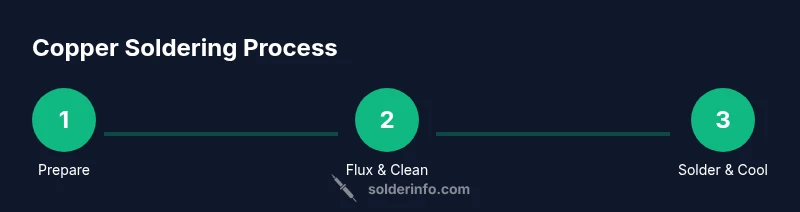
- 1
Prepare the work area and materials
Set up a clean, fire resistant workspace. Gather the torch, flux, solder, copper pieces, brushes, and PPE. Confirm ventilation and have water nearby for safety checks. This foundation helps prevent interruptions during the soldering session.
Tip: Have scrap copper ready to test heat and flux before working on real pieces. - 2
Clean and pre-tin copper surfaces
Remove oxidation with a copper brush until bright. Wipe with isopropyl alcohol and dry. For piping ends, deburr and square the cut. Pre-tinning a small area can help solder wet more readily when you start the joint.
Tip: Pre-tin only a thin layer; excess solder can cause blobs at the joint. - 3
Apply flux and position parts
Coat mating surfaces with flux. Align parts accurately before heating, as copper expands and can shift under heat. For piping, keep ends flush and squared for a tight seal.
Tip: Use a small clamp or magnet to maintain alignment while you heat. - 4
Set up torch and flame for copper work
Adjust the torch to a neutral flame with a steady, medium heat. You want a flame that is easy to control and moves fluidly around the joint without overheating nearby areas.
Tip: Practice with scrap pieces to refine heat delivery before the real joint. - 5
Heat joint and apply solder
Move the flame around the joint to heat the surface evenly, then touch solder to the joint tip. Allow capillary action to pull solder into the seam; avoid direct contact with the solder to your fingers.
Tip: Keep the solder close to the joint and use a light touch to avoid excess beads. - 6
Cool, inspect, and touch up
Remove heat and allow the joint to cool naturally. Inspect for a smooth fillet and uniform coverage. If needed, re-heat small sections and reflow to refine the look. Clean flux residues with a damp sponge.
Tip: If oxidation forms, re-clean and reflux before reheating. - 7
Finish and safety wrap-up
Wipe the joint one final time and store tools safely. Check for leaks on piping joints and ensure every item is powered down correctly. Leave the area clean and ventilated after the session.
Tip: Document any issues for future improvements.
Quick Answers
What is the best torch for copper piping?
For piping, use a higher capacity torch with adjustable flame and good regulator. The goal is steady heat that covers the joint without overheating surrounding areas.
For piping, a larger adjustable torch is usually best for even heat across the joint.
Can I solder copper jewelry with a propane torch?
Yes, propane torches are common for copper jewelry. Work slowly with small joints, use a precise flame, and protect any stones or delicate components.
Propane torches work for copper jewelry if you keep heat tight and away from stones.
What flux should I use on copper before soldering?
Rosin based flux is versatile for electronics and jewelry, while plumbing flux handles heat cycles and outdoor use. Choose a flux appropriate for your copper work context.
Rosin flux works well for jewelry; plumbing flux is better for piping.
Why is my solder bead not flowing evenly?
Issues usually come from oxidation, insufficient flux, or uneven heat. Re-clean, reflux, and rehear with a steady, focused flame while monitoring the joint.
Oxidation or uneven heat causes beads not to flow; re-clean and reheat gently.
Is lead-free solder required for copper plumbing?
For safety and compliance, use lead-free solder in plumbing applications. Ensure you follow local plumbing codes and test joints for leaks after cooling.
Lead-free solder is standard for copper plumbing to meet safety rules.
Watch Video
Top Takeaways
- Master flame control to prevent copper oxidation
- Choose the right torch size for the project
- Prepare surfaces and flux for reliable wetting
- Inspect joints after cooling and rework if needed