Learn to Solder Copper Pipes: A Beginner Guide Today
Master the basics of soldering copper pipes with a practical, safety-focused guide. Learn tools, techniques, and steps for leak-free joints that are durable and reliable for home plumbing projects.


By the end of this guide, you will confidently learn to solder copper pipes for basic residential plumbing. You'll understand proper safety, required tools, cleaning and fluxing techniques, heat control, and how to achieve leak-free joints. According to SolderInfo, a steady hand, quality lead-free solder, and good ventilation are essential for durable results.
Learn to solder copper pipes safely
Learning to solder copper pipes safely is a practical and rewarding skill for DIY homeowners and professionals alike. The process combines careful surface prep, correct flux use, precise heat application, and clean, well-fitted joints to create durable, leak-free connections. The phrase learn to solder copper pipes isn’t just about technique—it's about building habits that prevent leaks and service calls. This guide focuses on safe practices, the most common tools, and a repeatable method you can use on small repair jobs or fixture installations. You’ll start with a clear plan, then practice on scrap sections to build familiarity before working on live plumbing. Remember, consistent heat control and clean edges matter as much as choosing the right solder as they do for any plumbing project.
In practice, copper pipe soldering is a soldering sweat job: you clean, flux, heat, and cap it with solder. The SolderInfo team emphasizes patience and organization; skipping steps or rushing joints often leads to leaks down the line. Begin with a simple repair or stub-out to build confidence, then scale up to longer runs. This approach minimizes waste and reduces the risk of damaging nearby components during heating. With the basics down, you’ll be ready to tackle more complex plumbing tasks, from repairing a leaking tee to installing a new faucet supply line.
As you progress, keep a small notebook of joint types, temperatures, and outcomes. Documenting which flux and which heat level yielded the cleanest bead helps you become faster and more precise over time. Practice on copper pipe scraps first to master your torch technique before moving to live piping. This steady, deliberate practice will turn a beginner into a confident solderer who can handle typical home projects with minimal supervision.
The goal is not just a single successful joint, but the repeatable skill of creating strong, leak-free connections that you can apply across every project. By adopting a structured approach and using the right materials, you’ll save time and frustration while building a dependable plumbing system for years to come.
questionsAllowedForJsonDiffersFromPromptNote":null}
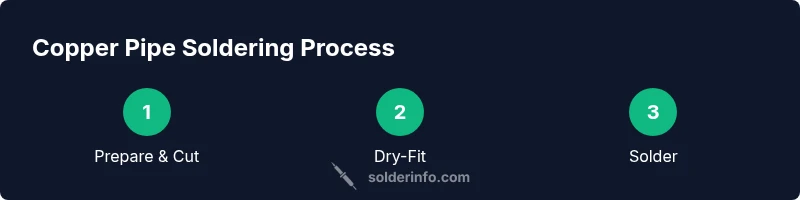
toolsMaterials":{"items":[{"name":"Propane or MAPP torch with regulator","required":true,"note":"Adjustable flame; keep away from combustible materials; check hoses for leaks before use"},{"name":"Copper pipes (type K or L)","required":true,"note":"Cut to length with a pipe cutter"},{"name":"Pipe cutter","required":true,"note":"Cuts square edges for best joints"},{"name":"Deburring tool","required":true,"note":"Remove burrs for smooth insertion"},{"name":"Flux (lead-free selectable for potable water)","required":true,"note":"Rosin-core flux or paste flux to promote solder flow"},{"name":"Lead-free solder (suitable for potable water)","required":true,"note":"Use safe, compliant solder for drinking-water lines"},{"name":"Emery cloth or sandpaper","required":true,"note":"Clean and prepare pipe ends"},{"name":"Safety gear (glasses, gloves)","required":true,"note":"Eye protection and heat-resistant gloves are essential"},{"name":"Ventilation or fume hood","required":true,"note":"Flux fumes can be irritating; ensure good ventilation"},{"name":"Fire extinguisher or water source","required":false,"note":"Have on hand as a precaution"}]},"stepByStep":{"steps":[{"number":1,"title":"Prepare workspace and safety gear","description":"Set up a clean, well-ventilated area. Put on safety glasses and heat-resistant gloves. Check your torch and gas lines for leaks before lighting. Having a tidy space reduces mistakes and protects against accidents.","tip":"Always have an exit route and a fire-safe surface nearby."},{"number":2,"title":"Measure, cut, and deburr copper pipe","description":"Mark your cut length, then use a pipe cutter to make a clean 90-degree cut. Deburr the inner edge with the deburring tool so the tongue of the pipe doesn’t snag flux or cause misalignment.","tip":"Keep cuts square and burr-free for a stronger joint."},{"number":3,"title":"Dry-fit the pipe and fittings","description":"Slide fittings onto the pipe without solder or flux to verify alignment and fit. Check that the pipe is long enough to reach the fitting with a comfortable margin, and ensure no gaps will occur after assembly.","tip":"Mark the insertion depth on the pipe for consistent assembly."},{"number":4,"title":"Clean and prepare the joint surfaces","description":"Wipe the cut ends with a clean rag then lightly abrade the bevels with emery cloth. This removes oxidation and creates a better surface for the flux and solder to adhere.","tip":"A clean surface is critical for capillary action to draw solder into the joint."},{"number":5,"title":"Apply flux evenly to pipe and fitting","description":"Brush flux onto the pipe end and into the inside of the fitting. A consistent coat helps prevent oxidation and improves solder flow.","tip":"Work flux into the joint but don’t over-apply, which can create excess bead."},{"number":6,"title":"Assemble the joint and align correctly","description":"Insert the pipe into the fitting and ensure proper alignment before heating. A stable, straight joint reduces the chance of leaks.","tip":"Keep the pipe steady with one hand while positioning the fitting with the other."},{"number":7,"title":"Heat the joint with light, even strokes","description":"Move the torch around the joint with a steady, sweeping motion. Heat the pipe and fitting together, not the solder itself, to avoid overheating.","tip":"If the flux starts to sizzle, you’re heating correctly; avoid overheating the copper."},{"number":8,"title":"Apply solder at the heated joint","description":"Feed the solder into the joint seam as you maintain heat. Capillary action pulls the solder into the joint for a clean bead.","tip":"Make sure the bead fills the joint without excessive excess."},{"number":9,"title":"Wipe and cool the joint","description":"Remove heat and let the joint cool undisturbed for a minute or two. Wipe away any excess flux residue after cooling.","tip":"Don’t disturb the joint while it cools to prevent micro-movements that cause leaks."},{"number":10,"title":"Inspect for leaks and perform a test","description":"Once cooled, dry-test the joint by pressurizing with water or air according to local codes. Look for drips or damp spots and re-test if needed.","tip":"If you see a leak, reheat and re-solder the joint after cleaning."},{"number":11,"title":"Finish and document care steps","description":"Tidy the area, store tools, and document the joint type and location for future maintenance. Proper documentation speeds future repairs.","tip":"Label the line and note the solder type used."},{"number":12,"title":"Evaluate next steps and plan improvements","description":"Assess the job for any improvements needed, such as sealing methods or additional fittings. Plan ahead for future projects to increase efficiency.","tip":"Practice on scrap sections to refine your technique before tackling critical runs."}],"estimatedTime":"45-60 minutes"}},"tipsList":{"tips":[{"type":"pro_tip","text":"Keep the flame moving to prevent overheating one spot."},{"type":"warning","text":"Never point the torch at yourself or flammable materials; work in a clear, ventilated area."},{"type":"note","text":"Lead-free solders are essential for potable water lines; ensure compatibility with local codes."},{"type":"pro_tip","text":"Use a pipe cutter for clean, square cuts to improve joint quality."},{"type":"note","text":"Wipe away flux after cooling to prevent corrosion and staining."}]},"keyTakeaways":["Prepare the workspace and safety gear before starting","Use clean cuts and deburr edges for reliable joints","Heat the joint, not the solder, and feed solder into the seam","Test joints for leaks after cooling to ensure reliability"] ,"videoEmbed":{"videoQuery":"how to solder copper pipes plumbing tutorial"},"faqSection":{"items":[{"question":"What is the best solder for copper pipes?","questionShort":"Best solder?","answer":"For potable water, use lead-free solder recommended for plumbing. Follow local codes and manufacturer guidance for compatible flux and alloy." ,"voiceAnswer":"Lead-free solder is recommended for drinking-water lines; check local codes for compatibility.","priority":"high"},{"question":"Do I need to sweat joints or can I use compression fittings?","questionShort":"Sweat or compression?","answer":"Both methods are valid. Sweat soldering creates permanent joints with soldered connections, while compression fittings are easier for temporary or adjustable connections." ,"voiceAnswer":"You can use either sweat joints or compression fittings depending on the application and codes.","priority":"medium"},{"question":"Can I solder copper pipes with a butane torch?","questionShort":"Butane torch ok?","answer":"A propane or stronger heat source is usually recommended for larger pipes. Butane can be used for small-diameter, but it may not provide even heat for larger joints." ,"voiceAnswer":"Butane torches can work for small joints, but a larger torch gives you more control for bigger pipes.","priority":"medium"},{"question":"Is lead-free solder safe for drinking water?","questionShort":"Lead-free safe?","answer":"Yes. Use lead-free solder and flux designed for potable water and verify with local plumbing codes." ,"voiceAnswer":"Yes—lead-free solders are the standard for drinking-water lines, per plumbing guidelines.","priority":"high"},{"question":"What safety precautions should I follow when soldering?","questionShort":"Safety steps?","answer":"Work in a ventilated area, wear eye protection, gloves, and keep a fire extinguisher nearby. Inspect your torch and propane connections for leaks before use." ,"voiceAnswer":"Ventilate, protect yourself, and keep a fire extinguisher handy; always check for gas leaks first.","priority":"medium"}]},"mainTopicQuery":"copper piping"},"mediaPipeline":{"heroTask":{"stockQuery":"Copper pipes soldering in workshop","overlayTitle":"Solder Copper Pipes","badgeText":"2026 Guide","overlayTheme":"dark"},"infographicTask":{"type":"process","htmlContent":"<div class="w-[800px] p-8 bg-slate-900 text-white"><h3 class="text-2xl font-bold mb-6">Copper Pipe Soldering Process</h3><div class="grid grid-cols-3 gap-6"><div class="flex flex-col items-center"><div class="w-12 h-12 rounded-full bg-emerald-500 flex items-center justify-center text-xl font-bold">1</div><div class="mt-2 text-center">Prepare & Cut</div></div><div class="flex flex-col items-center"><div class="w-12 h-12 rounded-full bg-emerald-500 flex items-center justify-center text-xl font-bold">2</div><div class="mt-2 text-center">Dry-Fit</div></div><div class="flex flex-col items-center"><div class="w-12 h-12 rounded-full bg-emerald-500 flex items-center justify-center text-xl font-bold">3</div><div class="mt-2 text-center">Solder</div></div></div></div>","altText":"Infographic: Step-by-step copper pipe soldering process","caption":null}},"taxonomy":{"categorySlug":"plumbing-soldering","tagSlugs":["plumbing-solder","copper-pipe-solder","soldering-safety","what-is-solder","joint-quality"]}},
Tools & Materials
- Propane or MAPP torch with regulator(Adjustable flame; keep away from combustible materials; check hoses for leaks before use)
- Copper pipes (type K or L)(Cut to length with a pipe cutter)
- Pipe cutter(Cuts square edges for best joints)
- Deburring tool(Remove burrs for smooth insertion)
- Flux (lead-free for potable water)(Rosin-core flux or paste flux to promote solder flow)
- Lead-free solder(Use safe solder for drinking-water lines)
- Emery cloth or sandpaper(Clean and prepare pipe ends)
- Safety gear (eye protection, gloves)(Essential for eye and hand protection)
- Ventilation or fume hood(Flux fumes can be irritating; ensure good ventilation)
Steps
Estimated time: 45-60 minutes
- 1
Prepare workspace and safety gear
Set up a clean, well-ventilated area. Put on safety glasses and heat-resistant gloves. Check your torch and gas lines for leaks before lighting. Having a tidy space reduces mistakes and protects against accidents.
Tip: Always have an exit route and a fire-safe surface nearby. - 2
Measure, cut, and deburr copper pipe
Mark your cut length, then use a pipe cutter to make a clean 90-degree cut. Deburr the inner edge with the deburring tool so the tongue of the pipe doesn’t snag flux or cause misalignment.
Tip: Keep cuts square and burr-free for a stronger joint. - 3
Dry-fit the pipe and fittings
Slide fittings onto the pipe without solder or flux to verify alignment and fit. Check that the pipe is long enough to reach the fitting with a comfortable margin, and ensure no gaps will occur after assembly.
Tip: Mark the insertion depth on the pipe for consistent assembly. - 4
Clean and prepare the joint surfaces
Wipe the cut ends with a clean rag then lightly abrade the bevels with emery cloth. This removes oxidation and creates a better surface for the flux and solder to adhere.
Tip: A clean surface is critical for capillary action to draw solder into the joint. - 5
Apply flux evenly to pipe and fitting
Brush flux onto the pipe end and into the inside of the fitting. A consistent coat helps prevent oxidation and improves solder flow.
Tip: Work flux into the joint but don’t over-apply, which can create excess bead. - 6
Assemble the joint and align correctly
Insert the pipe into the fitting and ensure proper alignment before heating. A stable, straight joint reduces the chance of leaks.
Tip: Keep the pipe steady with one hand while positioning the fitting with the other. - 7
Heat the joint with light, even strokes
Move the torch around the joint with a steady, sweeping motion. Heat the pipe and fitting together, not the solder itself, to avoid overheating.
Tip: If the flux starts to sizzle, you’re heating correctly; avoid overheating the copper. - 8
Apply solder at the heated joint
Feed the solder into the joint seam as you maintain heat. Capillary action pulls the solder into the joint for a clean bead.
Tip: Make sure the bead fills the joint without excessive excess. - 9
Wipe and cool the joint
Remove heat and let the joint cool undisturbed for a minute or two. Wipe away any excess flux residue after cooling.
Tip: Don’t disturb the joint while it cools to prevent micro-movements that cause leaks. - 10
Inspect for leaks and perform a test
Once cooled, dry-test the joint by pressurizing with water or air according to local codes. Look for drips or damp spots and re-test if needed.
Tip: If you see a leak, reheat and re-solder the joint after cleaning. - 11
Finish and document care steps
Tidy the area, store tools, and document the joint type and location for future maintenance. Proper documentation speeds future repairs.
Tip: Label the line and note the solder type used. - 12
Evaluate next steps and plan improvements
Assess the job for any improvements needed, such as sealing methods or additional fittings. Plan ahead for future projects to increase efficiency.
Tip: Practice on scrap sections to refine your technique before tackling critical runs.
Quick Answers
What is the best solder for copper pipes?
For potable water, use lead-free solder recommended for plumbing. Follow local codes and manufacturer guidance for compatible flux and alloy.
Lead-free solder is recommended for drinking-water lines; check local codes for compatibility.
Do I need to sweat joints or can I use compression fittings?
Both methods are valid. Sweat soldering creates permanent joints with soldered connections, while compression fittings are easier for temporary or adjustable connections.
You can use either sweat joints or compression fittings depending on the application and codes.
Can I solder copper pipes with a butane torch?
A propane or stronger heat source is usually recommended for larger pipes. Butane can be used for small-diameter joints, but may not provide even heat for bigger joints.
Butane torches can work for small joints, but larger pipes benefit from a stronger flame.
Is lead-free solder safe for drinking water?
Yes. Use lead-free solder and flux designed for potable water and verify with local plumbing codes.
Lead-free solders are standard for drinking-water lines; follow local guidelines.
What safety precautions should I follow when soldering?
Work in a ventilated area, wear eye protection, gloves, and keep a fire extinguisher nearby. Inspect your torch and gas connections for leaks before use.
Ventilate, protect yourself, and keep fire safety gear nearby.
Watch Video
Top Takeaways
- Prepare the workspace and safety gear before starting
- Use clean cuts and deburr edges for reliable joints
- Heat the joint, not the solder, and feed solder into the seam
- Test joints for leaks after cooling to ensure reliability