How to Solder Copper Water Pipe: A Complete Guide
Learn safe, code-compliant copper pipe soldering techniques from prep to leak testing. This guide covers flux, heating, and inspection with practical tips from SolderInfo.


Goal: learn how to solder copper water pipe safely and reliably, covering prep, flux selection, heating, soldering, and leak testing. This how-to walks you through each stage with practical tips and safety reminders. By the end, you'll have watertight joints that meet standard plumbing codes. It's suitable for DIYers with basic tools and offers strategies to avoid common leaks.
Copper Water Pipe Soldering Fundamentals
Copper water pipe soldering is a straightforward skill that combines clean preparation, controlled heat, and quality filler metal to create lasting water-tight joints. The technique, often called sweating, is the method most plumbers use for residential piping. When you start, your main goals are to remove oxidation, apply the right flux, heat the joint evenly, and introduce solder so it flows into the joint by capillary action. According to SolderInfo, the most reliable copper joints begin with a dry fit and a clean surface, then progress to flux application and measured heat to avoid scorching the pipe. In this guide, you’ll learn how to approach each stage with clarity, safety, and respect for plumbing codes. Treat each joint as a small system: pipe, fitting, flux, heat, and solder all working together. Practice on scrap pieces first to build confidence and reduce the risk of leaks later.
Safety and Codes: Your first priority
Soldering copper involves open flame and hot metal, so safety is essential. Work in a well-ventilated area, away from flammable materials, and wear eye protection and gloves. Keep a fire extinguisher or water source nearby in case of a flare-up. Read local plumbing codes before starting; many jurisdictions require lead-free solder for potable water lines and may specify joint testing procedures. Ensure you turn off water supply, drain the line, and relieve pressure before starting. Keep a clean work surface; stray debris can contaminate joints and create leaks. If you’re operating near electrical wiring or combustible materials, consider temporary barriers and caution signage. Finally, never leave a torch unattended, and switch off fuel when not actively heating a joint. These precautions reduce risk, protect your home, and ensure the job passes inspection.
Flux and Solder: Choosing the right materials
Flux acts as a chemical barrier that prevents oxidation and aids solder flow into the joint. For copper water piping, choose a flux compatible with copper and safe for drinking water. Rosin-based flux or flux paste is common; apply a thin, even coat to the cleaned surfaces. Solder must be lead-free and appropriate for potable water systems. The best practice is to use solder designed specifically for copper piping and high-quality flux to ensure a reliable seal. Avoid flux residues that can be corrosive or cause staining; wipe away excess flux after soldering. If you’re using flux-core solder, keep an eye on the flux distribution along the joint to prevent gaps. In general, plan for a consistent layer of flux and a steady heat approach to help the solder wick into the joint.
Prepping Pipes: Cutting, Deburring, and Cleaning
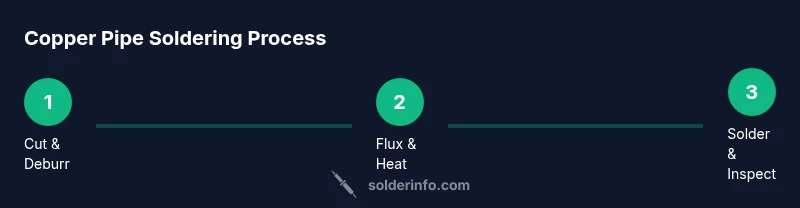
Begin by measuring the required length and cutting squarely with a proper copper pipe cutter. A straight, clean cut is critical to seating the fitting fully and preventing gaps. After cutting, deburr the inside and outside edges with a deburring tool; this removes sharp edges that could puncture the flux film or hinder solder flow. Wipe the ends with a clean cloth or solvent to remove grease or oil. Dry-fit the parts before applying flux, ensuring the pipe slides fully into the fitting and sits flush against the stop. Mark the joint alignment to guarantee proper orientation, then wipe the surfaces again to ensure they're dry and free of oil. This stage is the foundation for a successful soldered joint.
Heating technique and solder application
With joints prepared and flux applied, place the pipe into the fitting and bring the joint area to temperature evenly. Move the torch around the joint in a slow, circular pattern to avoid heat concentration; the goal is to heat copper, not to scorch flux. When the flux film begins to shimmer and the joint is hot to the touch, touch solder to the joint at the edge, not directly onto the flame. The solder should melt and be drawn into the gap by capillary action. If it beads or fails to wick, re-warm gradually and apply more flux before trying again. Remove heat as soon as the solder has circulated and the joint is filled with a smooth ring around the fitting. Let the joint cool naturally—quenching can weaken the joint. This technique yields strong, leak-free connections.
Inspecting joints and leak testing
After cooling, wipe away flux residue with a damp rag. Inspect each joint for a uniform fillet around the entire circumference; gaps or voids indicate poor flow or misalignment. For leak testing, slowly restore water supply and check for leaks at joints under normal pressure. A soapy water test can aid in spotting slow leaks; bubbles indicate a leak that needs attention. If a leak appears, re-heat the joint briefly and apply extra solder as needed; do not overheat. Documentation: keep track of tested joints and re-test after any adjustments. This stage confirms the reliability of your work and helps prevent future water damage.
Troubleshooting common issues
Common problems include under-filled joints, overheating, and flux corrosion. Under-filled joints reveal a visible gap or dry solder; rework the joint with fresh flux and vigilant heat control. Overheating can anneal copper and weaken the pipe, so practice steady heat and avoid lingering the flame on one spot. Flux residue that remains after cooling can trap moisture; clean with a damp cloth and rinse thoroughly. If joints repeatedly fail, reevaluate tool quality, pipe preparation, and fit tolerance. Practicing on scrap segments helps you perfect timing and technique.
Maintenance and code-conscious practices
Copper piping is durable when installed with proper fittings and materials. Store flux and solder in a dry location and check for corrosion or early wear on joints during routine inspections. If patching or extending a run, maintain consistent pipe diameter and fitting type to prevent pressure imbalances. Regular testing after installation can catch issues before they become leaks. Adhering to local codes ensures safety and reduces the risk of failure when the system is under pressure.
Tools & Materials
- Pipe cutter(Cuts clean, square ends on copper pipe)
- Deburring tool / reamer(Removes burrs for a clean joint)
- Propane or MAPP gas torch(Adjust flame to a blue cone for even heat)
- Lead-free solder for copper piping(Choose a solder compatible with potable water lines)
- Flux paste or rosin flux(Apply a thin, even coat to cleaned surfaces)
- Cleaning solvent (isopropyl alcohol or acetone)(Wipe surfaces clean before flux)
- Safety gear (gloves, goggles)(Protect hands and eyes from heat and flux)
- Wire brush or abrasive pad(Clean pipe surfaces before soldering)
- Fittings and clamps(Dry-fit before soldering; keep joints stable)
Steps
Estimated time: 60-90 minutes
- 1
Measure and cut pipe
Measure the required length, mark, and cut squarely with a pipe cutter. Ensure the cut is perpendicular to the pipe axis to seat fittings fully.
Tip: Use a square to confirm the cut is true; test two pieces to compare lengths before gluing them. - 2
Deburr and square ends
Deburr the interior and exterior edges to remove sharp edges that can trap flux or hinder solder flow. Wipe the cut ends clean.
Tip: A sharp deburring tool produces a consistent edge for a better seal. - 3
Dry-fit the joints
Assemble the pipe and fittings without solder to verify alignment and seating depth. Mark orientation to keep everything aligned.
Tip: Dry-fitting prevents wasted flux and rework later. - 4
Clean and flux the surfaces
Wipe surfaces with solvent if needed, apply a thin layer of flux to the pipe end and the fitting socket.
Tip: Flux should be visible as a light film; too much flux can cause drips and mess. - 5
Heat the joint evenly
Apply heat to the joint area in a circular motion; avoid concentrating heat on one spot. The pipe should be warm, not sizzling.
Tip: Keep the flame moving to prevent overheating the copper. - 6
Apply solder to joint
Touch the solder to the joint edge after the joint is hot; let it melt and wick into the seam. Remove heat as soon as solder fills the joint.
Tip: If solder beads, re-warm and add flux before reapplying. - 7
Cool and inspect
Allow the joint to cool naturally, then wipe away flux residue and inspect for a smooth, continuous fillet around the joint.
Tip: A glossy, uniform fillet indicates a good seal. - 8
Leak test
Slowly restore water supply and check for leaks. Use soapy water to identify any slow leaks; address them before closing the project.
Tip: Test under normal system pressure for accuracy. - 9
Finish and clean up
Turn off the torch, store tools, and clean the work area. Document any notes for future repairs.
Tip: Cool joints completely before moving components.
Quick Answers
Do I need flux for copper pipe soldering?
Flux is essential on copper joints to prevent oxidation and help solder flow. Use a flux suitable for copper piping and apply a thin, even coat to the cleaned surfaces.
Flux helps solder flow and prevents oxidation, so you’ll want a copper-suitable flux.
What type of solder is best for potable water pipes?
Lead-free solder is standard for drinking water lines. Choose a solder designed for copper piping and potable water use, and follow the manufacturer’s recommendations.
Lead-free solder is recommended for drinking water lines.
How long should I wait after soldering before turning the water back on?
Allow the joint to cool fully before testing with water pressure. Then perform a gradual pressure test to spot leaks without stressing the joint.
Let the joint cool completely before testing, then test gradually.
Can I reuse cut pipe ends after deburring?
Yes, as long as the ends are clean, square, and free of burrs. Deburr again if you re-cut or shift fittings.
You can reuse ends if they’re clean and square.
Is a propane torch safe for indoor plumbing soldering?
Propane torches can be used indoors if you have good ventilation and follow safety precautions. Keep a fire extinguisher nearby and keep flammables away from the workspace.
Yes, with proper ventilation and safety practices.
What is the difference between soldering and brazing copper pipes?
Soldering uses lower temperatures and flux to join copper with filler metal, while brazing uses higher temperatures and a separate brass or bronze filler. For household copper water lines, soldering is the standard method.
Soldering uses lower heat and solder; brazing uses higher heat and a brass filler.
Watch Video
Top Takeaways
- Prepare and clean pipe surfaces before soldering.
- Control heat and flux for a reliable capillary seal.
- Use lead-free solder for potable water lines.
- Test joints thoroughly before closing up.
- Follow local codes for a compliant, durable install.