How to Solder Copper Pipe When Wet: A Practical Guide
A comprehensive, safe guide to soldering copper pipe in damp conditions. Learn prep, flux selection, heat control, and leak testing to achieve reliable joints even when the environment isn’t fully dry.


You can solder copper pipe in wet conditions by preparing the surface, using the right flux and lead-free solder, and applying controlled heat with a propane torch. Start dry where possible, protect surrounding surfaces, and work quickly with minimal dampness at the joint. For best results, keep a damp cloth nearby and follow strict safety steps.
Why wet conditions complicate copper pipe soldering
Moisture, temperature, and surface moisture create a perfect storm that makes copper joints unreliable. When copper is wet, heat transfer into the pipe slows, and moisture can flash to steam at the joint. Flux helps by creating a conductive barrier, but only if it can wet the metal surface properly. According to SolderInfo, damp surfaces can cause solder to bead elsewhere or fail to flow into the seam, resulting in cold joints that leak. The key is to control the surface moisture, maintain a clean, dry line at the joint, and temper heat carefully so you do not boil water within the pipe. Use a dry cloth to blot up any standing water and protect the work area from spray. The goal is to create the dry, clean surface necessary for solder to capillary through the joint. In practice, plan for a slightly longer work window and avoid rushing; a cautious, methodical approach yields the best results.
Tools, materials, and workspace essentials for damp environments
Working with wet copper requires careful organization. First, set up a dedicated workspace with good drainage and ventilation. Keep a bucket of water handy for quick cooling, but never let it splash into the work area. Gather essential items: propane or MAP torch with adjustable flame, heat shield, flux designed for copper, lead-free solder (rosin-core or paste flux), a clean dry rag, abrasive pad for surface cleaning, and a pair of adjustable pliers. Have sandpaper blocks, a degreasing solvent, and a small, non-slip surface to rest the pipe. Safety gear includes eye protection, waterproof gloves, and a face shield if splashing is a concern. This block should remind readers that working in damp conditions requires slightly different planning than dry workspace soldering. It is also recommended to check for any local codes and to keep a fire extinguisher accessible. According to SolderInfo, preparation reduces failure risk more than any single tool choice in wet work.
Surface preparation under damp surfaces
The foundation of a good copper joint is a clean, dry surface. Start by drying the pipe ends with a lint-free cloth and removing any oxidation with a light abrasive pad. Use a degreaser or isopropyl alcohol to wipe down both the outside of the pipe and the inside of the fitting. In wet conditions, you may need to re-dry during the process, especially after any flux application. Allow the surface to air-dry or gently blot away moisture with the cloth to achieve a dry seam area. Once dry, roughen the copper slightly with scotch-brite to improve flux adhesion. The presence of moisture on the pipe and fitting can hinder solder flow, so this step is critical for success. When you re-sweat the joint, ensure the flux is evenly spread along the seam to maximize capillary action.
Flux, solder choices, and heat management for wet work
Choosing the right flux is essential in damp environments. Use a rosin-based flux or paste flux compatible with copper solder, avoiding water-based flux as it can trap moisture. Apply a thin, even coating to both pipe and fitting, ensuring you cover the entire mating surface. Use lead-free solder with appropriate diameter; rosin-core solder often provides reliable flow at typical wrenching temperature ranges. The heat source should be a torch with adjustable flame; set to a gentle blue flame to avoid overheating and warping. When heat begins to transfer into the joint, apply solder at the joint seam, allowing capillary action to pull it into the gap. In wet conditions, work quickly but not recklessly, and avoid direct contact with standing water. Pause to recheck the surface dryness as you proceed.
Quick overview of the wet-soldering approach (high level)
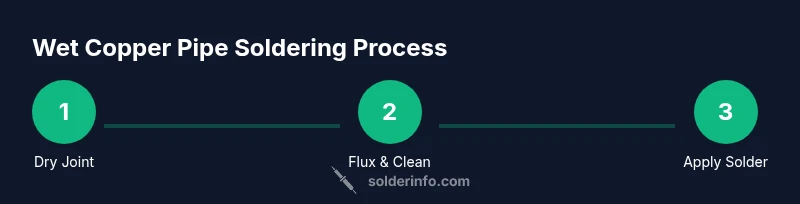
This section outlines the approach without repeating the step-by-step instructions; it gives you the logic behind the technique and how to pace your work. Pre-dry and clean the joint, apply flux evenly, set up the fitting, and carefully apply heat to drive the solder into the seam. Always test for dryness between actions, not only at the end. The goal is to create a continuous, leak-free joint through controlled heating and proper flux adhesion.
Troubleshooting wet-soldering joints and safety
If a joint leaks after cooling, inspect the seam for oxidation or flux residue; rework may be necessary. Check that the pipe ends remained dry during final seating; moisture can cause a weak bond. If you see steam or rapid bubbling during heating, back off heat and re-dry the joint before continuing. Small bubbles indicate poor wetting; wipe away flux to inspect surface. For safety, never touch the tip of the torch to adjacent materials; keep flammable items away. Always wear eye protection and gloves, and know where to shut off valves in case of a leak. Finally, remember that practice in controlled conditions yields better results; practice on scrap copper before attempting a live line.
Tools & Materials
- Propane or MAP torch with adjustable flame(Ensure the nozzle is clean and the flame is blue; use a heat shield.)
- Heat shield or fireproof mat(Protect surrounding surfaces and reduce radiant heat.)
- Flux for copper solder(Rosin-based flux or paste flux; avoid water-based flux in damp work.)
- Lead-free solder (0.5–1.0 mm diameter)(Rosin-core versions typically provide good flow.)
- Dry cloths and abrasive pad(Lint-free cloths; use a pad for cleaning and dulling oxidation.)
- Degreaser or isopropyl alcohol(Clean and degrease copper surfaces to improve adhesion.)
- Sandpaper or scotch-brite pad(Lightly abrade to enhance flux bonding.)
- Adjustable pipe cutter(Clean, square cuts help joint quality.)
- Safety gear (gloves, goggles, face shield)(Protect hands, eyes, and face from heat and flux splatter.)
- Leak testing supplies (soapy water)(For post-solder leak checks.)
Steps
Estimated time: 60-90 minutes
- 1
Dry the joint area completely
Begin by removing standing water from the joint area using a dry, lint-free cloth. Wipe the ends of the copper pipe and the inside of the fitting until no moisture remains. Recheck periodically as you work, since condensation can re-form. Keep hands and tools dry to prevent slipping or accidental burns.
Tip: Keep a small, dry towel handy and pause to re-dry before each action. - 2
Prepare and clean the copper ends
Lightly abrade the pipe ends and the fitting mating surfaces to remove oxidation and create a micro-rough surface for better solder adhesion. Use a degreasing solvent or isopropyl alcohol to wipe away oils. Allow any solvent to evaporate completely before applying flux.
Tip: Do not skip the abrasion step; it is essential for wet environments. - 3
Apply flux evenly to joint surfaces
Coat both the pipe end and fitting with a thin, even layer of flux, covering the entire mating surface. In damp conditions, flux helps prevent oxidation and promotes wetting by solder. Avoid pooling flux at the bottom of the joint, which can cause poor flow.
Tip: A small amount goes a long way—too much flux can obscure the seam. - 4
Fit the joint and secure positioning
Slide the pipe into the fitting and check alignment. Make sure the joint is seated squarely and won’t shift as you heat. If needed, use clamps or temporary supports to hold the joint steady.
Tip: Stability is crucial to prevent misalignment during heating. - 5
Apply controlled heat to the seam
Begin heating the joint with a steady, sweeping motion, moving around the seam to distribute heat evenly. Avoid concentrating heat in one spot to prevent scorching or warping. Stop heating once the flux begins to glow and scent changes indicate the copper is approaching soldering temperature.
Tip: Keep the flame moving; overheating can warp fittings. - 6
Supply solder at the seam and allow capillary action
Touch the solder to the heated seam and allow it to melt and draw into the joint by capillary action. Do not press the solder into the joint; let surface tension pull it through. When the seam is filled, remove the flame and let the joint cool undisturbed.
Tip: If solder beads or pools, re-check dryness and rehearse flux coverage. - 7
Cool and inspect the joint
Allow the joint to cool naturally; do not quench with water as this can create stress cracks. Wipe away flux residue with a damp cloth and inspect for uniform filling along the seam. Look for a smooth, continuous bead without gaps.
Tip: A good joint should show a consistent bead around the entire circumference. - 8
Test for leaks and finalize
Perform a leak test after cooling, using soapy water or a pressure test per local codes. If bubbles appear, rework the joint or replace the affected section. Once confirmed leak-free, clean the area and store tools properly.
Tip: Document any issue for future reference and adjust technique accordingly.
Quick Answers
Is it safe to solder copper pipe when wet?
Soldering in damp conditions increases the risk of steam burns and poor wetting of the joint. Always maximize surface dryness, use proper flux, and maintain controlled heat. If moisture persists, pause and re-dry the joint before continuing.
Soldering copper pipe when wet increases risk; ensure dryness and use proper flux and controlled heat.
What flux should I use for copper pipe in damp spaces?
Choose a rosin-based flux or paste flux appropriate for copper solder. Avoid water-based fluxes in damp settings, and apply a thin, even layer to both pipe and fitting for best wetting.
Use rosin-based flux and apply a thin, even coat to all mating surfaces.
Can I use push-fit fittings in wet environments instead of soldering?
Push-fit fittings can provide a temporary fix in damp conditions, but for a lasting solution, soldering the joint is preferred when possible. Ensure the area is as dry as possible before soldering.
Push-fit can be a temporary option, but soldering is preferred for lasting joints when feasible.
Will condensation affect the joint after soldering?
Yes, residual moisture around the joint can creep into the seam and compromise the bond. Dry the area thoroughly before seating, and perform a test after cooling to confirm integrity.
Condensation can affect the joint; dry fully and test after cooling.
How can I test for leaks after soldering in wet conditions?
After the joint cools, perform a leak test using soap solution or a pressure test per local codes. Look for bubbles at the joint and re-solder any suspect areas.
Test the joint with soap bubbles or a pressure test to confirm no leaks.
What safety measures are essential for wet soldering?
Wear eye protection, heat-resistant gloves, and keep water away from the torch. Maintain ventilation and have a fire extinguisher accessible. Plan the workspace to reduce slips and accidents.
Wear protection and keep water away from the flame; ensure adequate ventilation.
Watch Video
Top Takeaways
- Dry surfaces are non-negotiable for reliable joints
- Use rosin-based flux and lead-free solder designed for copper
- Heat with a controlled, sweeping motion to avoid warping
- Wipe away flux residue and test for leaks after cooling
- Prepare a safe, dry workspace even in damp environments