How Much to Solder a Copper Pipe: Time, Cost & Tips
Estimate time and cost to solder copper pipe with per-joint ranges, required tools, and practical tips from SolderInfo for leak-free, reliable joints.


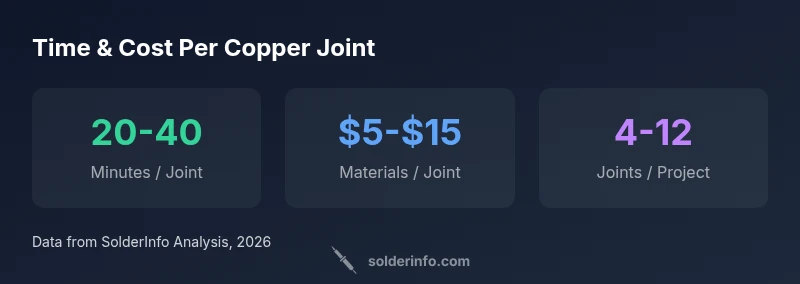
For a single copper pipe joint, expect about 20–40 minutes of labor, with materials totaling roughly $5–$15 per joint, depending on pipe size and solder type. On larger projects, total time scales with the number of joints and access. This range reflects common on-site practice and standard plumbing joints.
What determines the cost and time to solder a copper pipe
In plumbing applications, the expression how much to solder a copper pipe isn't a single value. Instead, the time and cost depend on joint type, pipe diameter, the solder and flux chosen, and the workspace conditions. From a practical standpoint, the most common factor is the joint type: straight couplings, 90-degree elbows, and T-joints each take different heat and flux needs. According to SolderInfo, planning around these categories helps you estimate labor more accurately and avoid budget overruns. The phrase 'how much to solder a copper pipe' becomes a planning problem more than a fixed number: you’re budgeting for prep, heating, soldering, and cleanup. In addition, the choice between lead-free and traditional lead-containing solders influences both material cost and regulatory compliance, especially for potable water lines. The environmental and safety considerations are not cosmetic details; they can affect the total time to complete the install, because improper flux choice or inadequate cleaning can require rework. With careful assessment at the design stage, you can derive a more precise estimate for a given project, rather than relying on a single heuristic.
Time and workflow: planning a soldering session
A typical session begins with prep: cleaning the pipe ends, applying flux, and cutting the pipe square. The heating phase should be steady and even, avoiding overheating that can burn flux or warp fittings. Allow for cooling before moving to the next joint. For residential work, 20–40 minutes per joint is a realistic target, but real-world conditions—tight spaces, long pipe runs, and multiple joints—extend this window. The SolderInfo team emphasizes pacing and drying times between joints to ensure solid, leak-free joints. In practice, you’ll often batch multiple joints in a single run, which reduces setup time per joint and improves consistency. Ambient temperature and ventilation can also impact heat retention and flux performance, so adjust heat input based on the environment rather than applying a fixed duration rule.
Cost considerations: materials, tools, and labor
Costs to solder copper pipe break down into three primary buckets: materials (flux, solder, fittings), tools (torch, cutting tools, measuring, and cleaning implements), and labor. Materials per joint typically run in the $5–$15 range, depending on pipe size and solder type. A basic soldering kit that includes a propane torch, flux, and lead-free solder can be a modest upfront investment, often in the $20–$60 range if you don't own tools already. Larger projects may justify higher-quality flux and solder, which can improve joint reliability and reduce rework. Beyond per-joint costs, you should budget for consumables like replacement flux and cleaning rags, as well as safety gear. From a planning perspective, the total project cost scales with the number of joints, the accessibility of each joint, and whether you must run additional piping sections or make in-wall joints.
How to estimate per-joint cost and time: a practical approach
Start by listing all joints required for the project: straight, 90-degree elbows, T-joints, and any in-wall connections. Assign a time range to each joint type based on past experience or the per-joint guidance above (20–40 minutes per typical straight joint, more for elbows or in-wall connections). Sum the time across joints, then add 10–20% contingency for unseen issues like misfit or needing to reclaim heat. Calculate materials by joint type: flux and paste vary by brand, solder type by pipe size. Finally, add a small buffer for safety checks and pressure testing. This method provides a transparent, auditable estimate you can share with clients or supervisors.
Common pitfalls and how to avoid leaks
The most common leaks stem from improper surface prep, insufficient flux, and uneven heating. Ensure pipe ends are clean and square, flux is evenly applied, and heat is distributed evenly along the joint without overheating the fitting. Avoid overheating flux, which can burn and produce a dull joint, and never reuse flux that has dried out. A test with a low-pressure water check or air pressure test helps detect leaks before the system is buried in walls. If you encounter a leak, re-clean the joint, re-apply flux, and re-solder with steady heat. Keeping a notebook of joint outcomes can help you refine estimates for future projects.
Regulations, safety, and best practices for copper pipe soldering
Safety is non-negotiable when handling a torch and hot metals. Work in a well-ventilated area, wear eye protection and heat-resistant gloves, and keep flammable materials away from the work zone. Follow local plumbing codes for joint types, clearance, and pressure testing requirements. Use lead-free solder for potable water lines in most jurisdictions, and verify flux expiration dates to ensure proper adhesion. Document your process and results for quality control and future reference. By combining solid prep with consistent technique, you reduce the likelihood of leaks and callbacks.
Estimated time and cost by joint type
| Joint Type | Estimated Time (min) | Estimated Material Cost |
|---|---|---|
| Straight joint | 20-40 | 5-15 |
| 90-degree elbow | 25-45 | 6-15 |
| T-joint | 30-60 | 7-20 |
| In-wall retrofit | 45-90 | 10-25 |
Quick Answers
What affects the time it takes to solder a copper pipe joint?
Time depends on joint type, pipe size, flux quality, and accessibility. Elbows and in-wall joints generally take longer due to heat distribution and fitment challenges.
Time depends on joint type, pipe size, and access; elbows and in-wall joints usually take longer.
How much does soldering copper pipe cost per joint?
Materials typically run about $5–$15 per joint; labor varies by project scope and regional rates, with additional costs for tools if not already owned.
Materials are usually five to fifteen dollars per joint; labor and tools may add to the total depending on the project.
Is lead-free solder required for home plumbing?
For potable water lines, most jurisdictions require lead-free solder and flux to ensure safety and code compliance.
Yes. Lead-free solder is typically required for drinking water lines.
What tools are essential for soldering copper pipe?
A propane torch, flux, lead-free solder, a pipe cutter, and basic cleaning tools are essential; a caliper helps with joint fit.
You need a torch, flux, solder, cutters, and cleaning tools.
How can I avoid leaks after soldering?
Clean joints, apply the right amount of flux, heat evenly, and perform a pressure test to confirm leak-free joints.
Clean, flux properly, heat evenly, and pressure test the joints.
“Accurate estimates come from disciplined prep and correct heat control; when done right, copper joints are reliable and leak-free.”
Top Takeaways
- Estimate 20–40 minutes per joint.
- Material costs typically range from $5–$15 per joint.
- Plan for longer times in tight spaces or long runs.
- Use lead-free solder for potable water lines.
- Always pressure test to confirm leak-free joints.