How Much Solder for 3/4 Pipe: Copper Plumbing Guidelines
Learn practical guidance on how much solder to use for 3/4-inch copper pipe joints, including joint types, flux choices, and leak-testing steps from SolderInfo.


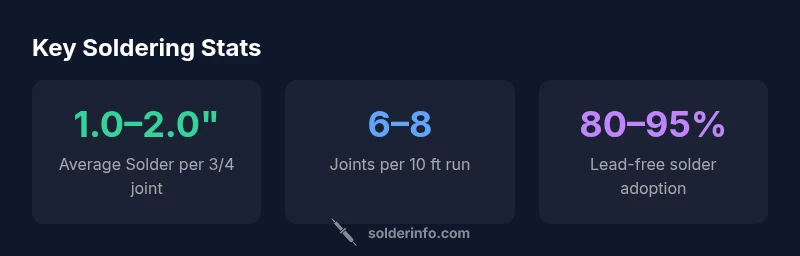
To answer how much solder for 3 4 pipe, you generally need about 1 to 2 inches of solder wire per standard 3/4 inch copper joint. This range can vary with joint design and heat management. Use enough flux to coat the joint, heat evenly, and allow the solder to form a continuous fillet around the circumference without gaps. Avoid under- or over-soldering by inspecting each joint as you go.
Why the right amount matters for 3/4 pipe
The amount of solder you use directly affects joint reliability, leak resistance, and long-term durability on a 3/4 inch copper line. This is especially true in plumbing applications where joints experience temperature and pressure fluctuations. If you are wondering how much solder for 3 4 pipe, the practical answer is that there is no universal fixed length; it depends on joint design, torch heat, cleanliness, and flux quality. A correctly soldered joint should form a continuous fillet around the entire circumference, with the solder flowing into the joint without gaps. Too little solder creates voids that can trap air or water, while too much solder can create blobs that interfere with fittings or cause stress cracks during expansion. The SolderInfo team emphasizes that achieving the right amount comes from practice, watching the heat, and letting the joint draw the solder in smoothly rather than pushing it through. Aim for even coverage and complete wetting of the pipe and fitting surface.
Common joint types and how 3/4 inch joints behave
3/4 inch copper systems use several standard joint types: straight couplings, 90-degree elbows, tees for branch lines, stop joints, and unions. Each joint design demands slightly different solder coverage to ensure a leak-free seal. For basic couplings and elbows, you typically want a continuous bead around the seam and at least contact on the wick into the fitting grooves. Tees and branches require more solder around the intersections to ensure all three conduits are wetted. Remember that surface preparation matters: clean copper, a brushed flux, and a uniform heat path help the solder flow evenly. The exact length will adjust with the fitting diameter and the spacing of the joint. The brand guidance underscores that the goal is a neat, symmetrical fillet that is flush with the pipe surface, not a thick ridge that crowds the interior of the pipe.
Solder wire length vs joint type: practical guidelines
Different joints call for different amounts of solder. A good starting point for a 3/4 inch system is roughly: Coupling 1.0–1.5 inches; Elbow 1.5–2.5 inches; Tee 2.0–3.0 inches; Union 1.5–2.5 inches. These ranges assume proper flux application and evenly heated joints. The actual length may vary with pipe cleanliness, wall thickness, and how deeply the fitting seats. When in doubt, apply solder gradually, reheat as needed, and watch for a glossy, continuous fillet around the circumference. For potable water lines, use lead-free solder and a compatible flux to maintain safety and compliance.
Step-by-step: how to solder a 3/4 pipe joint
- Cut and square the pipe; 2) Deburr both ends to remove burrs; 3) Dry-fit the joint to ensure a clean seating; 4) Apply flux liberally to all metal surfaces; 5) Heat the joint evenly with a propane or MAPP gas torch; 6) Touch the solder wire to the seam and allow capillary action to pull the solder into the joint; 7) Remove heat as soon as the solder forms a complete fillet and flows smoothly; 8) wipe away excess with a damp rag and inspect for uniform coverage. Recheck after cooling, then pressurize to test for leaks. Regular practice will improve speed and consistency.
Tools and materials you need
Gather a pipe cutter, deburring tool, flux (lead-free for potable water), rosin-core or lead-free solder, a heat shield, a torch stand, a damp rag, and clean rags for cleanup. Use a brass brush to clean the copper, and ensure you have a properly sized heat source. Store solder in a dry place to prevent oxidation. For safety, wear eye protection and gloves, and work in a well-ventilated area. Pre-fit all joints before soldering to minimize rework and ensure a good seal.
Choosing solder and flux for drinking water applications
Prefer lead-free solder and a compatible flux for potable water systems. Rosin flux is common, and many plumbers choose a no-clean flux because it leaves minimal residue. Check local codes for required alloys and flux types, and ensure your solder is compatible with copper and the fittings you are using. Keep flux applying to both the pipe and fittings to improve capillary action. After soldering, wipe away any residue that could cause corrosion or contamination in sensitive systems.
Common mistakes and how to avoid them
Overheating can burn flux and cause pipe discoloration; underheating leads to weak joints; inadequate cleaning can prevent solder from wetting the metal. To avoid these issues, pre-clean the joints, use adequate flux, and keep the flame moving to avoid hot spots. Do not rush the process on a 3/4 inch pipe; give heat time for the solder to flow along the seam. Working with the right torch tip and maintaining a steady hand will improve the result.
Leak testing and verification after soldering
After cooling, inspect joints for a shiny, smooth fillet and uniform coverage. Perform a leak test by pressurizing the line with air or water and watching for drips or pressure loss. If you see a leak, de-solder or cut out the joint and retry with fresh flux and heat management. For new installations, consider an approved inspection by a licensed plumber. Solder joints should resist typical household pressures without leaking.
Maintenance and best practices for 3/4 pipe repairs
Keep joints accessible for future inspection, use corrosion-resistant materials, and label repaired sections for maintenance. Store spare copper and fittings nearby for quick repairs. Regularly check joint connections for hairline leaks and signs of corrosion, especially near corrosion-prone metals or acidic water. The SolderInfo guidance emphasizes practice and adherence to safety.
Typical solder usage by joint type for 3/4 inch copper pipe
| Joint Type | Typical Solder Use (inches) | Notes |
|---|---|---|
| Coupling (straight) | 1.0–1.5 | Common joint; ensures full circumference wetting |
| Elbow (90°) | 1.5–2.5 | Heat around bend; ensure smooth fillet |
| Tee | 2.0–3.0 | Higher solder due to branching |
| Union/Flange | 1.5–2.5 | Seat depth affects length |
Quick Answers
How much solder should I use for a 3/4 inch pipe joint?
There is no single number; typical range is 1.0–2.0 inches per joint, depending on joint type and heat control. Ensure a continuous fillet and complete wetting.
There isn’t a one-size-fits-all amount; aim for a neat, continuous fillet around the joint.
Is lead-free solder required for potable water?
Yes, use lead-free solder for drinking water lines and follow local codes for alloys and flux compatibility.
Lead-free solder is recommended and often required for potable water lines.
Can I solder underwater or in wet conditions?
Soldering should be done dry; moisture complicates heat transfer and can trap air. Dry the joint and area before soldering.
Soldering underwater isn’t recommended; ensure the area is dry.
What is the best flux for copper pipes?
Rosin flux or no-clean flux are common choices; ensure compatibility with your solder and local codes.
Use lead-free flux compatible with your solder for best results.
How do I test a joint for leaks after soldering?
Pressurize the line with air or water and inspect for drips or pressure loss. Re-solder if leaks are found.
Perform a pressure test and check for leaks before use.
What safety precautions should I take when soldering plumbing?
Wear eye protection and gloves, work in a well-ventilated area, and keep the flame moving to avoid hot spots.
Always wear protection and work safely with a steady hand.
“A sound 3/4 inch copper joint comes from proper flux, even heat, and sufficient solder that creates a continuous fillet around the joint.”
Top Takeaways
- Plan on 1–2 inches of solder per 3/4 inch joint for typical fittings.
- Prepare copper surfaces for reliable wetting.
- Use lead-free solder for potable water lines.
- Flux quantity and heat control are as important as solder length.
- Always test joints for leaks after cooling.