How Long to Heat Copper Pipe for Solder: A Practical Guide
Master the timing for heating copper pipe when soldering. Learn safe techniques, factors that affect heat duration, and a step-by-step approach to leak-free joints for plumbing projects.


You heat copper pipe evenly with a neutral flame until the flux sizzles and the solder flows smoothly into the joint. There is no universal fixed time—the duration depends on pipe diameter, wall thickness, and joint fit. For small-diameter copper, plan roughly one to two minutes of heating per inch of exposed pipe, plus prep and cooling. Always test readiness before applying solder.
Before you start: safety and prep
Heating copper pipe for soldering is as much about technique as it is about safety. According to SolderInfo, the most reliable joints begin with clean copper, properly deburred ends, and controlled heat. Equip yourself with safety glasses, heat-resistant gloves, and good ventilation. Use lead-free solder for potable water lines and a compatible flux for copper. Clear the workspace of flammable materials, and keep a damp cloth nearby to wipe flux and molten solder as needed. A steady, controlled approach reduces the risk of overheating and cold joints, and it helps you meet code expectations. The SolderInfo team also emphasizes matching the pipe cut to a square, ensuring a snug, gap-free joint when you assemble the fitting before heating.
Key factors that influence heat duration
Heat duration is not fixed; it varies with several practical factors. The most influential are pipe diameter and wall thickness—the larger the pipe, the more heat it requires to reach soldering temperature. Joint fit matters too: a tidy, close fit conducts heat efficiently and reduces time spent heating. Flux type and cleanliness affect heat transfer and solder flow; oxidized or dirty surfaces absorb more energy and resist capillary action. Ambient conditions — such as room temperature, airflow, and how long the joint has to stay in place before cooling — also play a role. By understanding these factors, you can estimate a reasonable heating window without relying on guesswork.
For example, a half-inch (12.7 mm) copper pipe will heat differently from a 3/4 inch (19 mm) pipe, even if you’re working on the same joint. The SolderInfo analysis highlights that preparing the joint well, selecting appropriate flux, and keeping the flame moving are more important than chasing a precise time. Always aim for consistent heat distribution and monitor the solder’s behavior rather than fixating on a timer.
The heating process: how to apply heat evenly
Effective heating requires a few disciplined techniques. Hold the torch at a slight angle and keep it in motion, circling the joint to avoid hotspots. Start heating the fitting and the pipe evenly, not just the joint walls; this helps prevent thermal mismatch that can lead to leaks. A common rule is to bring the pipe and fitting up to temperature together, then pause briefly to allow the flux to begin its work. If you see a dull, gray oxidation on the copper, scrub it with a clean cloth and re-apply flux before continuing. Be mindful of overheating the ends, which can burn flux and cause weak joints. The goal is a bright, evenly heated surface that invites solder to wick in via capillary action.
Testing readiness and applying solder
Ready-to-solder means the flux is actively sizzing and the joint has reached a uniform temperature. Touch a small amount of solder to the joint (not directly to the flame). If the solder wets the joint and flows smoothly around the circumference, you’ve achieved readiness and can proceed. If solder beads up or refuses to flow, reheat gradually, keeping the flame moving. Remove heat as soon as you see capillary action draw the solder into the seam. Allow the joint to cool undisturbed for several minutes before handling. After cooling, wipe away flux residue and perform a leak test with soapy water or a pressure test per local plumbing codes.
Common mistakes and how to avoid them
Avoid overheating or holding the flame in one spot for too long, which can burn flux and oxidize copper. Do not rush the heating process; uneven heating creates cold joints and leaks. Never apply solder to the hot flame itself; always use a properly heated joint as the soldering surface. If flux dries out too fast, reapply a thin layer before continuing. Finally, ensure you dry-fit the pipe and fittings first; a loose joint costs time and can compromise reliability. Following these practices helps you produce strong, code-compliant joints with consistent results.
Tools & Materials
- Copper pipe (cut to length)(Square cut, deburred ends)
- Pipe cutter(Quality wheel cutter for clean cuts)
- Deburring tool(Smooths inner edge)
- Lead-free solder (for potable water)(Ensure conforming to local codes)
- Flux suitable for copper plumbing(Rosin-core flux or pipe flux as recommended)
- Propane/Map gas or equivalent torch(Keep a steady, moving flame)
- Heat shield or tape (optional)(Protect nearby materials)
- Rags or damp sponge(Wipe flux and cooling joint)
- Coolant/ventilation setup(Ensure good airflow for safety)
Steps
Estimated time: Estimated total time: 15-25 minutes per joint plus prep and cooling
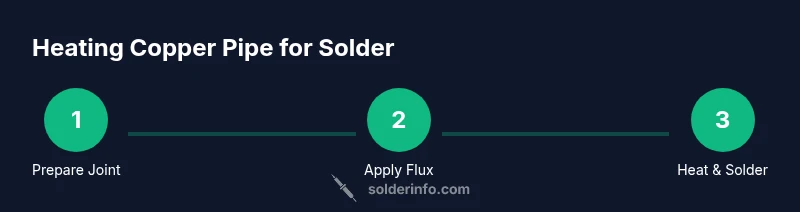
- 1
Prepare joint and cut pipe
Cut the copper pipe square with a cutter, deburr the inside edge, and wipe the end clean. A clean, square cut ensures better alignment and easier heat transfer.
Tip: Dry-fit the joint first to verify alignment. - 2
Apply flux and clean ends
Wipe away oil and oxidation, then apply a thin coat of flux to both pipe end and fitting. Flux reduces oxidation, promotes solder flow, and guides capillary action.
Tip: Ensure flux covers the full circumference for even flow. - 3
Fit and secure the joint
Insert the pipe into the fitting and test the fit with light pressure. Use clamps or a helper to hold orientation; a stable joint heats more evenly.
Tip: Dry-fit first; a loose joint won’t heat consistently. - 4
Heat the joint evenly
Begin heating the joint with a moving flame, circling to avoid hot spots. Heat until the flux becomes glossy and the surface glows slightly, indicating even temperature.
Tip: Keep the flame in constant motion to prevent scorching. - 5
Apply solder when ready
Touch the solder to the joint seam (not to the flame). If it flows smoothly around the joint, you’re ready. Remove heat as soon as capillary action fills the seam.
Tip: Work quickly but steadily; flooding can cause leaks. - 6
Cool, inspect, and test
Allow the joint to cool naturally, then clean flux residue and test for leaks using a soap solution or appropriate pressure test per code.
Tip: Do not disturb the joint while it cools to avoid weak spots.
Quick Answers
How long should I heat copper pipe before applying solder?
There is no universal fixed time. Heat until flux sizzles and solder flows into the joint, then test readiness. Duration depends on pipe size, wall thickness, and joint fit.
There isn’t a fixed time. Heat until the flux sizzles and the solder flows, then test readiness. It varies with pipe size and fit.
What happens if I overheat the pipe?
Overheating can burn the flux, oxidize copper, and weaken the joint. It can also cause flux spatter and poor solder flow.
Overheating can burn flux and oxidize copper, making the joint unreliable.
Can I use regular solder on copper plumbing for drinking water?
Use lead-free solder that complies with local plumbing codes and piping materials. Rosin-core flux is commonly used with copper piping.
Yes, but use lead-free solder that meets local codes and appropriate flux.
Do I need to reheat after applying solder?
Usually not. Allow the joint to cool and inspect. If the joint leaks after cooling, you may need to rework the joint carefully.
Usually you don’t reheat; let it cool and inspect, then rework if needed.
Is this method suitable for all copper pipe sizes?
Principles remain the same, but larger pipes require more heat and sometimes heat sinks or multiple passes. Always adjust technique to the diameter.
The method stays the same, but bigger pipes need more heat and possibly extra care.
What safety practices should I follow?
Work in a ventilated area, wear PPE, keep flammables away, and have a water source for cooling if needed. Follow local codes.
Ventilate, wear PPE, and follow local plumbing codes.
Watch Video
Top Takeaways
- Heat evenly to avoid cold joints
- Use proper flux and clean ends before soldering
- Test readiness with solder before final fill
- Cool joints naturally and inspect for leaks