Compression vs SharkBite vs Solder: A Practical Plumbing Fittings Guide
Compare compression fittings, SharkBite push-to-connects, and solder joints. Learn installation speed, durability, compatibility, and cost to choose the best method for copper, PEX, and CPVC piping.


Compression fittings, SharkBite push-to-connect connections, and traditional solder joints each have distinct trade-offs for plumbing work. For speed and reliability, push-to-connect options shine; compression fittings offer good balance of cost and tooling needs; soldered joints excel in long-term durability when done properly. This article compares performance, cost, and installation considerations to help you decide.
Overview of Joining Methods
When evaluating the trio of options in the keyword phrase compression vs sharkbite vs solder, it helps to frame what each method actually is. Compression fittings seal by compressing a ferrule around the pipe, SharkBite and similar push-to-connect fittings rely on a spring-loaded collet and a clean tube end, and solder joints create a metallurgical bond through heat and filler metal. The choice affects speed, tool requirements, compatibility with copper, PEX, or CPVC, and long-term reliability. According to SolderInfo, the decision often hinges on the project environment and maintenance expectations, not just initial cost. This section will lay the groundwork for a deeper, evidence-based comparison later in the article and connect the discussion to practical workflows.
Compatibility Matrix: What You Can Connect
All three methods have material implications. Copper-to-copper joints are common across all three, while CPVC and PEX introductions vary by connector design. The key is to verify the pipe end conditions, diameter, and correct fitting type. The compression option tends to tolerate slightly imperfect pipe ends better than soldering, but it can suffer from creep under pressure if ferrules are not properly seated. In contrast, push-to-connect fittings simplify installation but require clean, burr-free ends and compatible materials. Solder joints demand skilled technique and clean surfaces but reward you with a continuous metal bond that resists vibration and long-term wear.
Defining Your Use Case: DIY, Pro, or Mixed Systems?
Understanding your environment helps determine the right fit. For easy replacements in existing copper or PEX networks, SharkBite or compression fittings often deliver the fastest results with minimal heat exposure. For copper-only, high-demand runs where long-term durability matters, a properly executed soldered joint might be worth the extra effort. Soldering remains favored by professionals for critical connections like radiant heating manifolds or copper supply lines exposed to vibration.
Installation Tools and Safety Considerations
Push-to-connect fittings generally require only a cutter and deburring tool plus a clean pipe end. Compression fittings need an adjustable wrench or a dedicated tool to compress ferrules securely. Soldering needs a torch, flux, and safety gear. In restricted spaces, push-to-connect options can dramatically reduce heat exposure and fire risk, aligning with safety standards. The same safety lens applies to all methods: ensure a leak test, isolate the section being worked on, and use proper PPE when using torches or solvent cleaners.
Material Performance Across Common Piping Systems
Copper systems often show a strong case for solder joints due to long-term reliability and uniform thermal expansion. PEX facilities benefit from push-to-connect fittings for speed and simplicity, while CPVC can be joined with compression or push-to-connect options depending on the product line. The final decision should balance material compatibility, pressure rating, and the likelihood of future modifications. SolderInfo’s analysis emphasizes that the environment—corrosion potential, vibration, and maintenance schedule—should steer the method choice as much as the pipe material itself.
Cost Considerations and Lifecycle Value
Initial costs vary: push-to-connect components and compression fittings often cost more per joint than a basic solder joint when you factor in speed and labor. Over the lifecycle, solder joints may provide lower maintenance requirements for copper networks but require a higher skill floor and more time upfront. For mixed-material projects, fast-connect options can reduce labor time, while copper-only long-term installations might justify soldering for durability. SolderInfo notes that total cost should include labor, risk mitigation, and future modification needs, not just the sticker price.
Long-Term Reliability: Leak Resistance and Maintenance
All three methods can be reliable when used correctly. A well-made solder joint typically offers excellent leak resistance and durability in copper systems, especially under thermal cycling and vibration. Push-to-connect fittings, while convenient, may require periodic checks and eventual replacement if the pipe ends degrade or if the push-to-connect components are exposed to incompatible conditions. Compression fittings can be dependable in stable conditions but may loosen if overtightened or if pipe ends bend over time. Routine inspection and scheduled maintenance help extend system life across the board.
Environmental and Safety Considerations in Tight Spaces
In confined spaces or areas where a torch presents a fire risk, push-to-connect or compression fittings often provide safer alternatives to soldering. Ventilation and proper PPE remain essential for all methods, particularly when dealing with flux residues and pipe cleaning solvents. From an environmental angle, consider recyclability and the potential for easier disassembly when planning future renovations. Proper disposal of copper scrap and chemical waste is part of responsible plumbing practice.
Quick Refresher: The Best Scenarios for Each Method
If you need speed and simplicity in a DIY setting, SharkBite push-to-connect fittings deliver rapid results with high confidence. For copper systems where you expect to modify or expand later and want a robust permanent joint, soldering is often the gold standard. When working with mixed materials or constrained tool access, compression fittings provide a flexible middle ground that can save time and reduce tool requirements. The key is aligning the method with the project goals, materials, environment, and maintenance expectations.
Feature Comparison
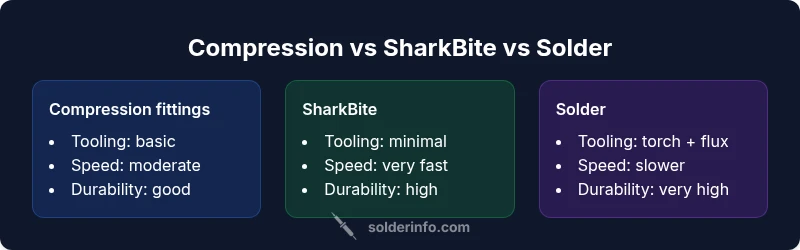
| Feature | Compression fittings | SharkBite push-to-connect | Solder joints |
|---|---|---|---|
| Installation speed | Moderate to fast with proper ferrules | Very fast, no heat required | Slower; requires heating and cooling time |
| Tooling required | Cutter, deburring tool, wrench | Minimal tools, basic cutter | Torch, flux, solder, tinner, brush |
| Durability (long-term) | Good if ferrules seat correctly | High with correct pipe ends and good seal | Very high with perfect technique and clean joints |
| Repairability | Relatively easy to replace ferrule ends | Very easy to swap out one joint | Desoldering and cleaning required for repairs |
| Material compatibility | Copper, CPVC with adapters | Copper, PEX, CPVC (select models) | Primarily copper; some alloys and flux requirements |
| Cost range (relative) | Low to moderate per joint | Moderate per joint, higher upfront cost | Moderate to high depending on setup and materials |
| Best for | Mixed-material runs, DIY quick fixes | Speedy, tool-light jobs | Copper-only, long-term durability |
Advantages
- Fast to install for common repairs
- Minimal specialized tools with push-to-connect options
- Relatively easy to disassemble and re-seat for upgrades
- Versatile across several pipe materials with the right fitting
- Lower heat risk in tight spaces with push-to-connect options
Cons
- Higher ongoing cost per joint in some setups
- Not all systems compatible with every connector type
- Push-to-connect joints can fail if pipe ends are damaged or out-of-spec
- Soldering requires skill and poses burn/ventilation risks in confined spaces
SharkBite push-to-connect fittings offer the best balance of speed and reliability for most DIY scenarios, while soldered joints provide ultimate durability for copper runs when done by skilled technicians; compression fittings strike a flexible middle ground for mixed-material projects.
Choose SharkBite for quick installs and simple repairs. Opt for soldering when durability is paramount in copper systems. Use compression fittings where you need flexibility and materials variety without extensive tooling.
Quick Answers
What is the main difference between compression fittings, SharkBite push-to-connect, and solder joints?
Compression fittings seal by crushing a ferrule around the pipe, SharkBite uses a spring-loaded coupling that clamps onto a clean pipe end, and solder joints form a metal bond after heating the joint. Your choice depends on speed, material compatibility, and long-term durability needs.
Compression uses ferrules, SharkBite clamps onto clean ends, and soldering bonds with heat. Choose based on speed, materials, and durability needs.
Are SharkBite fittings suitable for all pipe materials?
SharkBite and similar push-to-connect fittings support copper, PEX, and CPVC with specific product lines. Always check the manufacturer's compatibility chart for your exact pipe size and material to ensure a proper seal.
SharkBites work with copper, PEX, and CPVC when the product line supports it. Check compatibility for your pipe and size.
Is soldering always the best long-term solution?
Not necessarily. Soldering offers excellent durability for copper systems when performed correctly, but it requires skill, flame safety, and proper ventilation. In cramped or heat-sensitive spaces, push-to-connect or compression can be safer and more practical.
Soldering isn’t always the best long-term option; it needs skill and safety, while other methods may be safer in tight spaces.
How do costs compare across the three methods?
Push-to-connect fittings tend to have higher material costs per joint but save on labor time. Soldering has higher upfront tool costs and labor precision but can be cheaper per joint in large copper networks. Compression fittings sit between, offering labor savings with moderate tool use.
Push-to-connect costs more per joint but saves time; soldering costs tools and skilled labor; compression balances cost and effort.
What maintenance or inspection is recommended after installation?
Schedule a leak test after installation and periodically inspect joints for signs of leakage or corrosion. Replace aging push-to-connect fittings if the ends show wear, and avoid exposing solder joints to excessive movement that could cause cracks.
Test for leaks after installing, then inspect joints regularly and replace worn parts as needed.
Top Takeaways
- Choose push-to-connect for speed and ease
- Soldering wins long-term copper durability
- Compression fittings suit mixed-material projects
- Always verify material compatibility before installing
- Test for leaks after any joint replacement