Can You Solder Copper When Wet? A Practical How-To
Learn whether you can solder copper when wet, why moisture harms joints, and a detailed, step-by-step guide to drying, prepping, and soldering copper piping safely.


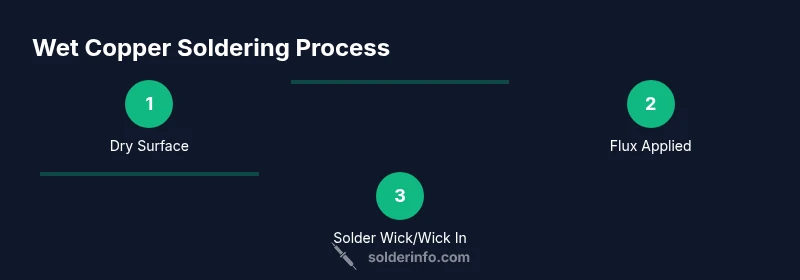
You should not solder copper when it's wet. Moisture creates steam and disrupts solder flow, leading to weak joints and potential leaks. Always dry copper surfaces completely, then apply flux, tin, and heat evenly for a solid connection. If copper remains damp, dry, re-clean, and re-tin before soldering.
Can You Solder Copper When Wet? Practical Reality
Can you solder copper when wet? In most home and professional settings, the short answer is no. Moisture on copper surfaces or in the surrounding environment hinders solder adhesion, promotes oxide formation, and can trap steam that blows solder away from the joint. The SolderInfo team emphasizes that the strongest copper joints form only after you achieve a dry, clean surface and a stable temperature window. If you attempt to solder a damp pipe or copper plate, you risk a cold joint, leaks, and corrosion initiation at the joint. This section explains why moisture matters, how to dry copper effectively, and a step-by-step approach to a reliable solder connection when dryness is restored. Prioritize safety and verify dryness before fluxing and soldering.
Why Moisture Is the Enemy of Solder Joints
Moisture on copper surfaces disrupts capillary action, changes heat transfer, and can flash steam that deflects molten solder. Oxidation from residual moisture increases surface tension and creates a barrier that prevents proper wetting. In humid environments, even small amounts of surface dampness can produce a dull, grainy joint that is prone to cracking and leaks. According to SolderInfo, the best joints form when copper is dry, clean, and properly fluxed, with heat applied evenly to promote solder flow into the joint rather than skating over the surface. Understanding this helps you identify moisture sources, plan drying strategies, and avoid common slippery pitfalls.
Pre-Solder Drying and Cleaning Protocols
Effective drying starts with removing visible moisture, then using heat and desiccants to reach a stable dryness. Wipe and air-dry the copper, then use a heat source such as a heat gun or warm air to drive out embedded dampness. Wipe again with isopropyl alcohol to remove oils and residues, then re-check for dampness. Flux should be added only after surfaces are fully dry. If you work in a notoriously humid area, consider a dedicated drying station with a small desiccant chamber to maintain a consistently dry environment around the workpiece.
Assessing Wet Copper: When It’s Safe to Proceed
Before soldering, verify that both the surface and the environment are dry. A simple test is to wipe with a clean, lint-free cloth and observe if any moisture reappears as you lift the cloth. If you see beads of moisture or condensation, pause and continue drying. In addition to surface dryness, ensure the workspace is free of standing water and that humidity is stabilized. SolderInfo notes that dryness, combined with clean copper and fresh flux, dramatically increases the chance of a successful joint.
Surface Preparation for Copper Pipes and Copper Sheet
Copper surfaces must be free of oils, oxides, and contaminants. Use abrasive pads or sandpaper to create a bright, slightly rough surface, which improves mechanical bonding and solder wicking. Remove burrs from cut edges with a deburring tool; ensure pipe ends are square. After abrasion, wipe with isopropyl alcohol and re-check dryness. Flux should cover all wetted surfaces to minimize oxidation during heating, and dedicated flux brushes help apply a thin, uniform layer rather than pooling flux in the joint.
Flux, Solder, and Soldering Techniques
Choose flux suited for copper and for your solder type (rosin-core flux for electronics or plumbing flux for pipes). Apply a consistent, thin layer of flux to both mating surfaces, then tin the joint with a small amount of solder on the iron tip to establish the wetted surface. When you heat, keep the iron moving to avoid heat concentration that could burn flux or warp components. For copper pipe, heat the joint evenly and feed solder into the seam, not directly into the heat source. The goal is to draw solder into the joint by capillary action as flux reduces oxidation.
Soldering Copper in a Wet Environment: Real-World Scenarios
In many cases, you may encounter damp workshop air or wet ambient conditions near plumbing installations. The recommended approach is to fully dry the workpiece and workspace first; if moisture persists, postpone soldering and address the source of dampness. In critical plumbing applications, consider sealing off the area and using a temporary enclosure with low humidity or a commercial drying agent. If you absolutely must work in a moist environment, an alternative method such as brazing with specialized equipment may be considered, but it requires different materials and procedures and should only be attempted by trained professionals.
Common Mistakes and How to Avoid Them
- Skipping drying steps and attempting to solder on damp copper. Always dry first.
- Over-applying flux, which can trap moisture or create excessive residue. Apply a thin, even coat.
- Heating too slowly or unevenly, causing oxidation and weak joints. Move heat around the joint for even coverage.
- Neglecting surface prep; oily or corroded copper will not wet properly. Clean and abrade until shiny.
- Rushing to finish before the joint cools. Allow appropriate cooling time to set a proper bond.
Troubleshooting: Cold Joints, Cracks, and Leaks
A cold joint appears dull, irregular, or grainy, and leaks may occur under pressure. If you suspect a cold joint, rework the joint after thorough cleaning and drying. Cracks or gaps indicate poor fit or insufficient solder; re-trim ends and re-run the weld with proper heat input. For persistent leaks, inspect the pipe for hidden defects or misalignment and consider re-soldering the entire joint if necessary. Documentation from SolderInfo recommends verifying joint integrity with a soap-test or pressure test after cooling and cleaning.
Safe Practices and Personal Protective Equipment (PPE)
Always wear safety glasses and heat-resistant gloves when soldering copper to prevent burns from hot flux and molten solder. Work in a well-ventilated area to avoid inhaling fumes from flux or plating residues. Keep flammable materials away from the work zone and use clamps or helping hands to minimize handling while hot. Finally, store flux and solders in a cool, dry place to prevent oxidation and degradation of flux resins.
Authority Sources and Further Reading
- OSHA: https://www.osha.gov
- NIST: https://www.nist.gov
- IEEE Spectrum: https://spectrum.ieee.org
Quick Recap: Dry Surfaces Lead to Strong Joints
Solder joints formed on dry copper are consistently stronger and more reliable than joints made on damp surfaces. Always verify dryness, prepare and clean surfaces, apply flux properly, and heat evenly for best results. This discipline reduces leaks and improves long-term performance.
Tools & Materials
- Soldering iron (temperature-controlled)(Tip size 1.5–2.5 mm; keep clean.)
- Lead-free solder for copper(Tin-copper alloy; rosin-core recommended.)
- Flux (rosin-core or paste)(Essential to prevent oxidation and improve flow.)
- Copper pipe cutter / shear(Cuts clean, burr-free edges.)
- Abrasion pad or sandpaper(Grit 120–240; prepares bright surface.)
- Isopropyl alcohol (70%+)(Degreases before flux application.)
- Lint-free cloths(Drying and cleaning without fibers.)
- Safety glasses and gloves(Eye and skin protection.)
- Clamps or helping hands(Stabilizes parts during soldering.)
- Heat shield or damp cloth(Protects nearby components from heat.)
- Desiccant or drying method(Optional for extra dryness in humidity.)
- Ventilated workspace or fume extractor(Reduces flux fumes inhalation.)
Steps
Estimated time: 60-90 minutes
- 1
Check environment and gather tools
Assess the workspace for dryness and gather all required tools before starting. Confirm there is no standing water and that humidity is controlled. This initial check reduces surprises mid-process and ensures you can complete the job safely.
Tip: Have a clear drying plan and a fan or dehumidifier nearby to manage moisture. - 2
Dry the copper surface
Wipe the copper with a lint-free cloth, then apply controlled heat with a heat gun or warm airflow to drive off moisture. Re-check for dampness by wiping again. Only proceed when the surface stays dry after you lift the cloth.
Tip: Avoid prolonged direct heating on a single spot to prevent scorching the copper. - 3
Degrease and abrade surfaces
Use an abrasive pad or fine sandpaper to remove oils and oxide layers, revealing a bright copper surface. Wipe with isopropyl alcohol and re-check dryness. This prepares the metal for optimal flux bonding.
Tip: Keep the surface consistent; uneven prep can trap moisture in crevices. - 4
Apply flux and tin the joint
Apply a thin, even layer of flux to all wetted surfaces, then lightly tin the joint with solder on the iron tip to establish wetting. Flux helps prevent oxidation during heat and encourages solder to wick into the joint.
Tip: Only flux where solder will flow; excess flux can create drips and residues. - 5
Position, clamp, and secure
Hold parts firmly in alignment using clamps or a helping hand. Ensure there is no movement during heating, as shifting can create gaps and leaks. A secure setup yields a clean, watertight joint.
Tip: Use heat-resistant clamps to avoid slips or damage. - 6
Heat evenly and apply solder
Melt solder at the joint by moving the heat source in a circular pattern around the joint, feeding solder into the seam rather than directly into the flame. The goal is capillary action with even heat to form a continuous bond.
Tip: Keep the heat moving to avoid overheating flux and scorching. - 7
Cool, inspect, and clean
Allow the joint to cool naturally, then inspect for gaps, voids, or dull surfaces. Clean flux residues and re-check that the joint is dry before pressure testing or use. A clean, dry joint is essential for long-term reliability.
Tip: Wipe away flux residues to prevent corrosion later. - 8
Test for leaks or continuity
After cooling, test the joint under pressure or perform a continuity check to confirm integrity. For plumbing, a soap-test can reveal minor leaks before final commissioning.
Tip: If you see any leaks, redo the joint with proper drying and prep.
Quick Answers
Can you solder copper if it is slightly damp?
No. Damp copper introduces moisture that can flash steam, preventing proper solder flow and forming weak joints. Always dry the surface completely before fluxing and soldering.
No—if it's damp, dry it first and recheck the joint before soldering.
What flux is best for copper in wet conditions?
A flux designed for copper that promotes wetting and oxidation resistance is recommended. Rosin-core flux for electronics or a plumber's flux designed for copper systems works well; apply a thin, even coat.
Use a flux designed for copper to improve flow and combat oxidation.
Is it safe to use heat guns or hair dryers to dry copper quickly?
A heat gun or hair dryer can help remove moisture, but they should not replace proper drying and environment control. Avoid overheating to prevent damage and oxidation.
You can use controlled heat to speed things up, but don't skip proper drying.
Can brazing be used instead of soldering on copper water pipes?
Brazing uses higher temperatures and different filler metals, requiring specific equipment. For typical copper water pipes, soldering with flux is standard, while brazing is a specialized alternative that should be done by trained professionals.
Brazing is possible but different and usually done by pros.
What signs indicate a failed solder joint?
Look for gaps, cracks, dull or grainy surfaces, and obvious leaks. If any are present, rework the joint after ensuring dryness and proper prep.
Leaks or a dull joint mean you should rework the connection.
Watch Video
Top Takeaways
- Dry surfaces produce reliable joints.
- Flux is essential for wetting copper surfaces.
- Even heating prevents cold joints and leaks.
- Thorough drying reduces oxidation and failure risk.
- Always inspect and test joints before use.