Soldering Broken Glasses: A Practical Frame Repair Guide
Learn how to repair metal and glass frames using soldering with a focus on safety, materials, and step-by-step techniques. Practical tips from SolderInfo for DIY enthusiasts, jewelers, and professionals.


Soldering broken glasses is a viable repair for metal frames with care: use appropriate flux, lead-free solder, and a fine-tipped iron, then clamp the frame to prevent warping. This guide provides safety tips, material choices, and a step-by-step method to restore joints without replacing lenses.
Why soldering broken glasses can be a practical repair
Soldering broken glasses is a technique that hobbyists and professionals use to restore structural integrity in metal frames without refitting or replacing the entire pair. When the damage is limited to joints, temples, or the bridge, a controlled solder join can reestablish alignment and hold lenses securely in place. It’s not a universal fix—frames made from some plastics or composite materials may not respond well to heat. The SolderInfo team emphasizes careful assessment of material compatibility, lens integrity, and the potential impact of heat on coatings and adhesives before attempting any repair. If executed with restraint, soldering broken glasses can extend the life of a beloved pair and save money, while preserving the original design where possible.
Safety considerations when soldering eyewear
Heat and fumes pose real risks to eyes, skin, and lenses. Always wear safety glasses, use a well-ventilated workspace, and consider a fume extractor or a small fan to direct fumes away from your face. Keep a water tray nearby to cool metal quickly if you notice scorching or warping. Avoid overheating any plastic components, coatings, or lens adhesives, which can soften or delaminate. Work on a heat-resistant mat and never leave a hot iron unattended near flammable materials. If the frame carries sentimental or high monetary value, err on the side of caution and seek professional repair.
Materials and methods: choosing solder, flux, and tools
For eyewear repairs, prefer lead-free solder with a suitable flux designed for delicate metal joints. Rosin-core solder can be useful for electronics-adjacent joints, but jewelry-grade or silver-bearing solders might be better for jewelry-grade frames. Flux reduces oxidation and improves wetting of the joint, helping to form a clean, strong bond. A fine-tipped soldering iron, a steady heat source, and fine-tipped tweezers or clamps are essential. Solder wick helps remove excess solder, while magnification aids precise alignment. Always test materials on a scrap metal piece if possible to gauge heat settings before touching the actual frame.
Preparing the glasses for repair: setup and safety checks
Before you start, remove the lenses if feasible to protect them from heat and flux. Clean all surfaces to remove oils or coatings that could hinder solder flow. Secure the frame in a small jig or clamp so the joint sits steady and square. Apply a thin coat of flux to the joint area to promote proper solder flow. Double-check that the frame is dry and free of moisture, which can cause steam and micro-bubbles during heating. A calm, well-lit workspace reduces mistakes and helps you monitor the joint carefully.
Common repair scenarios: where soldering helps and where it doesn’t
Repair opportunities include loose temple joints, cracked bridges, and broken nosepad mounts on metal frames. A stable joint with minimal visible damage can often be reinforced with a discreet solder bead. However, a severely cracked or bent frame that compromises alignment or lens security may still require professional frame replacement. When frames have multiple metals, consider how different metals solder together and whether the joint can tolerate heat without embrittlement. If the nose pads or hinges are plastic, soldering may not be appropriate. In such cases, epoxy or professional repair options may be preferable.
How to test and finish: cleaning, alignment, and lens care
After soldering, let the frame cool slowly to avoid thermal shock. Inspect the joint for gaps, sharp excess, or cracks. Remove any flux residue with a mild solvent or warm water, then polish the joint area carefully. Reinsert the lenses and check for proper alignment and comfort. If you notice stiffness or misalignment, recheck the joint and, if needed, adjust with a gentle hand. Finally, clean the frame and lenses to restore clarity and comfort.
When to seek professional help and alternative options
If the frame is valuable or heavily damaged, or if you’re unsure about material compatibility, consult a professional optician or jeweler who specializes in eyewear repair. Some repairs may be better accomplished by machining a new hinge or replacing sections of the frame rather than attempting a solder repair. In many cases, modern frames still benefit from adhesives or epoxy fixes for plastic sections, or a complete frame replacement if the structural integrity is compromised.
Tools & Materials
- Soldering iron with fine tip(Adjustable temperature; low to medium heat preferred for eyewear.)
- Lead-free solder (rosin-core or jewelry-grade)(Choose thin gauge (e.g., 0.5–0.8 mm) for precision.)
- Flux suitable for delicate metal joints(Use a flux designed for jewelry or electronics, avoid heavy rosin that can leave residue.)
- Solder wick (braid)(For removing excess solder and cleaning joints.)
- Fine-tipped tweezers(For precise placement of small components and solder beads.)
- Magnifying loupe or head-mounted magnifier(Helps with alignment and spotting micro-issues.)
- Heat-resistant mat and small clamps or a jewelry vise(Keeps frame stable during heating.)
- Isopropyl alcohol or mild solvent(For flux cleanup after repair.)
- Safety glasses and gloves(Protect eyes from splashes and heat.)
Steps
Estimated time: Total time: 30-60 minutes (depends on damage and precision required)
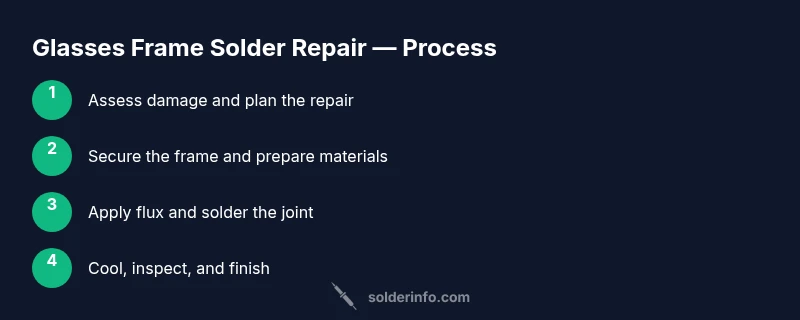
- 1
Assess damage and plan
Examine the frame to determine if soldering is appropriate. Identify joints that are loose or cracked and plan the repair path, including which parts to clamp and how to align the lenses.
Tip: Take a photo from multiple angles to guide your repair plan. - 2
Secure the frame
Place the glasses in a small jig or clamp so the joint sits square and remains stable during heating. Ensure no lens or coating is in contact with the iron.
Tip: Use a soft jaw clamp to avoid scratching metal surfaces. - 3
Prepare flux and solder
Apply a thin, even coat of flux to the joint. Cut a small piece of lead-free solder and pre-tin the tip of the soldering iron to improve heat transfer.
Tip: Test heat on a scrap metal piece first to avoid overheating the frame. - 4
Position the joint
Align the broken parts with the help of magnification. Keep the joint moisture-free and ensure there’s a continuous gap for the solder bead to flow.
Tip: Use fine-tipped tweezers to hold components in place while you apply solder. - 5
Apply heat and solder
Gently heat the joint with the iron and feed a small bead of solder into the joint, allowing capillary action to draw solder along the seam. Avoid direct contact of the iron with lenses or coatings.
Tip: Keep the iron moving to avoid hot spots that can warp the frame. - 6
Cool, clean, and inspect
Allow the frame to cool slowly, then inspect for gaps or excess solder. Clean the joint with isopropyl alcohol and magnify to ensure a neat finish. Reinstall lenses and test fit.
Tip: If you see a dull or grainy joint, reflow with a fresh bead after cleaning.
Quick Answers
Is soldering safe for plastic frames?
Plastic frames generally aren’t suitable for heat-based solder repairs, as heat can warp and weaken the material. Consider epoxy repairs or professional frame replacement. If in doubt, seek a professional opinion.
Plastic frames aren’t ideal for soldering repairs. Epoxy or professional replacement is usually safer.
What kind of solder should I use for eyewear?
Lead-free solder is preferred for safety. Jewelry-grade or electronics-compatible solders with flux provide better wetting and cleaner joints on metal frames.
Lead-free solder with flux is best for eyewear repairs.
Can soldering affect the frame warranty?
Solder repairs can void warranty on some frames, especially if the repair is performed by an unapproved technician. Check with the manufacturer or retailer for policy guidance.
Repairing it yourself can void warranties, so check with the maker.
What if the lenses crack or pop out during repair?
Removing lenses before soldering reduces risk. If a lens is damaged, professional lens replacement or re-seating may be necessary after repair.
Remove lenses before you solder to avoid damage.
How can I tell if the repair is strong enough?
Gently flex the frame near the repaired joint and inspect for movement or cracking. A well-executed solder bead should feel solid with minimal play.
Gently test the joint for movement and cracks to confirm strength.
Do I need professional equipment to start?
Basic hobbyist tools can work, but for safe eyewear repairs you should have a steadier heat source, magnification, and proper safety gear. If unsure, seek professional help.
Basic tools can work, but safety gear and precision help a lot.
Watch Video
Top Takeaways
- Assess frame compatibility before soldering broken glasses
- Use proper flux, lead-free solder, and delicate tools
- Clamp and stabilize the frame to prevent warping
- Only proceed if damage is limited to joints or metal components