How to Solder Stained Glass: A Complete Step-by-Step Guide
Learn to solder stained glass safely and effectively using copper foil or lead came, with essential tools, materials, a detailed step-by-step process, pro tips, and troubleshooting.


By the end of this guide you will know how to solder stained glass using the copper foil method (or lead came), including safety checks, material prep, flux selection, and a reliable soldering technique for durable joints. You’ll need a soldering iron, flux, rosin-core or cored flux, safety gloves, flux paste, and a clean, well-lit workspace. Follow step-by-step instructions for best results.
Copper foil vs lead came in stained glass soldering
When you set out to create a stained glass panel, you’ll typically choose between the copper foil method and the lead came approach. Both achieve strong, durable seams, but they suit different shapes, scales, and aesthetics. Copper foil is versatile for curved and intricate pieces, whereas lead came offers a robust framework for larger panels and a classic look. According to SolderInfo, copper foil is often the more forgiving starting point for beginners because it distributes stress across the foil rather than relying on a single came junction.
In the copper foil method, each glass piece is wrapped with thin copper tape along the edges and overlapped at seams. The seams are then soldered as a continuous grid. This allows for precise, crisp joints and fine detailing, such as beaded edges or textured glass transitions. For lead came, glass pieces are joined by channels of lead that form a structural grid. Solder is applied at the intersections to seal the joints, and the came can carry more weight, making it ideal for larger work or where the structure will bear load.
Safety and care are essential for both methods. Lead-based solders have toxicity concerns; use lead-free alloys if possible, ensure adequate ventilation, and never work near children or pets. Solder fumes can irritate the eyes and lungs, so a dedicated workspace with a fume extractor or at least good cross-ventilation is important. The SolderInfo team notes that safe ventilation is essential for reducing exposure to fumes and protecting your health. When deciding which path to take, consider panel size, shape, and display location, as well as whether you want a textbook-metal look (lead came) or a smoother surface with crisp lines (copper foil).
Essential safety and workspace setup
Safety is the foundation of any successful stained glass soldering project. Begin by establishing a dedicated workspace with good ventilation—ideally a fume hood or external exhaust. Wear safety goggles to protect your eyes from flying glass shards and hot solder, and use a sturdy heat-resistant glove on the hand that handles edges or hot joints. A respirator or disposable mask helps if you’re using lead-based solder or working in a tight space. Keep a water source handy for quick cooling if a piece cracks, and have a metal or ceramic tile as a non-slip, heat-absorbent work surface. Store flux, solvents, and batteries away from the soldering zone to prevent accidental ignition. The SolderInfo team recommends keeping children and pets away from the work area to minimize risk and distraction. After finishing, clean the area thoroughly and dispose of flux residues according to local guidelines; even small amounts of flux can corrode metal surfaces over time.
Tools and materials overview
A solid toolkit makes or breaks a stained glass soldering session. You’ll need a reliable soldering iron with a fine tip and adjustable temperature, rosin-core solder (lead-free preferred), and flux appropriate for metalwork. Copper foil tape is essential for the copper foil method, while lead came provides channels for larger panels. A soldering stand, damp sponge or brass wool for tip cleaning, PPE (goggles and gloves), a glass cutter with running pliers, nippers for trimming, and a sturdy work surface are all basics. Optional but helpful items include a flux brush for precise application, solder wick for mistakes, a pin vise for tiny adjustments, and a tilt-up platform to reduce wrist strain. For beginners, start with lead-free solder and a small project to learn heat control before tackling larger pieces.
Preparing glass edges and foiling
Preparing glass edges properly is the foundation of a clean joint. If you’re using the copper foil method, cut your pieces with a glass cutter, lightly grind the edges to remove burrs, and wear eye protection. Apply copper foil tape around the cut edges, pressing firmly to avoid gaps; the tape should wrap snugly but not wrap more than necessary. In curved areas, seal the tape gently so it lies flat without wrinkling. When using lead came, fit the pieces into the came channels first, ensuring joints are tight and flush. If needed, adjust with running pliers to prevent cracking. For both methods, dust off glass shards and clean surfaces before applying flux or solder. In all cases, ensure the seam lines are evenly spaced and ready for solder.
Flux, solder alloys, and joints
Flux is the catalyst that enables solder to flow smoothly and bond to metal surfaces. Use rosin-based flux for stained glass work; avoid water-soluble flux in the first few projects as its cleaning requirements differ. Select solder that matches your technique: lead-free solders are safer in shared spaces, while traditional lead solder offers a lower melting point and a more forgiving bead, albeit with more safety considerations. For copper foil, joints form along the foil seams; for lead came, joints occur at intersections where came pieces meet. Apply flux sparingly—too much flux can produce excessive solder residue and a dull finish. Always brush flux evenly along the seam, ensuring full contact with the metal.
Soldering technique: steady hands, heat control, and patterning
The core skill in stained glass soldering is controlling heat and maintaining a steady bead along the seam. Start with a clean tip and a small amount of solder on the iron. Lightly touch the seam with the iron to heat the joint, then apply solder from one end to the other in a smooth, continuous motion. Avoid lingering heat in one spot; move along the seam to prevent glass from overheating or warping. Use a neutral, non-greasy wipe to remove excess flux as you progress, and periodically reapply flux to keep the bond strong. For complex patterns, plan your bead path ahead and practice on a scrap piece to develop muscle memory. The SolderInfo team recommends practicing with simple panels before attempting highly intricate designs.
Finishing, cleaning, and sealing
Once joints have cooled, remove flux residue with a mild cleaner or a flux remover designed for stained glass. Cleanliness is critical to reveal the true color and clarity of your panel. If desired, apply a patina to lead came to achieve an aged look, but test on a small area first as patinas can vary in color. Inspect all joints for gaps; if you notice any, reheat and fill with a little extra solder from the end of the joint. Take care not to overheat the glass during reflow, which can cause stress and cracking. Finally, seal the panel with a protective finish or sealant if appropriate for display conditions. The SolderInfo team encourages thorough inspection to ensure the panel is both attractive and durable.
Troubleshooting and common mistakes
Even experienced hobbyists run into snags. Common problems include dull, pitted joints from excessive flux, blown joints from overheating, and glass cracking from too much heat. If you see a grainy or cloudy seam, reheat the joint carefully and reflow with fresh solder. Thin sections can burn easily, so adjust heat and pressure accordingly. When patterns don’t align after foiling or came assembly, re-check the layout and re-solder the joint. Finally, ensure proper ventilation to minimize exposure to fumes, especially when using lead-based solders. The guidance from SolderInfo emphasizes safety at every stage and suggests practicing on scrap panels to build consistency across joints.
Tools & Materials
- Soldering iron (60-120W, adjustable temperature)(Fine tip (1-2 mm) ideal for precise joints)
- Rosin-core solder (lead-free, 60/40 or 63/37)(Lead-free preferred for safety; 60/40 is forgiving)
- Flux (rosin flux or flux paste)(Apply sparingly; helps solder flow and bond)
- Copper foil tape (36 gauge, acid-etched)(Wrap around glass edges for copper foil method)
- Lead came strips (optional for lead came method)(If using lead came, fit into came channels)
- Soldering iron stand, sponge, and cleaning tools(Keeps tip clean and ready between seams)
- Safety gear (goggles, respirator or vent)(Protect eyes and lungs from fumes)
- Glass cutter and running pliers(Cut pieces to size before foiling)
- Solder wick (optional)(For correcting mistakes)
Steps
Estimated time: 2-4 hours
- 1
Prepare the workspace and safety gear
Set up a clean, well-ventilated workspace. Put on safety glasses and gloves. Gather tools and materials, and ensure kids or pets are away from the area.
Tip: Ventilation is key; consider a dedicated fume extractor or window fan. - 2
Choose your soldering method
Decide between copper foil and lead came based on panel size, shape, and desired aesthetic. Plan joints accordingly before cutting glass.
Tip: For beginners, copper foil offers more forgiving seams on curved pieces. - 3
Cut and prepare glass pieces
Cut glass with a glass cutter, then grind edges lightly to remove burrs. Clean dust from edges before foiling or fitting came.
Tip: Use running pliers to minimize edge chipping; test fit frequently. - 4
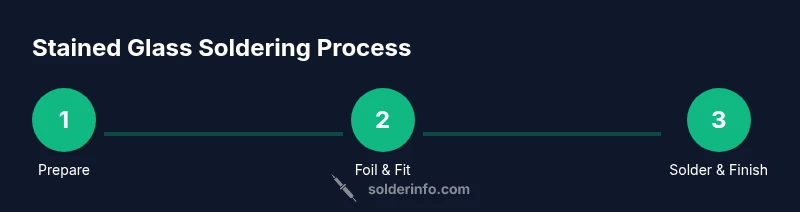
Foil the edges (if using copper foil)
Wrap each edge with copper foil tape, pressing firmly to avoid gaps. Ensure seams are aligned and taped evenly.
Tip: Avoid wrapping tape too thickly at sharp curves to prevent overlaps. - 5
Lay out and fit pieces in pattern
Assemble pieces on a flat surface to verify fit. Adjust gaps and align edges before applying flux or solder.
Tip: Have a second pair of hands if the panel is large. - 6
Apply flux to joints
Brush flux along the seams evenly. Flux improves solder flow and bonding to foil or came.
Tip: Wipe excess flux after a few joints to prevent residue buildup. - 7
Solder the joints
Travel along the seam with a steady, even bead. Use small increments and avoid staying in one spot too long.
Tip: Keep the iron moving to prevent heat damage to glass. - 8
Clean, inspect, and finish
Cool and wipe joints, clean flux residues, and inspect for gaps. Optionally apply patina to lead came for an aged look.
Tip: Test fit and reflow any questionable joints before final sealing.
Quick Answers
What is the difference between the copper foil method and lead came?
Copper foil wraps each edge and produces crisp, detailed joints; lead came uses channels to form a sturdy framework, often preferred for larger panels.
Copper foil wraps edges for detailed joints, while lead came provides a sturdy frame for large panels.
Is lead-based solder safe for stained glass?
Lead-based solder can release fumes; use proper ventilation and consider lead-free solder for safety, especially in shared spaces.
Lead solder can release fumes, so ventilate and consider lead-free options.
What flux should I use for stained glass?
Rosin-based flux is common for stained glass; avoid excessive flux and choose a flux compatible with your solder.
Rosin-based flux is typical; use just enough for good flow.
What temperature should the soldering iron be set to?
Set at a moderate temperature where solder flows smoothly without overheating the glass; adjust as needed for your solder alloy.
Use a moderate temperature and adjust as you go.
How can I avoid dull or gray joints?
Ensure joints are clean, flux is fresh, and heat moves steadily along the seam to prevent oxidation and dull finishes.
Keep joints clean and heat moving to prevent dull beads.
Can I solder stained glass outdoors?
Outdoors is possible with wind protection and stable power; ensure safety and ventilation regardless of location.
Yes, but protect the area from wind and keep a stable setup.
Watch Video
Top Takeaways
- Choose copper foil for detailed panels and lead came for structural strength.
- Maintain steady heat and movement for clean, reliable beads.
- Ventilate well and use lead-free solder when possible for safety.
- Inspect and clean joints thoroughly for best color and durability.