Solder Chain: Jewelry Soldering Guide and Repair Techniques
Learn how to solder a chain for jewelry, repair breaks, and finish with a professional polish. This step-by-step guide covers tools, safety, and troubleshooting to keep your solder chain flawless.


You will learn how to solder a chain for jewelry, repair a broken link, and achieve a seamless finish. This guide covers essential tools, material choices, safety steps, and troubleshooting tips. You will complete a safe repair, create a small jump link, and understand when to replace a chain segment. Photos, diagrams, and tips help you guide your hands-on practice today.
What is solder chain in jewelry?
A solder chain refers to a jewelry chain where the individual links are joined or repaired using a small amount of solder, producing a continuous, secure connection. This technique is common in gold, silver, and platinum pieces where the fit or integrity of the chain has been compromised, or where a clasp or extension must be soldered to the chain. In practice, a skilled jeweler uses heat, flux, and solder to bond metal pieces without visible seams, creating a smooth, uninterrupted line. According to SolderInfo, understanding the difference between soldering for jewelry and electronics is essential, since jewelry demands aesthetic finesse, controlled heat, and careful metal management to preserve the piece’s finish and value. As you work with gold and silver, you’ll learn to balance heat input, flux selection, and solder type to achieve invisible joins that withstand daily wear. This article uses the term solder chain to describe both repair of broken links and the creation of new, securely joined chain sections. By mastering this technique, you’ll gain confidence to repair bracelets, necklaces, and other wearable metalwork with professional results.
In jewelry, solder chain work blends craft with science: you’re joining metal through a precisely milled seam, allowing stress from movement to distribute evenly. That means you’ll need steady hands, proper tools, and a methodical approach. Solder chain work is a practical skill for hobbyists and professionals alike, enabling you to restore value to heirloom pieces or customize chains for enhanced length or design. The SolderInfo team emphasizes consistency in heat control and cleanliness to avoid rough joints or discoloration that can ruin the chain’s luster. By thinking through the task as a small-scale metalworking project, you’ll approach each link with care and precision.
note
Tools & Materials
- Jeweler's torch (butane or micro-torch)(Small, controllable flame; use with a heat-resistant workstation)
- Flux suitable for jewelry(Rosin-based flux or resin flux designed for precious metals)
- Solder (jewelry-grade, lead-free preferred)(Choose hard or easy solder depending on metal and joint size)
- Soldering picks and tweezers(Fine-point tools for precise placement)
- Bench block and clamps or helping hands(Stability is essential to prevent slips during heating)
- Fine-grit abrasive or file(Lightly clean oxidation and burrs before soldering)
- Polishing cloths and jewelry polishing compound(Final shine without scratching)
- Picker or toothpick for flux control(Useful for applying flux in tight joints)
- Safety gear (glasses, heat-resistant gloves)(Protect eyes and hands from heat and splatter)
- Pickling solution or ultrasonic cleaner(Remove oxidation after soldering)
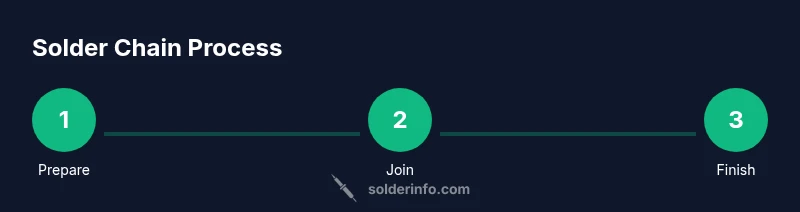
Steps
Estimated time: 30-45 minutes
- 1
Secure your workpiece and workspace
Set the chain on a stable bench block or third-hand tool. Use clamps to prevent movement, ensuring the broken link or joint stays aligned. Keep flammable materials away and have water nearby in case of heat exposure. The goal is a fixed, clean setup that allows precise control of heat and flux without accidental shifts.
Tip: Position the chain so the joint to be soldered faces upward for easy access; use a magnifier if needed to inspect alignment. - 2
Clean and pre-tin the joint
Gently remove oxidation from the joint area with a fine file or abrasive. Apply a thin, even coat of flux to the joint to promote solder flow and prevent oxidation during heating. Lightly tin the exposed metal near the joint with a small amount of solder to establish a predictable bonding surface.
Tip: Avoid excessive tin; a light coat helps solder flow into the seam without creating blobs. - 3
Position the broken links and place solder
Align the chain links so the ends meet precisely. Using tweezers, place a tiny solder bead at the seam or between the ends for a clean join. If the chain is delicate, use a thinner solder and a minimal amount to prevent runoff.
Tip: Use a stray piece of solder only at the seam; prevent excess solder from bridging unintended parts of the chain. - 4
Apply heat evenly and watch the flow
Heat the joint with a soft, even flame, moving around the seam to prevent overheating any single area. When the solder melts and flows into the joint, remove heat and allow the piece to rest in a neutral zone so the joint solidifies without warping.
Tip: Keep gemstones away; if you must work near stones, shield them with a metal barrier or avoid direct flame. - 5
Cool, quench, and clean the joint
Allow the chain to cool naturally or quench in water if appropriate for the metal type. Clean the joint in a pickle bath or with a neutral cleaner to remove flux residues. Rinse, dry, and inspect for a clean, flush seam with no visible gaps.
Tip: Inspect after cooling for a smooth surface; slight polishing may be needed to hide minor flow marks. - 6
Polish and perform a final inspection
Polish the repaired area to match the surrounding surface, using a fine polishing cloth and appropriate compound. Check the chain’s strength by gently flexing near the joint and confirming there are no audible gaps or rough edges. If in doubt, rework the joint or consult a professional.
Tip: Document the repair visually; take photos before and after to assess uniformity.
Quick Answers
What is solder chain used for in jewelry making?
Solder chain is a method of joining or repairing chain links by applying solder and heat to create a continuous, strong bond. It is used to fix broken links, add clasps, or extend a chain with visually seamless joints. Proper technique preserves the piece’s appearance and value.
Solder chain is about joining or fixing chain links with solder and heat to create a strong, seamless bond. It’s used for repairs and extensions while keeping the jewelry looking like one continuous piece.
Can I solder gold-filled chain safely?
Gold-filled chains can be soldered, but they require careful control of heat to avoid burning away the outer gold layer. Use appropriate flux and solder designed for gold-filled surfaces, and test on a scrap piece first.
Yes, but be cautious with heat. Use the right flux and solder for gold-filled surfaces and test on scrap first.
What solder types are best for jewelry chains?
For jewelry chains, rosin-core or hard solder with a color-matched alloy is common. The solder choice depends on the metal and the joint size; use a solder with a lower melting point for delicate links and a higher point for heavy chains.
Use rosin-core or hard jewelry solder matched to your metal. Choose a lower melting point for small links and a higher one for heavier parts.
Is torch heat safe around gemstones in a chain?
Direct torch heat can damage gemstones; protect stones with a heat shield or remove them before soldering. For chains with stones, consider indirect heating or alternate methods such as pre-assembling the links away from stones.
Be careful—strong heat can crack or damage stones. If possible, remove stones or shield them during soldering.
How do I test the strength of a soldered chain?
After cooling, gently flex the repaired area and inspect for any gaps or cold joints. A well-soldered chain should distribute stress evenly and resist flexing without revealing seams.
Gently flex the repaired joint and check for any gaps. A solid joint should feel uniform and secure.
How can I prevent tarnish after soldering?
Clean the joint thoroughly to remove flux residues, then polish with a proper metal polish. Store the chain in a dry, sealed container to slow tarnishing, especially for silver and lower-pinish metals.
Clean well after soldering and polish to prevent tarnish. Store in a dry container to slow oxidation.
Watch Video
Top Takeaways
- Master alignment before applying heat.
- Choose the right solder and flux for the metal type.
- Control heat to avoid damage to the chain and stones.
- Finish with careful polishing for a seamless look.
- Inspect and test the joint for durability.