How to Solder a Ring: A Complete Step-by-Step Guide
Learn how to solder a ring safely and effectively with this step-by-step guide. Tools, materials, flux choices, heating techniques, and finishing tips for durable jewelry joints.


Learn how to solder a ring with confidence. This guide covers tool selection, metal compatibility, flux choices, heat management, and finishing techniques to create a durable, professional-looking ring joint. You’ll follow a clear, step-by-step process designed for beginners and experienced hobbyists alike, with safety tips and common pitfalls to avoid.
Safety and foundational principles for ring soldering
According to SolderInfo, safe, high-quality ring soldering starts with a clean, well-lit workspace and proper safety practices. Before you touch a torch, prepare your bench, ensure good ventilation, and put on eye protection and heat-resistant gloves. The goal of this guide is to teach you how to solder ring joints reliably, not to rush through heat. Proper planning reduces waste, avoids overheating, and minimizes the risk of damaging the ring or injuring yourself. In jewelry work, lead-free materials, inert atmospheres, and gentle handling are essential. This section covers the fundamental concepts you should internalize: metal compatibility, joint fit, flux selection, and temperature awareness.
First, understand the principle of a strong solder joint: the pieces must fit tightly, the flux must prevent oxidation, and the heat must be enough to melt the solder without causing deformation. If you rush, you will leave uneven joints or heat-damaged surfaces. Take your time to inspect surfaces for bevels, burrs, and cleanliness. A clean, well-prepared joint will respond predictably when you apply heat, delivering a seamless repair or a professional-looking addition to your jewelry piece.
According to SolderInfo, always test fit a dry joint first. This gives you a sense of how the pieces will align under heat and helps you plan tack marks or clamps. You should also establish a safe cooling rhythm so you don’t introduce stress into the metal. In short, groundwork and patience are the foundations of a reliable ring solder.
Metals and joints: what works for rings
Rings are typically made from precious metals such as gold and silver, or from common metals like copper alloys. The metal choice affects solder color, flow, and required temperature. A snug fit is crucial for a seamless appearance, whether you’re joining two shanks or attaching a bezel stem. For most jewelry rings, soft solder with a lower melting point is used to minimize stress on delicate shanks. When joining two pieces, a small butt joint or a slightly beveled edge often yields the strongest result if cleaned and fluxed properly. Remember that different alloys expand and contract differently with heat, so plan your fit accordingly. If you’re repairing an heirloom, consider the ring’s karat or alloy composition and use a matching solder alloy when possible. In this context, SolderInfo emphasizes choosing a solder that aligns with the metal’s color and work-hardening properties to avoid visible seams or brittle joints.
Be mindful of how much metal is being heated. A larger mass will take longer to heat evenly, increasing the risk of overheating the edge and causing warps. For fairness and consistency, practice on scrap rings first to gauge how your chosen metal responds to heat, flux coverage, and cleaning methods. This builds confidence before you attempt a high-stakes repair or a custom piece. A well-chosen joint design also reduces the amount of heat needed, which is a win for both the ring and the craftsman.
Flux, solder, and heat management
Flux is your invisible ally; it prevents oxidation and helps solder flow to the joint. In jewelry soldering, you’ll typically use a borax-based flux or a paste flux designed for metal jewelry. Solder comes in different alloys, with soft solder being common for delicate rings and harder solders used for structural joints or thicker bands. The key is color matching and proper alloy selection so the seam blends with the ring’s finish. Heat management is the other critical piece: apply heat gradually and evenly, moving the flame around the joint to avoid overheating any single area. A common mistake is concentrating heat on one point for too long, which can lead to warping, fire scale, or a burnt surface. Use a heat sink or clamps to shield sensitive areas while you bring the joint to the solder’s melting temperature. Finally, clean flux residue thoroughly after heating to ensure a bright, uniform finish.
SolderInfo analysis shows that even heat distribution and clean flux coverage significantly improve joint strength and appearance. A little planning here saves time during finishing and reduces the need for rework later. By treating heat as a controlled ingredient—not a random force—you’ll achieve smoother seams and fewer post-solder blemishes.
Workspace setup and safety equipment
A proper workspace is the foundation of successful ring soldering. Choose a well-ventilated area with a sturdy, heat-resistant surface. Keep your torch, scrap metal, and tools organized on a fireproof mat or soldering board. Safety gear is non-negotiable: wear safety glasses, heat-resistant gloves, and a apron or protective clothing. A fume extractor or at least open air ventilation helps clear fumes produced during heating. Have a bowl of water or a quench container nearby for rapid cooling if needed, and keep a small brush to wipe away flux and oxides. Use tweezers or a third-hand tool to hold parts while you work, which reduces the risk of accidental burns. Finally, keep children and pets away, and do not leave the flame unattended. A clean, prepared workspace makes every step safer and more precise, especially when learning how to solder a ring for the first time.
Remember to wear a proper mask or ensure airflow in the room if fumes are noticeable. Ventilation is essential not only for safety but also for achieving consistent results across sessions. Consistency in your environment often translates to consistency in your results, making your rings look more professional with less effort over time.
Step-by-step soldering process: overview and preparation
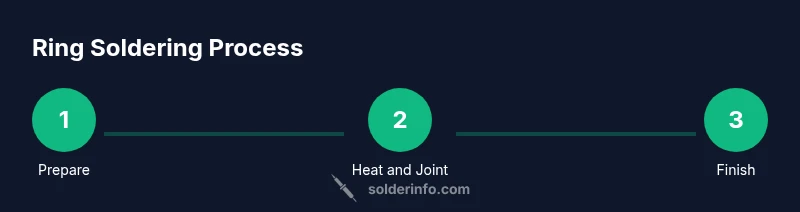
This section provides a high-level map of the ring soldering process you’ll follow in detail in the step-by-step section. Begin by inspecting and fitting the pieces tightly. Prepare a minimal but sufficient flux coverage on the mating surfaces, then place solder at the seam using the appropriate alloy. Heat gradually, sweeping the flame to bring the joint to the solder’s melting range. Watch for a smooth flow along the seam and avoid letting heat travel into the rest of the ring. Allow the joint to cool slowly to prevent thermal shock. Finally, remove flux and inspect the seam; if needed, perform minor finishing work with files and sandpaper to blend the seam. By following these steps, you’ll minimize assumptions and maximize repeatability, which is especially valuable when you’re producing multiple rings or repairing heirloom pieces.
In this guide, you’ll see each action expanded in the step-by-step section, with practical tips and timing cues to help you judge when to advance to the next stage. The goal is a seamless, nearly invisible seam that’s strong enough for daily wear. As you work, keep safety in mind and avoid rushing any step, since jewelry work rewards patience as much as it rewards skill.
Finishing, cleaning, and inspection
Finishing the ring after soldering is where the work of a craftsman shines. Start by removing any excess flux with a clean brush and a warm, not hot, rinse to avoid warping the ring. If you used a whitening or pickle solution, follow the manufacturer’s instructions for neutralizing and rinsing. Use a fine file or sanding stick to blend the seam into the ring, then progressively sand with finer grits to achieve a mirror-like surface. A soft polishing wheel or cloth with appropriate rouge can bring out the metal’s natural luster. At this stage, inspect the joint from multiple angles to ensure uniform color and no visible gaps. If the joint appears dull or uneven, consider a light rework—heat, flux, and gentle pressure can reflow the solder and improve the finish.
A well-finished ring should feel solid and smooth all around the seam and maintain its shape under light finger pressure. Take pride in small details: the transition line should be barely perceptible, and the overall feel should be comfortable against the skin. Safety remains important: always handle hot parts with tongs and never touch a hot joint with bare skin.
Consistency in finishing is a hallmark of quality in ring work, and practice will accelerate your speed and confidence with each piece.
Troubleshooting common issues and how to avoid them
Even experienced makers encounter challenges when learning how to solder a ring. Common issues include incomplete solder flow, burns or fire scale, joint cracks, and unattractive seams. Prevention starts in the planning stage: ensure a precise joint fit, clean surfaces, and adequate flux coverage. If the seam doesn’t flow, you may be applying heat unevenly or using an incompatible solder. Try moving the heat source, allowing the joint to get even heat, and ensuring the solder is at the correct melting point for your alloy. If there is fire scale or oxidation, reduce heat and reflow the joint after cleaning. Cracks often result from overheating or over-working the metal; in this case, you might need to anneal the metal and re-fit the pieces. Finally, for visible seams, consider a light file, re-polish, and reflow the solder with controlled heat. SolderInfo emphasizes taking notes on your settings for future pieces to build muscle memory and reduce repeat issues.
When problems arise, step back, assess the joint, and rework carefully. Avoid rushing the rework, as speed often increases mistakes. With patience and methodical practice, you’ll minimize these issues over time and produce reliable, long-lasting rings.
Ring sizing, adjustments, and care after soldering
After soldering, you may need to adjust the ring size or shape slightly. Use careful, controlled bending or a mandrel to re-shape the band without stressing the seam. If the band feels tight, remove a small amount of material from the inner edge with a fine file, test-fit, and re-check the joint integrity. For cleaning and long-term care, store rings in a dry environment and avoid harsh chemicals that can cause discoloration. Proper storage reduces tarnish and helps the finish stay brilliant longer. When resizing becomes necessary, reheat the joint with caution and avoid applying excessive pressure at the seam during the adjustment. Regular polishing and gentle cleaning will extend the life of the ring and its solder seam. By pairing careful sizing with proper maintenance, you’ll preserve both aesthetics and durability for years to come.
Practical examples and next steps
Now that you know the fundamentals of how to solder a ring, plan your next project with a clear workflow. Start with scrap pieces to test joint design, flux, and solder under your typical lighting and ventilation conditions. When you’re ready to tackle heirlooms or custom pieces, consider documenting your setup and settings for future reference. A well-documented process speeds up repeat projects and helps you maintain consistency across multiple rings. As you gain experience, you’ll refine your technique, choosing the most effective joint style, flux, and solder for each metal and design. The SolderInfo team recommends continuing practice on different metals and thicknesses to build a versatile skill set. Remember, safety always comes first, and consistent, careful practice yields the best results.
Tools & Materials
- Jewelry torch (butane or propane)(Small, adjustable flame with a secure stand)
- Flux or flux paste(Borax-based flux or jewelry flux suitable for metal)
- Solder wire (jewelry solder)(Soft solder for rings; match metal color)
- Soldering tweezers or pick(Non-marring, heat-resistant tweezers)
- Ring clamps or third-hand tool(Sturdy fixtures to hold pieces)
- Heat-resistant mat or soldering board(Protects work surface)
- Fine files and sandpaper (230-600 grit)(Blend seam and refine edge)
- Polishing cloth or wheel(Perfects finish and sheen)
- Safety glasses and heat-resistant gloves(Personal protection)
- Ventilation or fume hood(Clear fumes from the workspace)
- Quench bowl or container(Cool parts safely after heating)
- Scrap metal for practice(Use scrap pieces to learn technique)
Steps
Estimated time: 90-120 minutes
- 1
Prepare workspace and safety gear
Set up a well-lit, ventilated area. Put on safety glasses and heat-resistant gloves. Arrange tools and scrap pieces within easy reach for efficient use.
Tip: Always verify ventilation before lighting the torch. - 2
Inspect and prepare ring parts
Clean the ring components and check alignment. Remove oils and oxidation with a light scrub; ensure the joint surfaces are free of burrs.
Tip: Dry-fit first to confirm the joint will close cleanly. - 3
Fit pieces with a precise joint
Join the pieces with minimal gap. Use clamps or a third-hand to hold the pieces securely. The seam should be tight enough to flow solder but not overly tight.
Tip: Aim for a tiny, consistent gap that solder can bridge. - 4
Apply flux and prepare solder
Coat the joint with flux evenly to prevent oxidation. Cut or place a small amount of solder at the seam where the joint will flow.
Tip: Flux coverage should reach the entire seam for even flow. - 5
Heat gradually to flow solder
Position the flame to sweep the joint and bring it to the solder’s melting point. Move the flame to avoid heating any one spot too long.
Tip: Keep heat moving to prevent overheating the surface. - 6
Flow and set the joint
As the solder flows, watch for a smooth weld line along the seam. Stop heating once solder has filled the joint and looks uniform.
Tip: If solder beads, pause and allow even distribution. - 7
Cool and quench
Quench or allow to cool slowly in air if required by metal. Do not shock the ring with rapid water if the metal is sensitive.
Tip: A slow cool reduces stress in the seam. - 8
Clean and inspect
Rinse away flux residue, file or sand seam flush, and inspect for uniformity. Polish lightly to highlight the joint.
Tip: Inspect under magnification for a near-invisible seam. - 9
Final sizing and care
If needed, adjust the ring size and shape with controlled bending on a mandrel. Finish with a gentle buff and store properly.
Tip: Document settings for future projects.
Quick Answers
Can I solder rings made from different metals together?
Yes, but it requires careful matching of solder alloys and compatible flux. Differences in melting points and color will influence the final appearance and strength, so plan the joint and use compatible metals whenever possible.
Yes, with careful alloy matching and planning; consider color and strength when joining different metals.
What is the difference between soft solder and hard solder for rings?
Soft solder has a lower melting point and is common for delicate ring joints. Hard solder is stronger and used for thicker bands or structural joints, but requires more precise heat control.
Soft solder is easier for delicate joints; hard solder provides strength for thicker rings but needs careful heat control.
Do I need to anneal metals before soldering a ring?
Annealing softens the metal to prevent work-hardened fractures. If the metal resists bending or cracking, annealing is beneficial before soldering.
Anneal the metal if it’s hard or work-hardened before soldering.
How should I finish a solder joint for a clean look?
File and sand the seam, then polish with a light buffing wheel and compound. Ensure the seam is barely visible and the ring feels smooth.
Blend the seam with careful filing and polishing for a smooth finish.
Is venting necessary when soldering rings at home?
Adequate ventilation is important to reduce fumes. Use a fume hood or open air ventilation to improve air quality while heating the joint.
Yes, make sure you have good ventilation when soldering at home.
Watch Video
Top Takeaways
- Plan the joint and metal before heating.
- Control heat with even movement and proper fixtures.
- Use matching flux and solder for a seamless seam.
- Clean, inspect, and finish for a professional look.
- Practice on scrap rings to improve consistency.