How to Clean Solder Flux: A Practical Guide
Learn safe, effective techniques to clean solder flux after soldering. This comprehensive guide covers electronics, jewelry, and plumbing applications, with step-by-step methods, tools, safety tips, and maintenance.


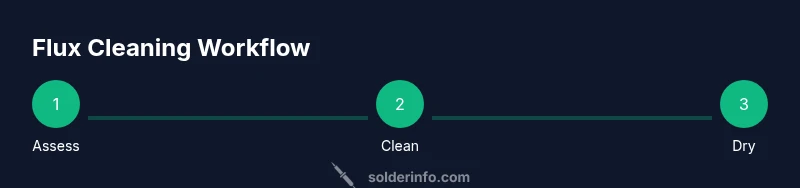
By the end, you will learn how to clean solder flux from joints after soldering, including when cleaning is necessary, which cleaners to use, and a safe workflow that protects components. This quick guide highlights essential steps and common mistakes to avoid.
Why clean solder flux matters
Flux residues are an inevitable byproduct of soldering. They can attract moisture, trap contaminants, and foster corrosion or conductive pathways if left on critical surfaces. For electronics, flux residue can impact electrical performance and long-term reliability; for jewelry, it can discolor metals and affect solder joints; for plumbing, residues can accelerate tarnish or corrosion on copper fittings. According to SolderInfo, establishing a consistent flux-cleaning routine reduces rework and improves joint durability across disciplines. In this guide, you’ll learn to assess residue type, select appropriate cleaners, and execute a safe cleanup workflow that minimizes risk to people and parts.
Flux residue chemistry: what stays behind after soldering
Flux types determine cleanup difficulty. Rosin-based flux (the traditional resin) leaves sticky, amber-colored residues that can become tacky when exposed to heat and humidity. Water-soluble flux leaves salts and ions that dissolve in water but may corrode metals if not rinsed and dried properly. No-clean flux is designed to leave minimal residue, often requiring little to no cleaning for simple boards, but complex assemblies or high-reliability work may still benefit from cleaning to prevent unexpected failure. Understanding residue chemistry helps you pick the right cleaning method and solvent. As noted in SolderInfo analyses, selecting a method aligned with resin chemistry reduces cleaning time while preserving surface finish and conductivity. For safety and efficacy, always test a small area when introducing a new cleaner and follow manufacturer guidelines.
Choosing cleaning methods: solvent vs water-based vs mechanical cleaning
Cleaning flux residues typically falls into three categories. Solvent-based cleaning uses alcohols (isopropyl alcohol), specialty flux cleaners, or acetone for stubborn residues. Water-based cleaners leverage detergents or alkaline solutions and are popular for no-clean and water-soluble flux types. Mechanical cleaning relies on soft brushes, lint-free wipes, and gentle swabs. Each method has trade-offs: solvents dry fast and evaporate cleanly but require proper ventilation; water-based cleaners are often milder and more eco-friendly but may require rinsing and drying steps; mechanical cleaning is simple but may miss hidden residues in fine-pitch areas. When choosing, consider flux type, device sensitivity, and safety constraints. The SolderInfo team recommends testing your chosen method on a sacrificial joint to confirm it does not alter finish or adhesion, and then applying a consistent routine across projects.
Safety considerations and ventilation when cleaning flux
Ventilation is non-negotiable when using solvents, especially near heat sources or open flames. Always work in a well-ventilated area, wear chemical-resistant gloves, and protect eyes with safety glasses. Keep a spill kit and proper waste containers nearby. Do not mix cleaners that release hazardous vapors; follow label directions for mixing and disposal. For electronics work, ensure your workspace is free of hot surfaces before applying any liquid cleaner to avoid thermal shock or component damage. OSHA guidelines emphasize chemical hygiene and storage—respect these rules to keep your environment safe while cleaning flux.
Tools, supplies, and workspace setup
A clean, organized workspace reduces the chance of recontamination. Essential tools include: a suitable cleaner (IPA or flux solvent), a soft nylon brush, lint-free wipes, cotton swabs for tight joints, distilled water for rinsing (if using water-based cleaners), a shallow tray for soaking, and PPE (goggles, nitrile gloves). A magnifier helps inspect hidden residues in dense layouts. Keep components off the bench using anti-static mats if dealing with electronics. Label residual solvents and store them in a dedicated cabinet to prevent cross-contamination. For the jewelry and plumbing contexts, use non-abrasive brushes and non-corrosive cleaners to protect metal finishes and fittings.
Flux-specific strategies: electronics, jewelry, plumbing
Electronics boards benefit from light cleaning with isopropyl alcohol and a gentle brush; sensitive components should be protected with masking or shielding. Jewelry pieces often require extra care to avoid dulling or scratching delicate metal surfaces; use mild cleaners and soft brushes with thorough drying. Plumbing joints, especially copper, tolerate water-based cleaners but must be dried completely to prevent oxidation. In all cases, ensure that residues are evaporated or wiped away completely and that no cleaner remains trapped under components or in crevices where it could later evaporate and cause issues.
Common mistakes and troubleshooting
Avoid oversaturation—too much liquid can wick under components or cause water intrusion in electronics. Do not use abrasive pads that could scratch finishes. Avoid mixing cleaners unless the label permits; incompatible solvents can create hazardous byproducts. If residues remain after cleaning, reapply the cleaner and gently agitate with a brush, then rinse and dry thoroughly. For stubborn deposits, consider a targeted soak with the appropriate cleaner and a softer brush, followed by a final wipe-down. Always verify the joint with a magnifier to confirm cleanliness.
When to rework or reflow after cleaning
If a joint appears dull, re-tinned, or shows signs of micro-voids after cleaning, it may require reflow or rework. Cleaning should come after inspection but before any final solder fixation is re-applied. For boards, reflow should be performed with appropriate temperature profiles and timers to prevent damage. For jewelry and plumbing, re-solder only after the flux residue is fully removed and the surface is dry. Rechecking with a magnifier helps ensure that no residues are trapped and that the solder joint presents a clean, uniform finish.
Maintenance and waste disposal to minimize future buildup
Create a routine for Flux Cleanup Day after each project: wipe, inspect, and dry, then store materials properly to prevent contamination. Dispose of used solvents following local regulations; many facilities require primary containment and labeling. Reusable tools should be cleaned and sanitized between jobs to prevent cross-contamination. Document any flux type used and the cleaning method so you can replicate successful outcomes. This consistent approach reduces reruns and ensures a reliable workflow across electronics, jewelry, and plumbing tasks.
Tools & Materials
- Isopropyl alcohol (IPA) 70-99%(Preferred: 99% for fast evaporation; work in a ventilated area)
- No-clean flux remover or specialty solvent(Use for stubborn rosin-based flux residues)
- Flux cleaner (water-based) or mild detergent(Choose for water-soluble flux types)
- Soft-bristle brush (nylon)(Small-head brush for tight spaces)
- Lint-free wipes or microfiber cloths(Lint-free to avoid residues)
- Cotton swabs (Q-tips)(For crevices and vias)
- Distilled water(Rinse with water-based cleaners)
- Shallow tray or dish(For soaking or dipping parts)
- Safety gear: goggles, nitrile gloves, mask(Protect eyes, skin, and lungs)
- Ventilation: fume hood or exhaust fan(Keep air clear of solvent vapors)
- Magnifier or loupe (optional)(Inspect tiny residues)
Steps
Estimated time: 30-60 minutes
- 1
Prepare workspace and safety gear
Set up a well-ventilated workstation. Don gloves and safety goggles before handling cleaners. Arrange components on a stable, non-absorbent surface and gather all tools to minimize trips.
Tip: Test cleaners on a sacrificial area to verify compatibility. - 2
Assess the flux residue
Inspect the joint area to identify residue type and extent. Rosin-based flux often leaves amber residues; water-soluble flux leaves crystalline or soapy films. This guides cleaner choice and technique.
Tip: Use a magnifier for tight or dense areas. - 3
Choose a cleaning method
Decide on IPA for light rosin residues, water-based cleaner for water-soluble flux, or a specialty solvent for stubborn deposits. Avoid mixing cleaners unless the label allows it.
Tip: Start with milder cleaners and escalate if needed. - 4
Apply cleaner to residues
Dampen a lint-free wipe or brush with cleaner. Gently apply to the residue, avoiding excess liquid near sensitive components. Do not soak boards or jewelry pieces aggressively.
Tip: Work from the outer edges toward the center to prevent spreading. - 5
Gently scrub and agitate
Use a soft brush to loosen stubborn residues. For hard-to-reach areas, use a cotton swab with care. Rinse or wipe away loosened flux gradually.
Tip: Take breaks to prevent solvent buildup on the surface. - 6
Rinse and dry
If using water-based cleaners, rinse with distilled water and dry completely. For IPA or solvents, allow evaporation in a warm, dry area before handling components.
Tip: Make sure no liquid remains trapped under components. - 7
Inspect post-cleaning joints
Re-examine joints for any remaining residue. Use a magnifier and ensure the surface is clean and dry before reassembly or reflow.
Tip: If residue remains, repeat the cleaning cycle with a different cleaner if necessary. - 8
Document results and store properly
Record which cleaner and method worked best for future projects. Store solvents in labeled containers away from heat and moisture.
Tip: Dispose of used solvents according to local regulations.
Quick Answers
Is it always necessary to clean flux after soldering?
Not always. No-clean flux is designed to leave minimal residue, but cleaning improves reliability and reduces long-term risks in sensitive electronics or high-reliability joints.
Cleaning isn't always required with no-clean flux, but it's often recommended for critical electronics or visible joints.
Can I reuse flux cleaners or solvents?
Reuse of solvents is generally discouraged because contaminants concentrate with use. Use fresh cleaner for each session to avoid depositing debris on joints.
Don't reuse cleaners. Fresh solvent reduces contamination and preserves cleanliness.
What solvents are safest for flux cleaning around electronics?
Isopropyl alcohol is a common, relatively safe option for many flux types. For stubborn rosin, specialty flux cleaners may be needed. Always follow manufacturer safety data and avoid solvents near heat sources.
IPA works for many fluxes; check labels for safety guidelines and avoid heat when using solvents.
How long should cleaned joints dry before reworking?
Drying time depends on the cleaner and environmental conditions. In a typical room, 1–5 minutes for IPA and 5–15 minutes for water-based cleaners is common before handling.
Most joints dry quickly; give a few minutes to air dry before reworking.
Is flux cleaning different for electronics vs jewelry?
Yes. Electronics emphasize avoiding moisture near components and moisture-sensitive parts, while jewelry cleaning prioritizes surface finish and metal care. Use appropriate cleaners and tools for each material.
Keep electronics dry and use gentle cleaners; jewelry needs gentle handling to avoid scratching.
Watch Video
Top Takeaways
- Choose cleaners based on flux type and material.
- Proper ventilation and PPE are essential.
- Thorough drying prevents corrosion and rework.
- Document cleaning methods for consistency.