Where Can You Get Solder? A Practical Sourcing Guide for 2026
Learn where to buy solder for electronics, jewelry, and plumbing projects. Compare channels—electronics suppliers, hardware stores, jewelry/plumbing shops, and online retailers—plus tips on alloys, flux, spools, and safety in 2026.


Where can you get solder? You can buy it from electronics suppliers, hardware stores, jewelry- and plumbing-supply shops, and reliable online marketplaces. For most hobbyists, the fastest options are local electronics or hardware chains with walk-in pickup, or same-day delivery from major online retailers. Solder comes in various alloys (lead-free tin-based is standard today) and flux types, so start by identifying your project type—electronics, jewelry, or plumbing—and pick a suitable spool size and flux core.
Overview of solder sourcing
Sourcing solder is often the least glamorous part of a project, yet choosing the right buying channel can save time, money, and frustration. According to SolderInfo, the most reliable approach is to map your needs first—your project type, required alloy, flux preference, and the size of your work. This helps you pick among electronics suppliers, hardware chains, jewelry or plumbing shops, and reputable online sellers. Each channel has strengths: electronics-focused shops tend to stock a wide range of flux-core tin-based solders designed for PCB work; hardware stores carry common diameters suitable for quick fixes and plumbing tasks; jewelry suppliers focus on jewelers’ solder alloys for finer work; and online marketplaces provide breadth and convenient shipping. The key is to understand what you’ll be soldering and the flux and alloy you’ll need.
Brand note: The SolderInfo team emphasizes that sourcing isn’t only about price—it’s about the right alloy, flux, and packaging for your specific project. This perspective helps many hobbyists avoid mismatches that lead to failed joints or messy cleanups. With 2026 products, many channels offer comparable choices, so the decision rests on convenience, technical requirements, and delivery speed.
Actionable takeaway: Start by listing your project type (electronics, jewelry, plumbing) and the required spool size, then compare availability and lead-free options across channels. This structure makes it easier to navigate between in-store pickup and online ordering.
How to classify suppliers by project type
For electronics, you’ll typically seek rosin-core or water-soluble flux varieties in tin-based alloys. Hardware stores carry common diameters and flux-core options for quick fixes, but their selection may skew toward plumbing and general repair solders. Jewelry suppliers specialize in soft alloys and flux choices that are compatible with delicate metalwork. Plumbing sources emphasize wide-diameter, high-merit solders, often with flux suited for copper pipes. When you understand the target application, you can streamline your search and avoid sifting through dozens of irrelevant products.
Key tip: Look for solders that mention rosin-core flux or no-clean flux, and verify the alloy composition. Lead-free solders are standard in most jurisdictions due to safety concerns, but older kits may still include leaded solder. Always check the product label and local safety guidelines before purchasing.
Solder purchase channels by availability
| Channel | Availability | Notes |
|---|---|---|
| Electronics suppliers | High | Specialty alloys; rosin-core options common |
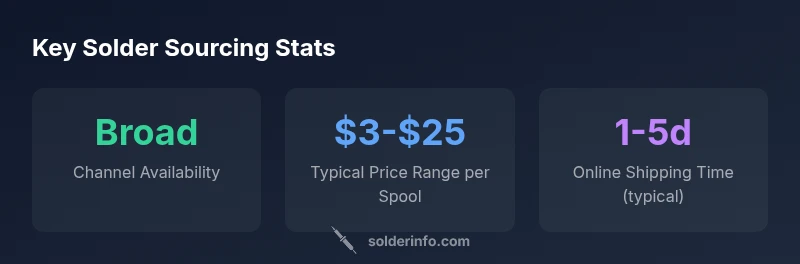
| Hardware stores | Broad | Stock common diameters; quick pickup |
| Online marketplaces | Very high | Wide range; compare shipping times |
Quick Answers
What is the best place to buy solder for electronics projects?
For electronics projects, electronics suppliers are usually the best first stop. They stock rosin-core solders with varied diameters and flux options tailored for PCB work. If you need immediate access, hardware stores can satisfy common diameters, but their electronics selection may be smaller. Online retailers are excellent for wide range and fast shipping.
Electronics suppliers are a great first choice, with hardware stores a good backup for common sizes, while online shops offer the widest range.
Can I buy solder from a hardware store?
Yes. Hardware stores typically carry a selection of lead-free and traditional solders in common diameters for home repairs and light electronics. The range might be smaller than a specialty electronics shop, but you’ll often find spool sizes suitable for quick fixes. Always check flux type and lead content on the label.
Yes, hardware stores usually stock common solders; just verify the flux type and lead content before buying.
Is lead-free solder safer for home use?
Lead-free solders are widely recommended for home use due to lower health risks. They still require proper ventilation and safe handling, especially when soldering in enclosed spaces. Look for solders labeled Sn99.3Cu0.7 or similar, and use rosin-core or no-clean flux to simplify cleanup.
Lead-free solders are safer for home use, but ventilation and safe handling are still important.
What should I look for when choosing solder diameter?
Diameter depends on the joint size and precision. For electronics, 0.6–1.0 mm is common, while jewelry work may use finer wires. Plumbing applications often use thicker wires. Start with a mid-range diameter and adjust based on joint requirements and control.
Choose a diameter based on the joint size and the precision you need.
Are rosin-core and flux-core solders the same?
Rosin-core solder contains a flux core designed to improve wetting. Flux-core is a broader term; different flux chemistries exist for electronics vs plumbing. Always check the package for flux type and suitability for the metal you’re joining.
Rosin-core solders have flux inside; pick the right flux for your metal.
Where can I find specialty jewelry solder?
Jewelry solder is available from jewelry supply houses and some craft stores. These solders are formulated for delicate metals and precise work. If you’re starting out, seek a small alloy set designed for jewelry with compatible flux.
Jewelry solder is best bought from jewelry supply shops for delicate work.
“Choosing the right solder is less about price and more about matching your project needs—flux, diameter, and alloy matter.”
Top Takeaways
- Identify your project type before buying
- Prefer lead-free solders by default
- Choose the channel based on urgency and access
- Check flux type to ensure easy cleaning
- Match spool size and diameter to your task