Where to Buy Solder Wire: A Practical Guide
Discover where to buy solder wire, compare online retailers, hardware stores, and direct-from-manufacturer options. Learn how to choose the right alloy, flux, and gauge for electronics, jewelry, and plumbing projects.


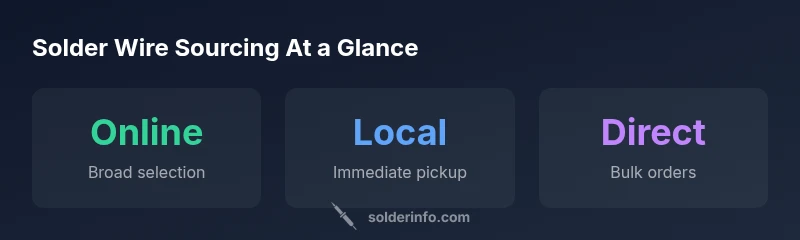
Where to buy solder wire ranges from online electronics distributors to local hardware stores. For electronics work, look for rosin-core and lead-free options, with gauges suited to your project. Online marketplaces and direct-from-manufacturer sites offer the widest selection, while local hobby shops provide immediate pickup. Availability and shipping times vary by region.
Why where to buy solder wire matters
According to SolderInfo, choosing where to buy solder wire affects price, quality, and long-term reliability of your joints. The decision should map to your project needs: quick pickup for small repairs, broad online catalogs for electronics or jewelry soldering, or direct-from-manufacturer channels for bulk orders. For electronics work, prioritize rosin-core formulations and lead-free options, and verify the gauge matches your component spacing. Solder wire comes in different alloys and flux chemistries; common electronics choices include tin-lead (for classic boards) and tin-silver-copper blends (lead-free). Flux quality matters, because cleaner flux reduces residue and helps with heat transfer. The SolderInfo team recommends starting with reputable vendors who disclose flux type, solder purity, and storage guidance. Read product pages carefully, confirm rosin-core content, and check return policies before ordering. Availability varies by region, so consider 2–3 sources to avoid delays.
Online marketplaces vs local stores
Online marketplaces offer breadth: you can compare brands, gauges, flux types, and price per reel at a glance. They also expose user reviews, which can help gauge reliability and packaging quality. Local hardware stores and electronics retailers provide immediate access, hands-on examination, and the ability to ask staff questions. However, they often carry fewer brands and limited gauges. SolderInfo notes that for most hobbyists, a mixed approach works best: use online sources for selection and bulk orders, and supplement with a nearby store for quick repairs or small spools. When shopping online, verify seller credentials, read return and warranty terms, and ensure the product description lists flux composition and rosin-core status. For in-store purchases, bring your project details and compare gauge compatibility on the spot.
What to look for when buying solder wire
Key criteria include: flux type (rosin-based is common for electronics; water-soluble flux is easier to clean but may require more care); alloy composition (lead-free SAC alloys are standard for modern electronics; tin-lead remains common for certain repairs); purity and rosin-core status; gauge/diameter; spool format and length; packaging integrity; and vendor reliability. Check that the site provides a datasheet or label with the flux type, alloy, flux residue, and diameter. For jewelry or plumbing solder, different alloys and flux requirements apply, so tailor your choice to the task. If in doubt, start with a mid-range gauge (around 0.6–1.0 mm) and a rosin-core, lead-free alloy from a reputable supplier. Always inspect the packaging for leaks or corrosion and ensure the spool is protected from moisture.
Solder wire types, alloys, and flux types
Electronics solder usually uses tin-based alloys. Leaded solder (tin-lead) provides smooth flow and forgiving joints, but regulatory and health considerations have shifted many users toward lead-free options, such as tin-silver-copper (SAC) formulations. For hobby electronics, a rosin-core flux is typical; water-soluble flux requires more thorough cleaning. Flux helps remove oxides and improves wetting, but residue can be corrosive if not cleaned properly. When selecting, prioritize flux that is compatible with your board materials and cleaning process. Some vendors package rosin-core solder as “no-clean” to minimize cleaning. If you work with delicate components, choose a finer gauge to reduce heat input and avoid damage. For jewelry or plumbing, different alloys such as soft solder with appropriate flux are used; always choose the alloy designed for the metal type and temperature range of your project.
Gauges and spool formats for different projects
Diameter choices range from around 0.3 mm to 1.5 mm, with 0.6–1.0 mm covering many electronics tasks. Thicker wires carry more current and transfer heat more quickly, but they can be harder to control on fine joints. For SMD work, you may prefer thinner gauges; for through-hole components or power rails, thicker gauges can be appropriate. Spool length varies by vendor, and the reel format matters for workflow: larger spools save money per ounce but require more storage space; smaller spools are convenient for occasional tasks. Some hobbyists buy two gauges to match different jobs. When purchasing, ensure the spool core or packaging lists the diameter, flux type, and alloy clearly. A simple rule of thumb is to start with a mid-range gauge and adjust based on your experience and the board density.
Lead-free vs leaded options: pros and cons
Leaded solder (tin-lead) is easier to work with on older equipment and some jewelry applications, offering a lower melting point and excellent wetting. However, many regions regulate or restrict lead-containing solders due to health and environmental concerns, so lead-free alloys have become the default for most electronics. Lead-free SAC alloys tend to require higher processing temperatures and might leave more visible flux residues if not cleaned properly. If you are repairing vintage gear that relies on leaded solder, you may need to source it carefully, but for new builds, lead-free is the safer and often mandated choice. Regardless of choice, always use proper ventilation and follow handling guidelines for flux and fumes.
Safety and storage tips
Work in a well-ventilated area, use a fume extractor or fan, and wear eye protection. Handle hot iron carefully, and avoid touching hot components or the molten solder path. Store solder wire in a cool, dry place, away from moisture; keep reels in their original packaging or sealed containers to prevent oxidation. Label the gauge and alloy clearly, and avoid mixing different alloys on the same work surface to prevent cross-contamination. Close the spool lid after use, and avoid exposing flux cores to humidity, which can degrade performance.
How to verify authenticity and avoid counterfeits
Purchase from reputable sources with clear product labeling, full manufacturer details, and traceable lot codes. Watch for suspicious packaging, vague descriptions, or missing flux data. If a seller cannot provide a datasheet or rosin-core confirmation, consider another supplier. For higher-value orders, request certificates of conformity or supplier warranties. User reviews can indicate inconsistent packaging, poor spool quality, or mislabeled diameters. Finally, compare melt characteristics and your own test results with the recommended process for your chosen alloy to ensure you bought authentic solder wire.
Getting started: first purchase checklist
- Define the project type (electronics, jewelry, plumbing) and required alloy (lead-free vs leaded). 2. Choose a gauge and spool size appropriate for your tasks. 3. Pick rosin-core flux and verify it is compatible with your materials. 4. Select a reliable supplier with clear labeling and return policy. 5. Confirm packaging integrity and storage guidance. 6. Order a starter set (2–3 spools) to cover common tasks; keep a spare reel for future work. The first purchase should emphasize quality labels, rosin-core flux, and compatible alloy; this reduces the need for returns and ensures reliable joints. The SolderInfo Team recommends documenting the alloy, flux, and gauge in your project notes and sticking with reputable vendors to minimize surprises.
Solder wire sourcing channels
| Channel | Pros | Cons |
|---|---|---|
| Online marketplaces | Wide selection, easy comparison | Shipping costs and times |
| Hardware stores | Immediate pickup, local support | Limited stock and brands |
| Direct from manufacturers | Bulk discounts, verified sourcing | Bulk orders may require larger commitments |
Quick Answers
What is solder wire and why does it come in different alloys?
Solder wire is a consumable used to join metals by melting and flowing into joints. Alloys determine the melting point, flow, and joint strength; different applications require different alloys.
Solder wire is the material that melts to join metals. Different alloys affect melting point and how strong the joint will be.
What is rosin-core solder and is it suitable for electronics?
Rosin-core solder contains flux that helps remove oxides during heating, improving wetting. It is standard for many electronics tasks, with no-clean variants reducing cleanup.
Rosin-core solder has flux inside; it helps joints form and usually doesn’t require heavy cleaning.
Lead-free vs leaded solder: which is recommended for electronics?
Lead-free alloys are now standard for most new electronics due to health and environmental concerns. Leaded solders are still used in some vintage gear or jewelry, but compatibility and higher temperatures can be concerns.
Lead-free is the safer, common choice today, though some vintage projects may still use leaded solder.
How do I choose the right gauge?
Choose gauge based on joint size and heat control needs. Thicker gauges carry more heat and are better for power connections; thinner gauges are easier for fine-pitch work.
Pick a gauge that matches your joint size and what you’re soldering.
Should I buy in bulk or per spool?
Bulk purchases reduce cost per length but require storage; for hobby projects, starting with a few spools of different gauges is usually enough.
Start with a couple spools of different gauges to cover common tasks.
Where can I buy solder wire online?
Online retailers and distributors offer the widest selection and user reviews. Verify seller credentials, return policies, and product labels before purchasing.
Online stores give you more choice; check listings carefully before buying.
“Solder wire selection boils down to alloy, flux, and application; buy from reputable sources and verify packaging for reliability.”
Top Takeaways
- Identify project needs before buying.
- Choose rosin-core, lead-free solder for electronics.
- Match gauge and spool format to tasks.
- Compare online and local sources for availability.
- Store solder properly and check labels.