What Size Solder for Electronics: A Practical Guide
Learn how to choose the right solder wire size for electronics projects, from through-hole to fine-pitch SMD, with actionable sizing guidance, examples, and tips for clean, reliable joints.


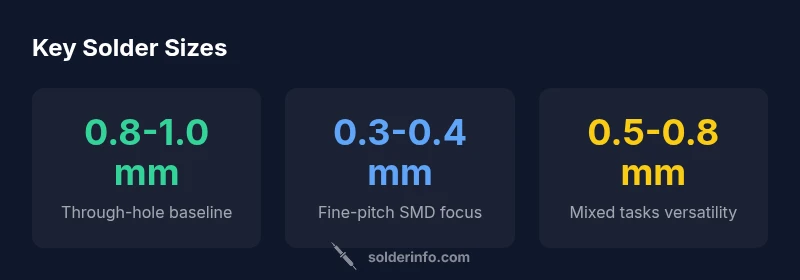
For electronics, the standard starting point is 0.8–1.0 mm leaded solder for through-hole work, with 0.3–0.4 mm ideal for fine-pitch SMD. Choose a diameter based on component density, heat management, and your technique. In practice, beginners often begin with 0.8 mm, then move to smaller sizes as precision improves. That makes it easier to control heat and avoid bridging.
Why the Size of Solder Matters for Electronics
For questions about what size solder for electronics, the answer begins with understanding how diameter affects heat transfer, wetting, and control during the joint formation process. The right wire size helps you deposit just enough solder without overheating the pad, bridging adjacent leads, or leaving a cold joint. In practical terms, choosing the diameter is not about chasing a magic number; it's about matching the task, component density, and your own technique. According to SolderInfo, beginners often underestimate how much difference the wire diameter makes in outcomes. Start with a forgiving size on simple through-hole boards and observe how the joint wets and cools. As you gain experience, you can tune the diameter to improve precision and reduce cleanup. This section lays out the core reasons why size matters and how to think about it across common electronics tasks.
How Wire Diameter Affects Heat Transfer and Wetting
The diameter of the solder wire is more than a fashion choice; it determines how much heat is introduced per joint and how quickly a blob of solder will flow into the joint. A thicker wire contains more metal and requires more heat to melt; that extra heat can travel into pads or traces and cause damage or delamination if you're not careful. Conversely, a thin wire deposits solder more slowly, giving you greater control but requiring more careful heat management to avoid a cold joint. Wetting quality—how well solder flows and adheres to copper—depends on flux, cleanliness, and temperature. The size interacts with all three factors: with the wrong diameter, even the best flux cannot compensate for misapplied heat. Use the ideal size for each scenario (see the data table later) to optimize wetting, minimize bridging, and shorten rework.
Common Wire Sizes Used in Electronics and When to Use Them
Most hobbyists start with 0.8-1.0 mm leaded solder for through-hole projects because it provides a forgiving balance of heat and flow. For dense, fine-pitch SMD work, 0.3-0.4 mm is preferred to maintain precision without requiring excessive force on the iron. A middle ground, 0.5-0.8 mm, covers mixed projects that include some through-hole and some larger SMD components. When working with power components or heat-sensitive boards, you may favor 0.8-1.0 mm to reduce the number of joint passes, but always use proper flux and temperature control. This section maps sizes to typical scenarios so you can quickly pick a wire that matches your task.
Matching Solder Type to Size: Leaded vs Lead-free
Leaded solders are generally easier to work with at lower temperatures, while lead-free solders require higher heat and can be more challenging with tiny joints. The diameter decision is largely independent of lead content, but mixing lead-free with a larger diameter may push heat away from the joint or require longer contact times. In practice, select the diameter that gives you the most reliable wetting at a controlled temperature, then adapt to lead content with compatible flux and fluxing regimes.
Practical Sizing Tips for a Clean Solder Joint
- Start with clean surfaces and fresh flux; dirty pads demand more heat and can skew sizing decisions.
- Choose a diameter that fits the task: 0.8–1.0 mm for through-hole, 0.3–0.4 mm for fine-pitch, and 0.5–0.8 mm for mixed work.
- Use flux-core rosin solder to improve wetting and reduce the risk of cold joints.
- Use a soldering iron with an appropriate tip size; a wide tip may require more heat, while a small tip demands precise control.
- Practice on test pads to feel how different diameters behave before working on a live board.
Common Mistakes Related to Solder Size and How to Fix Them
- Bridging and shorts: caused by using an overly large diameter or applying solder too quickly. Switch to 0.3–0.4 mm for dense areas and slow down the feed.
- Cold joints: caused by insufficient heat transfer, often from using too small a diameter. Increase diameter slightly or improve heat transfer with better tips and flux.
- Inconsistent joints: practice with a steady hand and a consistent feed rate; avoid long pauses that allow the joint to cool mid-flow.
Recommended solder sizes by electronics scenario
| Scenario | Recommended Solder Size (mm) | Notes |
|---|---|---|
| Through-hole boards | 0.8-1.0 | Good heat transfer; avoid excess |
| Fine-pitch SMD work | 0.3-0.4 | Requires precision and flux; avoid bridging |
| Power components (heatsinks) | 0.8-1.0 | Higher current demands; ensure heat control |
| Prototype/repair | 0.5-0.8 | Versatile for mixed tasks |
Quick Answers
What size solder should I use for electronics beginner projects?
For beginners, start with 0.8-1.0 mm leaded solder for through-hole work; as you gain control, you can try 0.5-0.8 mm for some tasks.
For beginners, start with 0.8-1.0 mm leaded solder for through-hole work. As you gain control, try smaller sizes for fine tasks.
Does solder size affect joint strength?
Size affects heat transfer and wetting; a diameter that's too large can cause bridging and heat damage, while too small can require longer heating and risk cold joints. Use the right size for the task and observe the joint.
The wire diameter matters for heat and wetting. Too big risks bridging; too small can overwork the joint. Pick the right size for the task and watch the heat.
Can I reuse solder wire of different sizes?
You can reuse wire, but mixing sizes across a project isn’t ideal. Keep a consistent size for a given task to maintain predictable heat and flow.
Yes, you can reuse, but try to stick to one size per task for consistency and predictable heat.
Is there a universal size for all electronics?
No. Choose based on task: through-hole, fine-pitch SMD, power components, and density of the board. Having a small and a large diameter on hand is common practice.
There isn't one universal size. Pick sizes based on the job—through-hole, SMD, and density.
What should I consider when choosing leaded vs lead-free solder sizes?
Lead-free solders typically need higher temperatures; diameter choices are similar, but smaller diameters can help with precision when heating the joint. Pair with appropriate flux and heat control.
Lead-free means hotter temps; size choices stay similar, but go for precision with smaller diameters if needed.
How do I know if my solder wire size is too large or too small?
Look for bridging, cold joints, or insufficient wetting. If you see these signs, adjust the diameter and heat approach, and practice on test pads to calibrate.
Watch for bridging or cold joints. If you see them, switch sizes and re-check heat and flux on a test pad.
“Solder diameter is a practical lever for heat control and precision; choose the smallest diameter that allows you to place and wet joints confidently.”
Top Takeaways
- Start with a 0.8–1.0 mm solder for beginner through-hole work.
- Use 0.3–0.4 mm for fine-pitch SMD tasks.
- Match diameter to heat management and component density.
- Choose rosin-core flux solder for easier wetting.
- Avoid oversized wire to prevent bridging and cold joints.