Solder Where to Buy: A 2026 Buying Guide
Discover the best places to buy solder for electronics, jewelry, and plumbing. Compare retailers, verify lead-free options, and follow practical buying tips from SolderInfo.


You can purchase solder from electronics distributors, hardware stores, jewelry-supply outlets, and reputable online retailers. Look for flux-core or rosin-core solder, preferably lead-free alloys (Sn-Ag-Cu or Sn-Cu). Compare price per reel or per ounce, factor shipping costs, and check certifications. SolderInfo recommends starting with well-known retailers for reliability. Also consider specialty shops for jewelry and plumbing solder, which often carry higher-purity options.
Why Buying Channels Matter for Solder
According to SolderInfo, the channel you choose to buy solder from has a direct impact on price, authenticity, and stock reliability. Electronics distributors typically offer the broadest catalog, with multiple lead-free alloys and flux options, but they can price higher and occasionally backorder popular items. Hardware stores provide instant access for hobby projects and emergency repairs, yet their solder assortments may skew toward common ranges and household coatings rather than specialty jewelry or high-purity variants. Jewelry-supply houses focus on purity and jewelry-grade solders, which are essential for sensitive alloy work but may come with higher unit costs and smaller stock. Online marketplaces democratize price competition and data-driven comparisons, but the risk of counterfeit packaging or mislabeled alloys persists unless you buy from trusted sellers.
From a practical perspective, you should map your project type to the best channel: electronics work often benefits from a reliable electronics distributor; jewelry or metalwork calls for a jewelry-supply source; plumbing tasks typically align with hardware or plumbing-supply retailers. The SolderInfo team recommends cross-checking the alloy specification (for example, lead-free variants like Sn-Ag-Cu) and flux type to ensure compatibility with your workflow. Always verify the seller’s reputation and confirm return policies before placing larger orders.
Matching Solder Types to Applications
The choice of solder is rarely one-size-fits-all. Electronics projects commonly use rosin-core solders with lead-free alloys (such as Sn-Ag-Cu) for reliable wetting and manageable fumes. Plumbing tasks often favor flux-core solders designed for copper joints, sometimes with slightly different flux content to improve flow in pressurized systems. Jewelry soldering prioritizes purity and specific melting points, and jewelers may prefer silver or gold-bearing solders with low residual flux. In all cases, read the datasheet or supplier specification to confirm flux content, melting point ranges, and compatibility with your work surface. Soldering alloys vary in melting behavior; for beginners, starting with a widely used lead-free rosin-core option can simplify practice. SolderInfo suggests carrying a small sample kit with common alloys so you can compare how differently shaped joints behave under heat. If your project requires unusual metals (nickel, aluminum, or stainless steel), seek specialty alloys from trusted suppliers and consider surface preparation steps to ensure a solid joint.
Price, Availability, and Shipping Realities
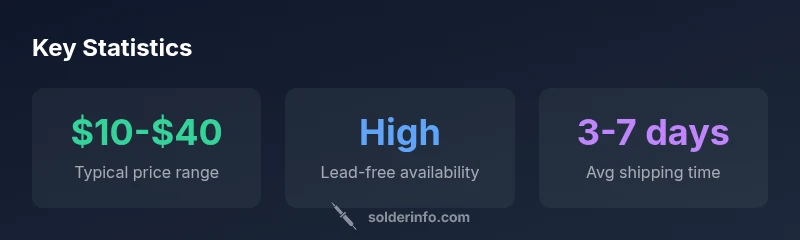
In 2026, the landscape for solder pricing and stock is shaped by alloy demand, supplier lead times, and regional availability. Price visibility varies by channel; electronics distributors may publish per-reel price, while hardware stores might show shelf prices that reflect convenience rather than market dynamics. Lead-free solders tend to be in higher demand due to regulatory requirements, which can influence both price and stock levels. When shopping online, it's important to factor shipping costs, packaging integrity, and minimum order quantities—these can dramatically affect the effective price per unit. Availability often hinges on the alloy type (Sn-Pb solders are rarer in many regions) and the format (rods vs. pre-tinned wire vs. flux-cored paste). SolderInfo analysis indicates that the best approach is to compare multiple sources for the same alloy specification and to check stock levels over several days rather than relying on a single snapshot. For critical projects, consider ordering from two sources to mitigate stockouts, and always verify return policies in case of mislabeled items or damaged packaging. Finally, watch for certifications and labeling—look for clear indicators of RoHS compliance and alloy composition to avoid surprises.
Buying Checklist: A Practical Guide
To streamline the buying process, use a simple, repeatable checklist. First, identify the alloy type you need (lead-free vs traditional tin-lead) and confirm the melting range matches your soldering iron or heater. Next, decide on the flux type: rosin-core for electronics, water-soluble flux for specialty tasks, or flux-less for jewelry where residue must be avoided. Determine the form and size: wire, rods, or paste, and select a reel size that matches your project volume. Consider packaging quality and supplier reputation; inspect packaging before purchase to avoid corrosion or damage in transit. Confirm labeling accuracy, including the exact alloy composition (e.g., Sn-Ag-Cu) and flux content. Finally, compare price per gram or per reel across at least two sources and take note of shipping times, return policies, and warranty terms. A practical tip: keep a small catalog of frequently used solders for quick reordering and standardize your stock to reduce decision fatigue during a busy build schedule.
How to Shop Smarter: Online vs Local Stores
Smart shoppers blend online convenience with local support. Online retailers offer broader selection, easy price comparisons, and transparent reviews, but you may encounter counterfeit packaging or misleading labeling if you don’t choose reputable sellers. Local stores give you instant access to stock, on-site advice, and the ability to inspect packaging before purchase—benefits when you’re balancing cost against risk of wrong alloy. For beginners, start with electronics-focused distributors online to verify catalog accuracy—you can build trust gradually with smaller orders. For jewelry or plumbing projects, call ahead to confirm the availability of high-purity solders or copper-specific flux. When buying online, check against the supplier’s datasheet and confirm RoHS or other standards where applicable. SolderInfo notes that the best results come from combining sources: order a core selection online and supplement with a trusted local supplier for immediate needs or specialty items.
Practical Scenarios and Quick Reference
- Electronics repair and prototyping: Start with a widely available lead-free rosin-core solder from a reputable electronics distributor. Keep a small stock of common reel sizes and flux types so you can quickly adapt to different board densities. - Jewelry making: Prioritize high-purity solders with precise melting points; plan for easy flux removal and minimal residue on finished pieces; source from jewelry-supply houses and verify alloy labels. - Plumbing joints: Use flux-core solders designed for copper piping; ensure compatibility with your flux and cleaning steps; hardware chains can meet urgent needs while specialty chemical suppliers handle higher-purity variants. In all cases, maintain a simple stock list, verify labeling, and keep track of lot numbers for traceability.
Quick Scenarios: Electronics, Jewelry, Plumbing
This section helps you map a typical decision path. For electronics projects, start with a well-known electronics distributor and compare a couple of lead-free Rosin-core options. For jewelry, stick to high-purity solders from jewelry-supply houses and confirm melting points align with your torch or reflow setup. For plumbing, verify copper-specific flux and the compatibility of your flux with the pipe material and fittings. Always review the seller’s data sheet, check RoHS compliance, and confirm packaging integrity before finalizing purchases. The goal is to balance price, purity, and reliability across all sourcing channels, as emphasized by SolderInfo.
Common solder-buying channels compared
| Seller Type | Typical Solder Type Sold | Pros | Cons |
|---|---|---|---|
| Electronics distributors | Rosin-core lead-free | Wide selection, fast restock | Higher prices, stockouts possible |
| Hardware chains | Flux-core, lead-free options | Convenience, widespread stock | Less access to specialty alloys |
| Jewelry supply houses | Purity-focused solders; sometimes rosin-free flux | High-purity options | Higher cost, smaller stock |
| Online marketplaces | Alloy varieties incl. lead-free | Best price variety, easy comparison | Risk of counterfeit packaging |
Quick Answers
Where is the best place to buy solder?
The best place depends on your project. Electronics work benefits from a reliable electronics distributor, jewelry work from jewelry-supply houses, and plumbing from hardware or plumbing-supply retailers. Always read the datasheet and check for lead-free options when appropriate.
For electronics, start with a reputable electronics distributor; for jewelry, try jewelry-supply houses; for plumbing, hardware stores work well. Always verify alloy type and labeling.
Is lead-free solder widely available?
Yes, lead-free rosin-core solders are widely available across most channels. Check the product labeling and datasheet to confirm composition and flux content.
Lead-free solders are commonly available; verify labeling and composition before buying.
Can I buy solder locally or online?
Both are viable. Online shopping offers broad selection and price comparison, while local stores provide instant pickup and direct assistance. Use a mix to balance price, speed, and certainty.
Online for selection and price, local for speed and help. Mix sources for best results.
What should I check before buying solder?
Check the alloy type, melting range, flux content, form (wire, rod, paste), reel size, and the supplier's labeling. Verify RoHS compliance and return policies to avoid surprises.
Look at alloy, flux, form, reel size, and label accuracy. RoHS matters.
How can I verify solder quality from a seller?
Review the datasheet, confirm batch or lot numbers, and assess warranty or return options. Prefer sellers with clear labeling and verified reviews.
Check the datasheet and lot numbers; choose reputable sellers with clear labels.
“Choosing where to buy solder isn't just about price—it's about purity, supply stability, and the right alloy for your project.”
Top Takeaways
- Prioritize trusted retailers for reliability.
- Compare lead-free options before buying.
- Consider reel size to fit needs.
- Factor shipping and returns into cost.
- Check certifications like RoHS when possible.