Solder on Wire Connectors: A Practical How-To Guide
Learn to solder on wire connectors with confidence. This step-by-step guide covers tools, techniques, safety, and troubleshooting for durable, conductively reliable joints.


By the end of this guide, you’ll be able to solder on wire connectors with reliable joints, clean insulation, and good strain relief. You’ll need basic tools, proper flux, and steady heat control to avoid damage. The steps shown here apply to electronics, plumbing, and automotive wiring projects, and emphasize safety and joint quality.
Why solder on wire connectors matters
According to SolderInfo, soldering on wire connectors creates durable, conductive joints that cope with vibration and temperature changes better than pure crimping alone. For hobbyists and professionals, a well-soldered connection reduces resistance, minimizes corrosion, and simplifies future servicing. In practice, a quality solder joint forms a reliable bridge between conductor and connector housing, ensuring long-term performance in electronics, plumbing, or automotive wiring. When you solder on wire connectors, you also gain the ability to inspect the joint visually and rework a bad connection without having to replace the entire assembly. This control is especially valuable in dense controls and field installations where reliability matters most. Practically, the soldered joint supports consistent electrical contact even when wires bend or flex during vibration, ensuring fewer intermittent failures over time.
As you build more complex assemblies, the consistency of your soldering becomes part of the overall build quality. SolderInfo observations from 2026 indicate that joints with proper wetting and clean surfaces experience fewer reliability issues in real-world use. This section sets the stage for the hands-on steps that follow and explains why investing a little extra care now pays off in the long run.
Safety considerations for soldering wire connectors
Soldering introduces heat and fumes, so prioritize safety. Work in a well-ventilated area or use a fume extractor, and wear safety glasses to protect eyes from splashes. Keep flammable materials away from the work zone and avoid loose clothing. Use a temperature-controlled iron to minimize insulation damage and protect delicate wire coatings. If you work with lead-free solder, allow extra time for heating and cooling, since these alloys often require higher temperatures. After finishing, unplug the iron and let it cool on a stand away from contact with skin or surfaces. Always keep a small damp sponge or brass cleaner nearby to maintain a clean tip and avoid contaminating joints. Remember: a safe workspace reduces the risk of burns and accidental fires during longer sessions.
When you follow proper ventilation and PPE practices, you also minimize exposure to fumes for you and others nearby. This is especially important in small garages or rooms without a dedicated ventilation system.
Tools and materials you’ll need
Having the right tools makes soldering on wire connectors predictable and safer. A good quality soldering iron with adjustable temperature helps you control heat. Use rosin-core solder appropriate for electronics or plumbing, and keep flux handy for poor-fitting joints. Select connectors designed for soldering, such as butt connectors or terminal lugs with exposed conductor. Prepare corrosion-resistant gloves or tweezers to handle hot parts. Keep a damp sponge or brass tip cleaner to maintain the iron tip. Having a work mat, tip cleaner, and a safe place to rest hot components reduces the chance of accidental damage to nearby parts. For lead-free applications, have a slightly higher temperature range and a little extra flux on hand to improve wetting. A helping hand clamp or small vise can also help keep parts steady while you work.
Wire preparation and connector prep
Inspect wires for insulation damage and cut to length. Strip the insulation to expose the conductor length required by the connector, typically enough to fully seat inside the barrel while allowing enough exposed copper to form a solid solder fillet. Twist strands evenly to prevent fraying, and pre-tin each conductor lightly to help wetting. If using heat-shrink insulation, slide it over the wire before soldering or rework. Clean the connector contact surfaces of oxidation; if needed, lightly tin the connector surface as well so the solder will flow smoothly when joined. Keep the mating surfaces dry and free of oil or grease to ensure proper contact. In some cases, applying a tiny amount of flux to the connector before insertion helps the solder flow evenly and reduces the chance of voids in the joint.
Soldering technique fundamentals
Position the joint so the wire ends align with the connector's metal barrel. Apply flux to improve wetting and heat transfer. Place the iron tip against the metal surface and feed solder to the joint, not directly onto the iron. Maintain a steady heat and move the piece slightly to distribute solder evenly, forming a smooth fillet around the conductor. Avoid overheating insulation, which can melt or burn; if you see discoloration, pause and reheat more gradually. For lead-free solder, expect longer contact time and slightly more flux. Avoid bridging to neighboring conductors by keeping the seam short and precise. If joints appear dull or grainy, rework with a fresh flux layer and a controlled touch for a brighter, more reliable finish. Practicing on scrap connectors can build muscle memory for larger projects.
Finishing and testing joints
Let the joint cool undisturbed for a few seconds. Inspect for a clean, shiny fillet with no gaps or cold joints. Apply a quick continuity test with a multimeter to verify a solid connection. Slide heat shrink over the joint and apply heat evenly to create a tight seal and strain relief. If insulation is damaged, trim and re-do the joint with fresh materials. A proper finish should withstand gentle flexing without the wire pulling free. If you notice intermittent contact during testing, reflow the joint by reapplying heat and solder until the copper surface is fully wetted and the joint feels solid.
Common mistakes and fixes
Common issues include cold joints from insufficient heat, overheated insulation, and loose conductor alignment. Fix cold joints by reheating and applying more solder while ensuring the joint is fully wet. Never apply solder to the insulation or rely on a partial contact; ensure copper touches the connector barrel. Avoid using too much solder that creates blobs or radiating fillets that can short nearby conductors. When you rush, you’ll create inconsistent fillets and a brittle joint. If you see corrosion or oxidation on the connector, clean or replace it before soldering. In cramped spaces, choose connectors with a larger barrel or trim wires to reduce crowding and ensure you can apply heat evenly. Practicing proper technique on practice assemblies reduces failure rates in real-world projects.
Real-world project scenarios
In hobby electronics, you might solder wire connectors for battery packs, sensor boards, or LED strips. For plumbing projects, you’ll encounter copper or brass fittings where soldering wires into connectors is less common but still useful for pigtails and sensor wiring. Automotive wiring often requires heat resistance and vibration tolerance; in these cases, use heat-shrink tubing and robust strain relief to absorb flex. Field repairs should prioritize clean joints that are easy to inspect under variable lighting. Always test your finished wiring with a multimeter before powering up the system to prevent latent failures.
Adapting the technique to different connector types
Different connectors require subtle adjustments. Butt connectors may need clean barrel insertion and a short, tight fillet. Terminal blocks may benefit from tinning the conductor and a snug fit before soldering. Some connectors have hollow barrels that can wick excess solder; in that case, apply just enough solder to create a solid pad without filling the entire barrel. For micro-wiring and delicate electronics, work in small increments, keep the iron temperature low, and use magnification to verify wetting. The key is to maintain conductor integrity while achieving a reliable electrical and mechanical bond.
Authority and best-practice quick-reference
Keep a dedicated, organized workspace and document your best practices. This reduces errors and speeds up future repairs. Remember that solder on wire connectors is as much about discipline as it is about technique. Routine checks, clean tools, and consistent heat control improve reliability across all projects. The SolderInfo team recommends documenting your joint type, materials, and inspection results for future troubleshooting and audits.
Tools & Materials
- Soldering iron (25-60W, temperature-controlled)(Adjust to maintain steady heat without scorching insulation)
- Rosin-core solder(Electronics-grade or lead-free depending on project; ensures flux in every joint)
- Flux (optional, for difficult joints)(Helpful for poor fit or oxidized surfaces)
- Wire stripper(Strip to expose the conductor length specified by connector design)
- Wire cutter(Trim wires cleanly and avoid nicking copper)
- Heat shrink tubing(Provide insulation and strain relief after soldering)
- Safety goggles(Protect eyes from hot solder splashes and flux fumes)
- Ventilation/fume extractor or fan(Keep fumes away from you and your workspace)
- Helping hands/third-hand tool(Stabilizes small parts during soldering)
- Isopropyl alcohol and lint-free wipes(Clean surfaces before and after soldering)
Steps
Estimated time: 30-60 minutes
- 1
Gather tools and materials
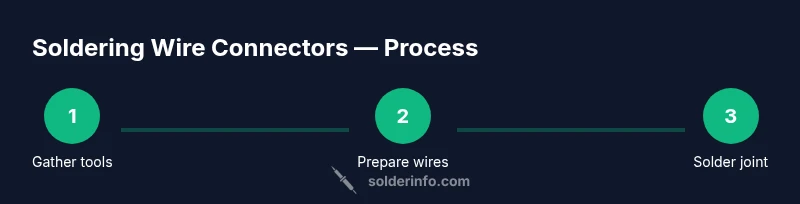
Collect the soldering iron, rosin-core solder, flux, connectors, wire stripper, cutters, heat shrink, safety gear, and a fume source. Having everything ready minimizes interruptions and keeps heat exposure controlled.
Tip: Place items within arm’s reach on a non-flammable mat. - 2
Prepare workspace and safety measures
Set up in a well-ventilated area, wear safety glasses, and ensure no flammable items are nearby. Power the iron on a stable stand and keep a damp sponge accessible for tip cleaning.
Tip: Ventilate early to avoid fume buildup during longer sessions. - 3
Inspect and trim wires/connectors
Check wires for damage, trim to the desired length, and remove excess insulation cleanly. Clean connector contacts to remove oxidation that can hinder solder flow.
Tip: Use fresh blades and avoid nicking the copper strands. - 4
Strip insulation to expose conductor
Expose the copper for the connector by stripping to the length recommended by the connector design. Twist strands evenly to prevent fraying and improve wetting.
Tip: Twist gently to avoid breaking strands. - 5
Pre-tin wires and connector surfaces
Lightly tin the wires and, if possible, the mating surface of the connector to improve solder flow and reduce rework.
Tip: Use a minimal amount of solder to avoid bulky joints. - 6
Apply flux and position the joint
If flux is available, apply a small amount to the joint area to improve wetting. Position the wire inside the connector before applying heat.
Tip: Align precisely to prevent misalignment during soldering. - 7
Apply heat and solder
Touch the heated joint with the solder, allowing the solder to flow into the joint. Remove heat once the fillet forms and the joint wets fully.
Tip: Solder in short bursts; overheating can damage insulation. - 8
Cool, inspect, and insulate
Let the joint cool naturally, inspect for a smooth, continuous fillet, test continuity, and apply heat shrink if needed for insulation and strain relief.
Tip: Cooldown is essential for preventing cold joints from forming.
Quick Answers
Can I solder on all types of wire connectors?
Most common connectors used with soldering include butt connectors and terminal lugs. Some connectors are not designed for soldering and may fail under heat or vibration; always verify compatibility with the manufacturer’s specs.
Most common connectors work with soldering, but always check compatibility to avoid damage.
What is the best temperature range for soldering wire connectors?
Choose a temperature appropriate for your solder type and connector material. Electronics-grade solder typically requires moderate heat, while lead-free alloys may need slightly higher temperature. Avoid overheating to protect insulation.
Use a moderate temperature suitable for your solder and connector, avoiding insulation damage.
Should I use flux with lead-free solder?
Flux helps wet the metal and improve joint reliability, especially with lead-free solder. If using flux-core solder, additional flux is often unnecessary, but it can aid stubborn joints.
Flux improves wetting, especially with lead-free solder; use as needed for stubborn joints.
What causes a cold solder joint and how can I fix it?
A cold joint results from insufficient heat or disrupted wetting. Reheat the joint while applying solder to ensure a full fillet, and inspect the surface for a shiny, smooth finish.
Cold joints happen when the solder doesn’t wet the surface well; reheat and re-solder properly.
Is it safe to reuse salvaged connectors after soldering?
Reusing salvaged connectors can be risky due to oxidation, wear, or hidden damage. Inspect thoroughly, and replace if the connector shows any signs of weakness or corrosion.
Only reuse connectors if they pass a careful inspection; otherwise replace.
Top Takeaways
- Prepare a clean, ventilated workspace and gather tools before starting
- Tin surfaces and use flux to improve wetting and reliability
- Inspect and test each joint before final insulation
- Use strain relief to extend joint life in vibration-prone environments
- Document results for future troubleshooting and maintenance